
Claw toes and hammer toes
Bent toes that rub against footwear and take weight on their tips.
Toes that bend, lift up or ride over their neighbour and rub against your shoe. We assess whether the deformity is flexible or rigid and help you reduce pain and look after how your foot works.
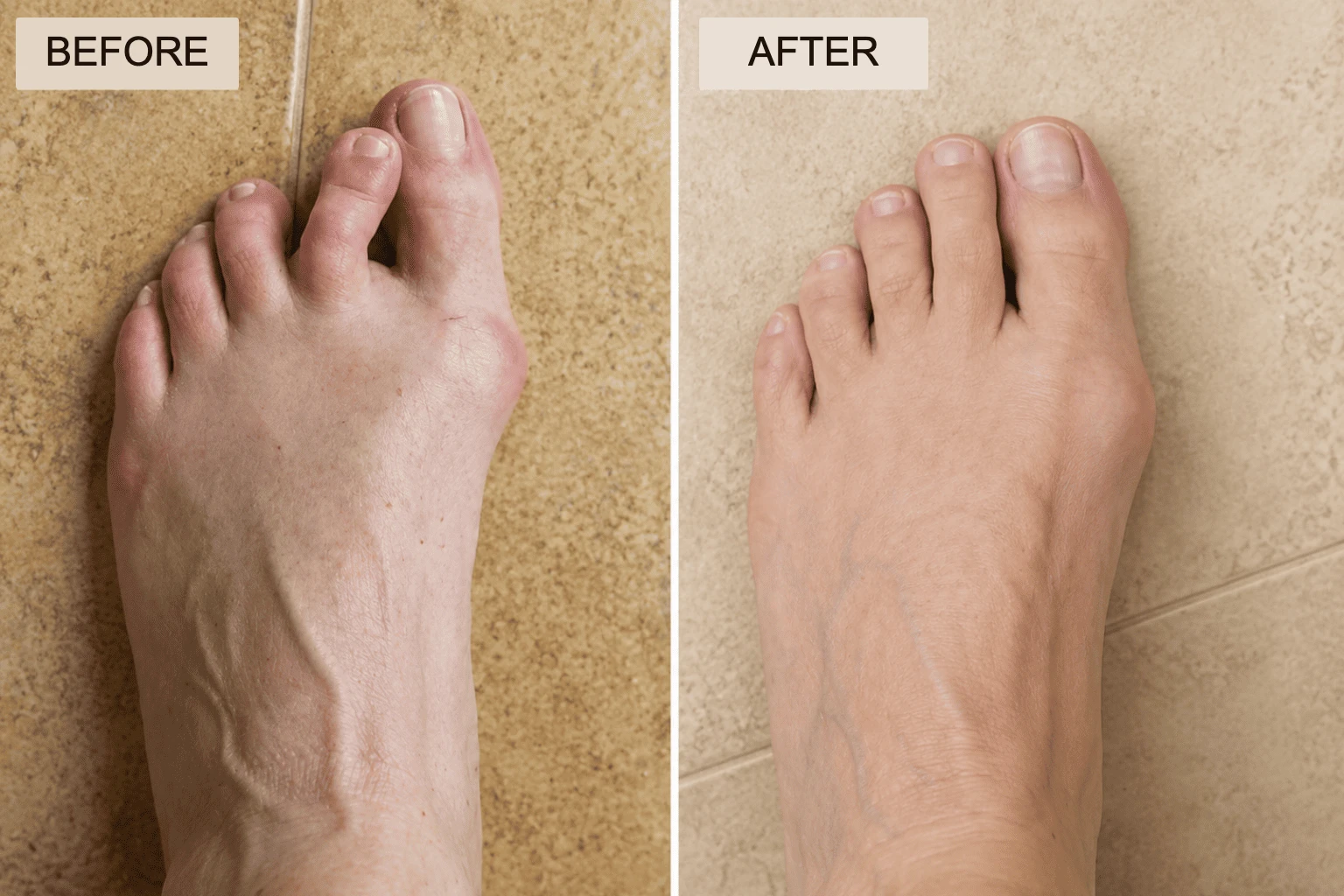
Claw toes and hammer toes are deformities in which the toe bends at one or more joints and takes on a hooked shape. In a claw toe, the base of the toe extends upwards and the next joints bend; in a hammer toe, the main bend is at the middle joint. Overlapping toes (supraductus) sit on top of the neighbouring toe, and underlapping toes (infraductus) tuck underneath it.
They usually develop from an imbalance between the long muscles and the intrinsic muscles of the foot, often encouraged by narrow or high-heeled shoes, a bunion pushing the neighbouring toes, or an injury to the plantar plate under the second toe. Some neurological or rheumatic conditions can also cause them.
Let’s be clear: physiotherapy does not straighten a rigid, established deformity. What it can do is relieve pain, maintain or improve flexibility while the toe can still be corrected by hand, strengthen the foot muscles and reduce rubbing with footwear and protection measures. When the toe is rigid and painful despite everything, a specialist can assess other options.
At Centro Ubud we examine each toe, the plantar plate with ultrasound and the rest of the foot, because toes rarely go wrong on their own.
If you have diabetes, poor circulation or loss of sensation in your feet, rubbing and wounds should be checked by your doctor or podiatrist. If you have wounds that won’t heal, redness or heat, seek advice without delay.
Bent toes that rub against footwear and take weight on their tips.

Supraductus and infraductus, often associated with a bunion or a plantar plate injury.
See metatarsalgia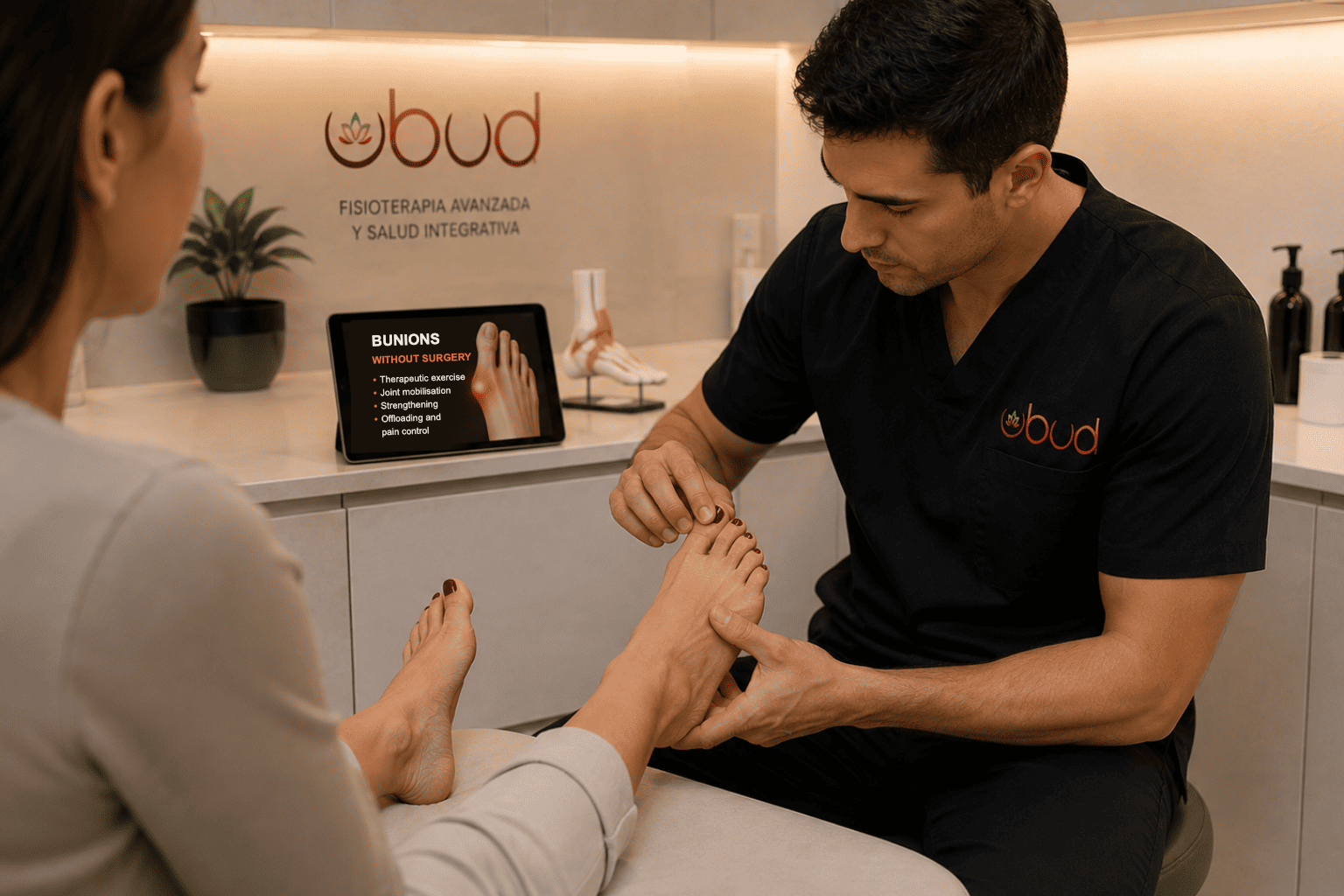
Hallux valgus pushes the second toe and encourages it to ride up.
See bunions without surgeryWe check whether each toe is flexible or rigid, review your footwear and assess the plantar plate with ultrasound.
We explain what we can and can’t improve, and plan an approximate number of sessions and home exercises.
Foot exercises, mobility work and protective measures to reduce pain and rubbing.
Improving how the foot works and reducing pain, with honest expectations.
Exercises to actively spread, stabilise and ground the toes.
We maintain flexibility in the toes and forefoot joints while they can still be corrected.
A wide, deep toe box, toe spacers or silicone protectors to reduce rubbing.
In selected cases, ultrasound-guided techniques for plantar plate pain or muscle overload.
Tell us what you would like to improve and we will explain, with no obligation, which treatment suits you.
Calle Arenas, 12 · 29620 Torremolinos, Málaga · Get directions · Patient reviews
All treatments are subject to a prior professional assessment. Results are individual and may vary from person to person. Centro Ubud is an authorised healthcare centre in Torremolinos (Málaga). NICA 64610. Clínica UBUD S.L. · CIF B56756158.