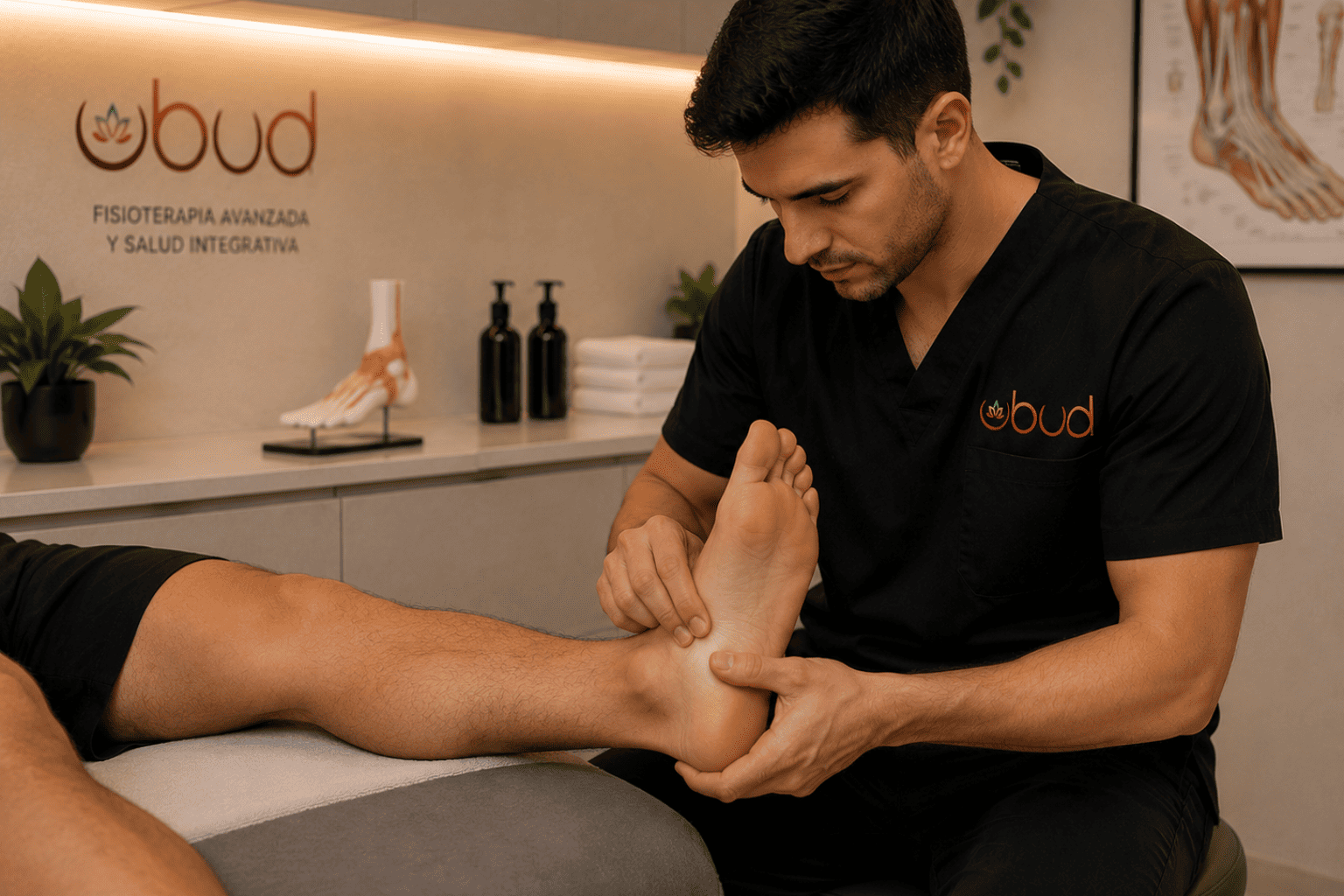
Plantar fasciitis is one of the most common causes of heel pain and is usually managed conservatively with physiotherapy, therapeutic exercise and adjustments to load. The most suitable treatment depends on each person, so a professional assessment is advisable before you start. At Centro Ubud in Torremolinos, we approach this problem through advanced physiotherapy, combining clinical examination with techniques such as shockwave therapy or invasive physiotherapy when they are indicated.
What is plantar fasciitis?
The plantar fascia is a band of connective tissue that runs along the sole of the foot from the heel to the base of the toes. It helps to support the arch of the foot and takes part in absorbing impact when walking or running. When this structure is subjected to more load than it can tolerate over a prolonged period, it can become irritated and pain can appear, especially where it attaches to the heel.
Although the term “fasciitis” is commonly used, in many long-standing cases inflammation is not the main feature; instead, there are degenerative changes in the tissue. That is why the term plantar fasciopathy is also used. This difference matters because it explains why rest or anti-inflammatory medication alone do not always resolve the problem.
What are the most common causes?
Plantar fasciitis rarely has a single cause. It is usually the result of several factors that add up and overload the fascia. The most common include:
- Sudden increases in activity: starting to run, walking much more than usual while on holiday, or changing sport without gradual progression.
- Spending many hours on your feet, especially on hard surfaces, which is common in hospitality and retail jobs.
- Unsuitable or very worn footwear, and prolonged use of flip-flops or flat shoes without support in summer.
- Stiffness in the ankle or calf muscles, which increases the tension borne by the sole of the foot.
- Weakness of the intrinsic muscles of the foot and of the posterior chain.
- Increased body weight, which raises the load with every step.
- Foot characteristics, such as a very high or very low arch, which can influence how loads are distributed.
What symptoms does plantar fasciitis cause?
The most characteristic symptom is pain in the lower, inner part of the heel. People who have it usually describe:
- Intense pain with the first steps in the morning, when getting out of bed.
- Discomfort when standing up after sitting for a while.
- Pain that eases somewhat as the foot “warms up”, but worsens at the end of the day or after long periods on your feet.
- Tenderness when pressing on the heel area.
If the pain is accompanied by tingling, a burning sensation or numbness, or if it appears at night at rest, other causes should be ruled out, such as compression of a nerve in the heel or ankle area. That is why a thorough examination is essential before starting any treatment.
How is it diagnosed?
Diagnosis is mainly clinical: it is based on the patient’s history and a physical examination of the foot, the ankle and the way you walk. In some cases an ultrasound scan can be useful to assess the thickness of the fascia and rule out other injuries. Tests such as X-rays are not always necessary; the well-known “heel spur” can appear in people without pain, so its presence does not explain the symptoms on its own.
Free first consultation at Centro Ubud, La Carihuela (Torremolinos). Message us on WhatsApp.
Plantar fasciitis: treatment with physiotherapy
Most cases respond well to a well-planned conservative treatment. There is no single technique that works for everyone, but rather a combination of strategies adapted to each case. In our physiotherapy unit in Torremolinos we usually work on the following pillars:
Education and load management
Understanding what is happening and which activities should be temporarily modified is the first step. It is not about stopping moving altogether, but about adjusting the volume of activity so that the tissue can adapt, and reviewing the footwear you wear every day.
Therapeutic exercise
Progressive strengthening exercise for the fascia, the foot muscles and the calf is one of the components with the best support in the scientific literature. It is prescribed individually and adapted according to the patient’s response.
Manual therapy
Manual techniques applied to the foot, ankle and calf can help to reduce pain and improve mobility, making it easier for the patient to tolerate exercise.
Shockwave therapy
In cases that do not improve with the initial measures, shockwave therapy is an option with evidence in persistent plantar fasciopathy. Whether it is appropriate should be assessed by the physiotherapist after the examination.
Ultrasound-guided invasive physiotherapy
Techniques such as percutaneous electrolysis (EPI) or dry needling, performed under ultrasound guidance, can form part of the treatment in certain patients. You can find out more on our page about plantar fasciitis treatment in Torremolinos.
Other complementary measures
In some cases heel pads, functional taping or certain changes to footwear can be useful. These are supportive measures that tend to work better combined with exercise than on their own.
How long does plantar fasciitis take to heal?
Progress varies greatly. Some people notice improvement within a few weeks, while others, especially when the pain has lasted many months, need more time. Factors such as how long the problem has been present, your activity level, your job and how consistently you follow the prescribed exercise all have an influence. The important thing is to follow a plan with clear goals and review it regularly.
What can I do at home in the meantime?
- Avoid walking barefoot on hard surfaces during the most painful phase.
- Wear comfortable footwear with good cushioning and a slight heel elevation.
- Temporarily reduce the activities that cause the most pain, without becoming completely inactive.
- Do the exercises your physiotherapist has given you regularly.
This advice is general and does not replace an individual assessment.
Frequently asked questions about plantar fasciitis
Does plantar fasciitis go away on its own?
In some cases the symptoms improve over time, but when the pain lasts more than a few weeks, an assessment is advisable so that targeted treatment can begin and the problem does not become chronic.
Is plantar fasciitis the same as a heel spur?
No. A heel spur is a bony outgrowth of the calcaneus (heel bone) that can be seen on an X-ray, whereas fasciitis affects the fascia. They can coexist, but a spur does not always cause pain.
Can I keep exercising?
It depends on the case. Often some activity can be maintained by adapting the volume and intensity. Your physiotherapist will advise what is reasonable at each stage.
Does shockwave therapy hurt?
It can be slightly uncomfortable during application, but the intensity is adjusted to each person’s tolerance.
Do I need insoles?
Not always. In some patients they can help as a complement, but the decision should be made after assessing the foot and the way you walk.
Would you like us to assess your case?
If you have had heel pain for a while and want to know which options suit your case, we can help. At Centro Ubud, at C/ Arenas 12 (La Carihuela, Torremolinos), we see patients by appointment. Message us on WhatsApp at +34 602 544 143 and we will explain what the first assessment involves and what availability we have.
Free first consultation at Centro Ubud, La Carihuela (Torremolinos). Message us on WhatsApp.

Physiotherapist specialising in the foot and ankle and musculoskeletal pain, educator of physiotherapists and founder of The Fisio Program. He works with Centro Ubud’s physiotherapy unit.
This article is for information only and does not replace an individual assessment by a healthcare professional.