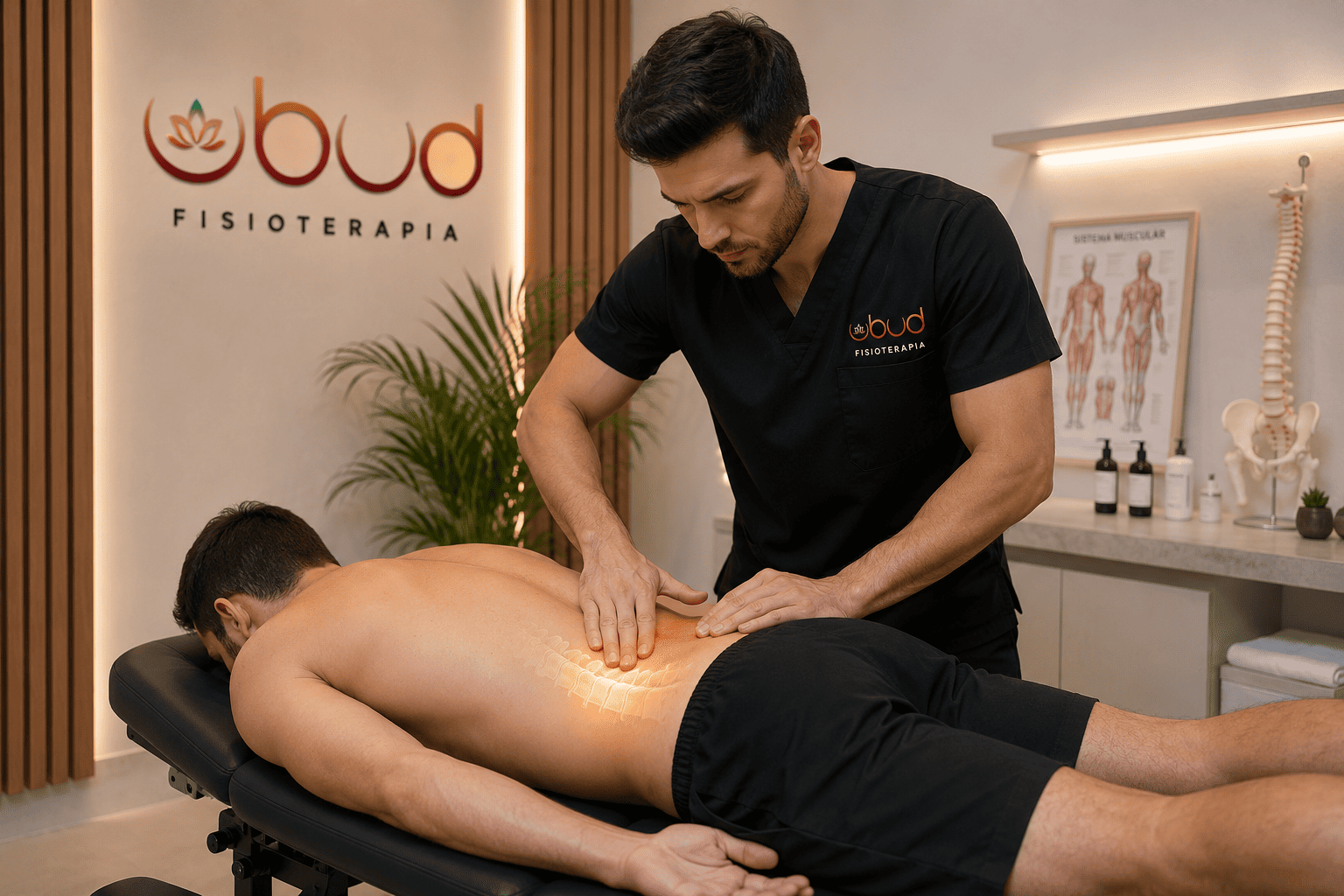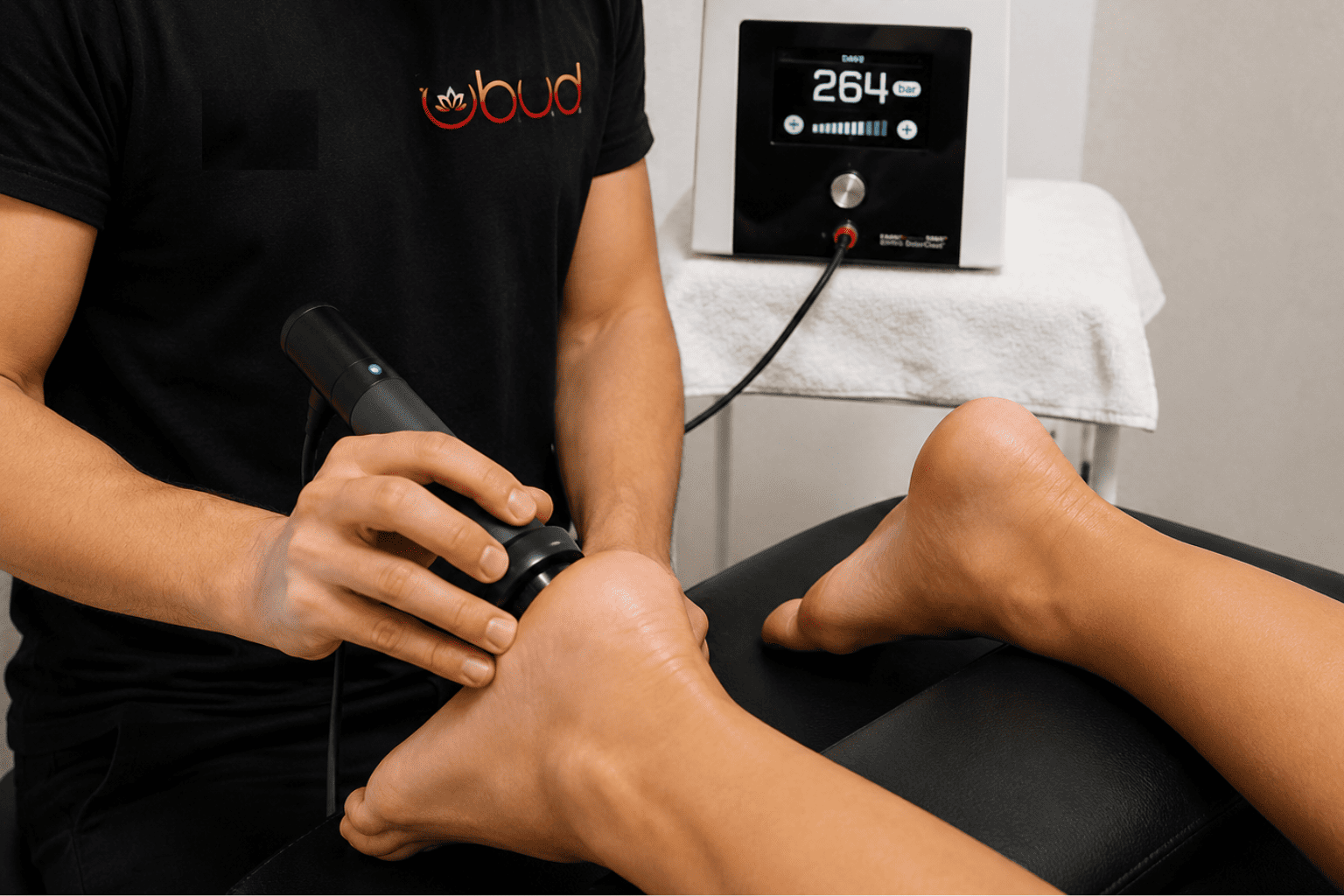
Dry needling and percutaneous electrolysis (EPI) are two invasive physiotherapy techniques that use a very fine needle but have different aims: dry needling is aimed mainly at muscle trigger points, whereas EPI applies a galvanic current through the needle, usually to tendons and other injured tissues, guided by ultrasound. Neither is a universal treatment: when they are indicated depends on the injury and is decided after an assessment. At Centro Ubud, in Torremolinos, we use them as part of an individualised physiotherapy plan.
What is invasive physiotherapy?
Invasive physiotherapy is the term for the set of techniques in which the physiotherapist passes a needle through the skin to act directly on a tissue: muscle, tendon, ligament or the area close to a nerve. The needles are made of steel, sterile and single-use, similar in thickness to acupuncture needles and much finer than those used for an injection.
Within this group, the best-known techniques are dry needling, percutaneous electrolysis and percutaneous neuromodulation. They are called “dry” because no substance is injected.
What is dry needling?
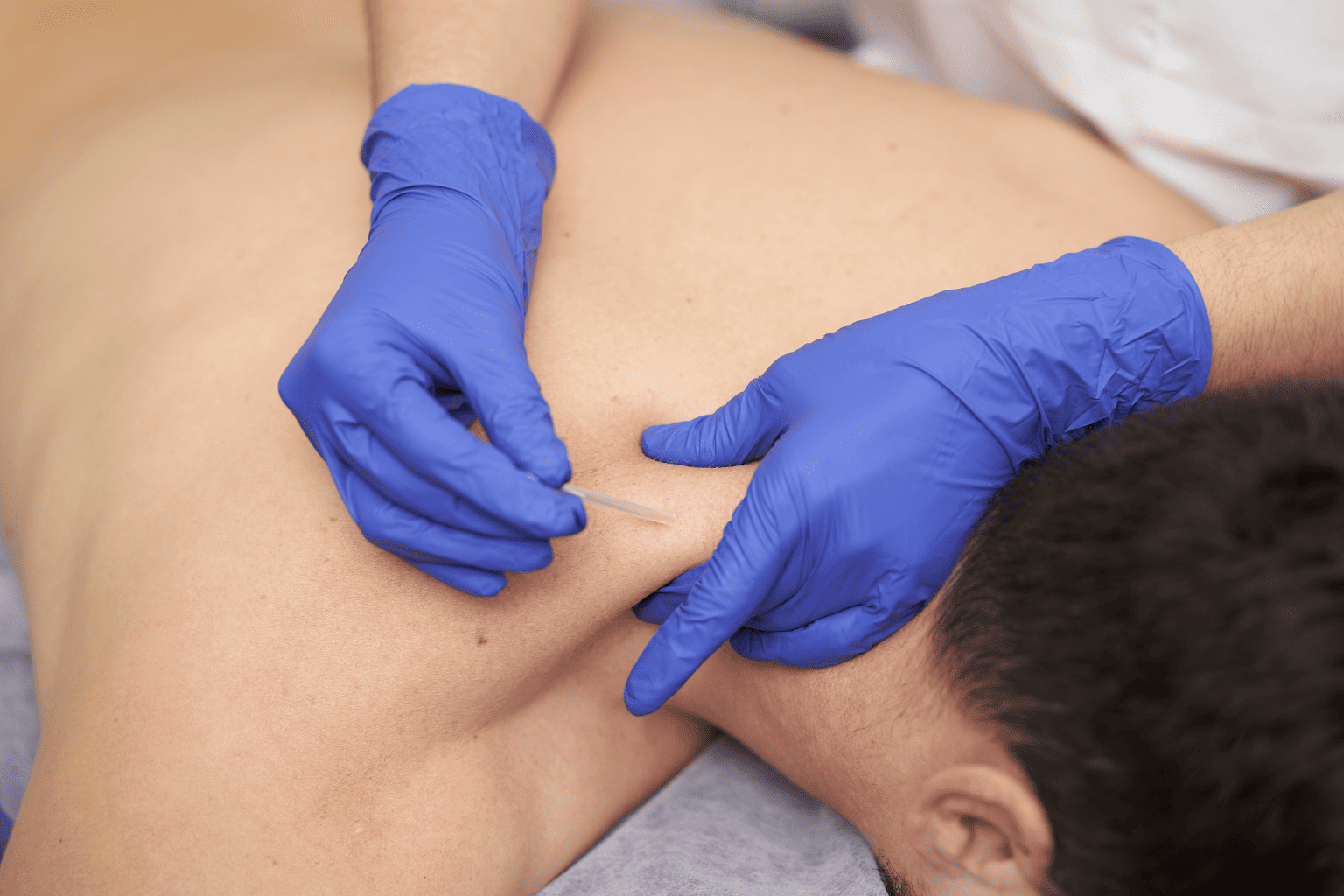
Dry needling involves inserting a needle into a myofascial trigger point: a hypersensitive spot within a taut band of muscle, which can cause local pain and pain referred to other areas. For example, certain trigger points in the trapezius can cause pain towards the head or neck.
When the trigger point is reached, a local twitch response often occurs, a small involuntary contraction of the muscle. It has been proposed that this effect, together with changes in local chemistry and in pain processing, explains part of its usefulness.
What is dry needling used for?
- Myofascial pain in the neck, shoulders and back.
- Some headaches of cervical or tension origin, as a complement.
- Low back pain with a muscular component.
- Muscle overload in athletes.
- Muscle pain associated with other injuries, such as tendinopathies or joint problems.
What is percutaneous electrolysis (EPI)?
Intratissue percutaneous electrolysis, known as EPI, involves applying a low-intensity galvanic current (direct current) through a needle placed in the injured tissue. It is usually performed under ultrasound guidance, which makes it possible to see the position of the needle and the treatment area in real time.
The current generates a local reaction in the degenerated tissue that has been linked to a controlled inflammatory response and to the activation of repair processes. For this reason it is used mainly in tissues with long-standing injuries.
What is EPI used for?
- Tendinopathies: patellar, Achilles, epicondylalgia or shoulder tendinopathies. You can see more on our page about tendinitis in Torremolinos.
- Long-standing plantar fasciopathy.
- Some muscle injuries, in the repair phase, depending on the case.
- Ligament injuries or scar tissue that is not progressing well.
Free first consultation at Centro Ubud, La Carihuela (Torremolinos). Message us on WhatsApp.
Dry needling vs. EPI: what are the main differences?
- Aim: dry needling acts on muscle trigger points; EPI is aimed at degenerated or injured tissues, above all tendons.
- Current: dry needling does not use current; EPI applies galvanic current through the needle.
- Ultrasound guidance: in dry needling it is useful in certain areas; in EPI it is considered practically essential to locate the tissue precisely.
- Sensation: in dry needling a brief muscle contraction is typical; in EPI a localised discomfort is usually felt while the current passes.
In some cases both techniques can be combined in the same treatment plan, together with others such as percutaneous neuromodulation, which applies electrical stimuli near a nerve to modulate pain and muscle function.
Is invasive physiotherapy safe?
When it is carried out by a physiotherapist trained in these techniques, with detailed anatomical knowledge and following safety protocols, invasive physiotherapy is considered a safe technique. Even so, like any procedure that passes through the skin, it has possible adverse effects and contraindications that need to be known.
What safety measures are applied?
- Use of sterile, single-use needles.
- Hand hygiene, gloves and skin disinfection.
- Prior review of medical history, medication and allergies.
- Ultrasound guidance in areas that require it, especially near vessels, nerves or in the chest region.
- Patient lying down during the technique to prevent dizziness.
What side effects can appear?
The most common are mild and temporary: pain or a feeling of “soreness” in the treated area for a day or two, small bruises and, occasionally, dizziness or a feeling of low blood pressure during the session. Serious complications are uncommon, and the best known, accidental puncture of the pleura when treating the chest area, is prevented with proper technique and, where appropriate, ultrasound control.
When is it not recommended?
- Intense fear of needles (belonephobia).
- Clotting disorders or anticoagulant treatment, depending on the case.
- Infections or skin lesions in the area.
- Pregnancy, especially for techniques using current.
- Pacemakers or other implanted electrical devices, for techniques using current.
- Allergy to the metals in the needle.
- Lymphoedema or circulatory problems in the area.
What is a session like?
First an assessment is carried out to confirm that the technique is indicated, and the patient is told what it involves. The area is then located by palpation and, if appropriate, ultrasound. The technique itself usually lasts only a few minutes and is completed with other interventions, such as therapeutic exercise or manual therapy. After the session, guidance is given on activity over the following days.
Why is the needle alone not enough?
Invasive physiotherapy can help reduce pain and stimulate the tissue, but in most injuries exercise and load management remain the foundation of treatment. In our invasive physiotherapy unit in Torremolinos we use these techniques to support recovery within a broader plan, adapted to each person.
Frequently asked questions about dry needling and EPI
Does dry needling hurt?
The needle entering is barely noticeable. The muscle contraction can be uncomfortable for a moment, and afterwards it is usual to feel the area sore for a day or two.
Does EPI hurt?
While the current passes, a localised discomfort is usually felt. The intensity is adjusted to each person’s tolerance.
How many sessions are needed?
It varies depending on the injury, how long it has been present and the individual response. Progress is reviewed at each session to decide whether it is worth continuing.
Can I train after a session?
It is normally recommended to avoid intense effort in the treated area for a day or two. Your physiotherapist will give you specific guidance.
Is dry needling the same as acupuncture?
No. Although similar needles are used, dry needling is based on anatomy and on examining muscle trigger points, whereas acupuncture is based on different principles.
Free first consultation at Centro Ubud, La Carihuela (Torremolinos). Message us on WhatsApp.

Physiotherapist specialising in the foot and ankle and musculoskeletal pain, educator of physiotherapists and founder of The Fisio Program. He works with Centro Ubud’s physiotherapy unit.
This article is for information only and does not replace an individual assessment by a healthcare professional.