Knee pain when running is usually due to overload: for a period of time, training exceeds the tissues’ capacity to adapt. The most common causes are patellofemoral pain, iliotibial band syndrome and patellar tendinopathy, although there are others. If the pain lasts more than two or three weeks, gets worse or is accompanied by swelling or locking, it is advisable to seek advice. At Centro Ubud, in Torremolinos, we assess runners of all levels to identify the source of the pain and plan the return to running.
Why does my knee hurt when I run?
Running involves repeating thousands of impacts on every outing. The knee, located between the hip and the foot, takes a significant share of that load. When volume or intensity increase faster than the tissues can adapt, pain appears.
The factors that most often contribute are:
- Sudden changes in training: more kilometres, more days per week, speed intervals or preparing for a race without progression.
- Changes in terrain: moving from tarmac to the mountains, running lots of hills or descents, or training on beach sand, which is common on the Costa del Sol.
- Changing running shoes or using very worn footwear.
- Lack of strength in the quadriceps, glutes or calf.
- Poor recovery: sleeping little, stringing together intense sessions or adding other loads such as physical work.
- Previous injuries to the knee, ankle or hip.
What are the most common causes of knee pain in runners?
Patellofemoral pain (“runner’s knee”)
This is one of the most common causes. It feels like a diffuse pain around or behind the kneecap, which usually gets worse going down stairs or slopes, squatting or sitting for a long time with the knees bent. It is related to the load borne by the joint between the kneecap and the thigh bone.
Iliotibial band syndrome
It causes pain on the outer side of the knee. It is characteristic for it to appear after a certain time or distance during the run and to build up until you have to stop. It is usually related to increases in volume and to downhill running.
Patellar tendinopathy
The pain is located just below the kneecap, in the patellar tendon. It is more common in runners who do intervals, hills or combine running with jumping sports. It often hurts at the start, eases as you warm up and gets worse after training or the next day.
Pes anserine tendinopathy or bursitis
It causes pain on the inner side of the knee, slightly below the joint. It is more common in older or overweight runners, and can also be associated with knee osteoarthritis.
Meniscal injuries
They can cause pain along the joint line, swelling, clicking or a feeling of locking or giving way. In young people they are usually associated with a twist; in older people they can appear gradually, through wear.
Knee osteoarthritis
Running does not cause osteoarthritis by itself in healthy people who train progressively. However, in those who already have it, certain increases in load can cause pain and swelling. In many cases you can keep running with adjustments.
Stress fractures
They are less common at the knee, but can affect the upper part of the shin bone. They cause localised pain that increases with impact and may appear even at rest. They require medical assessment.
When should I seek advice about knee pain when running?
It is advisable to ask for an assessment if:
- The pain lasts more than two or three weeks despite reducing training.
- It forces you to stop during the run or makes you limp.
- It also hurts at rest or at night.
- The knee swells visibly.
- You notice locking, giving way or a feeling of instability.
- The pain began after a twist, a blow or a fall.
If there is significant swelling after an injury, you cannot put weight on the leg, or there is fever or redness and heat in the knee, you should go to a medical service without delay.
Free first consultation at Centro Ubud, La Carihuela (Torremolinos). Message us on WhatsApp.
How is knee pain assessed in a runner?
The assessment includes a detailed interview about training (volume, pace, terrain, footwear, recent changes) and an examination of the knee, but also of the hip, ankle and foot. Strength, mobility and control are also analysed in movements such as the single-leg squat or jumping.
In some cases it can be useful to observe running technique. There is no “perfect way” to run, but sometimes small adjustments, such as slightly increasing cadence, reduce the load on the knee. If a structural injury is suspected, the need for imaging tests or medical referral will be considered.
What does a physiotherapist treat in the knee?
Treatment depends on the cause, but it usually relies on these pillars:
- Load management: adjusting the volume and intensity of training so that the knee can recover without you having to stop being active. Often you do not need to stop completely.
- Strength exercise: progressive strengthening of the quadriceps, glutes and calf is one of the best-supported interventions for patellofemoral pain and tendinopathies.
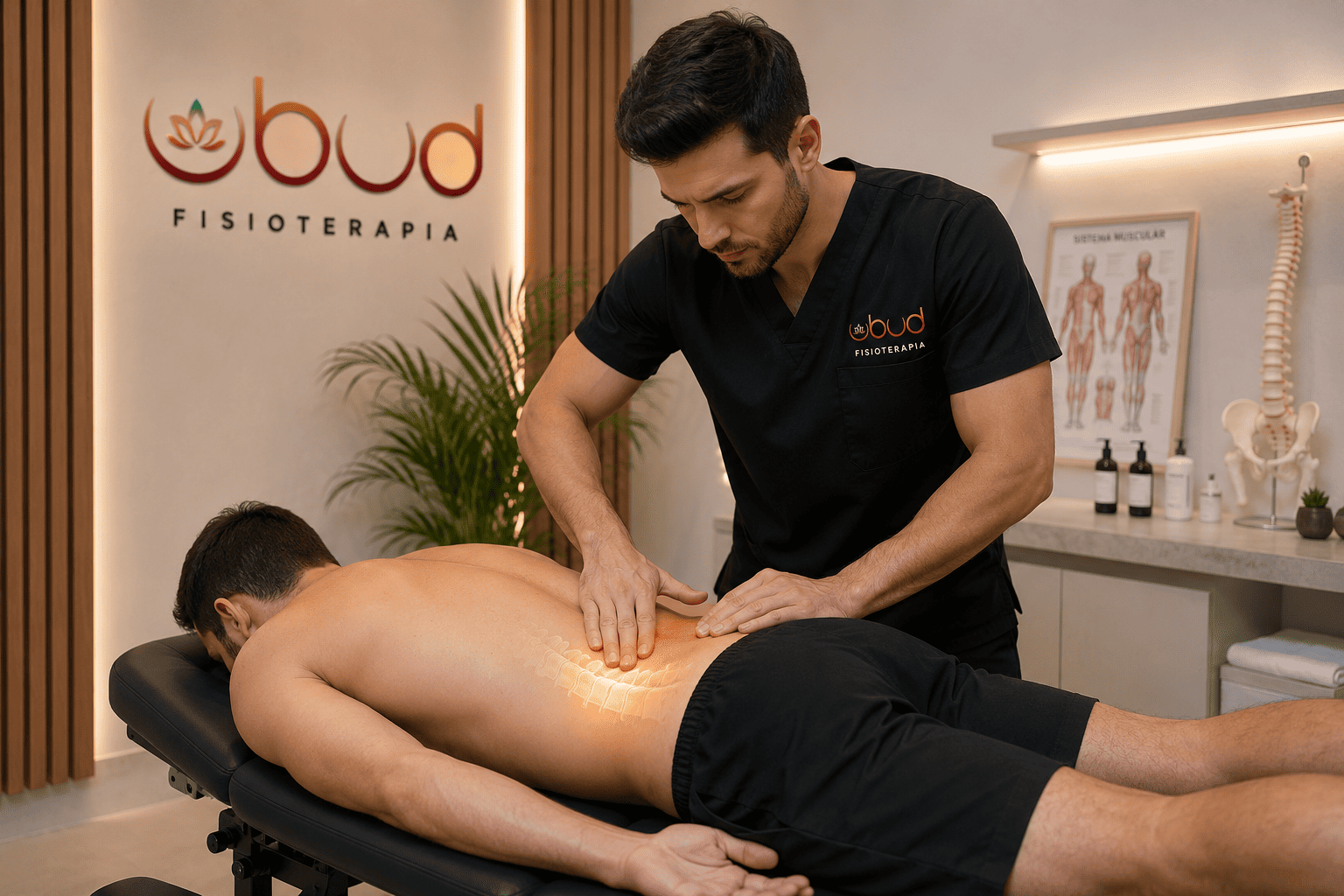
- Manual therapy to relieve pain and improve mobility.
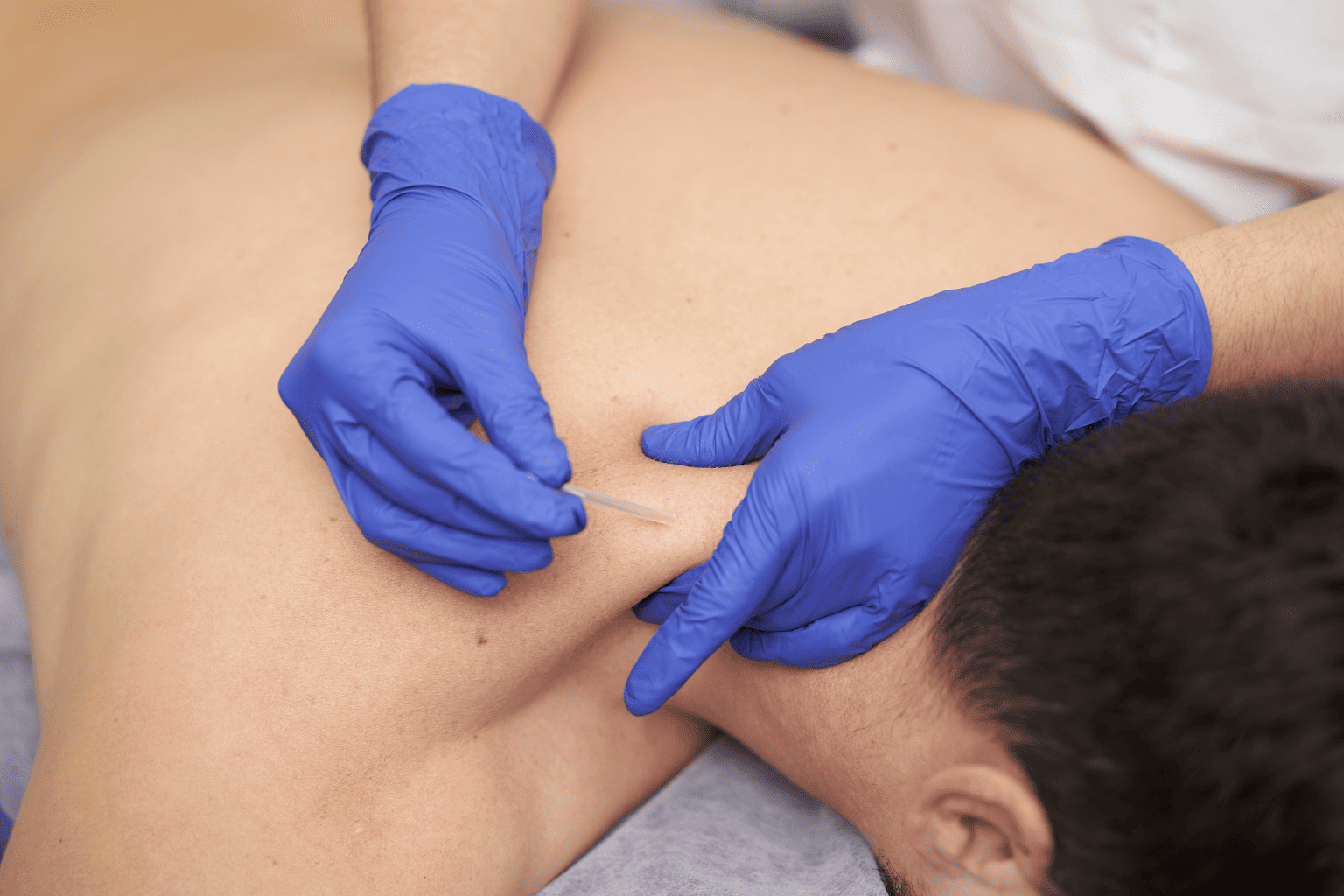
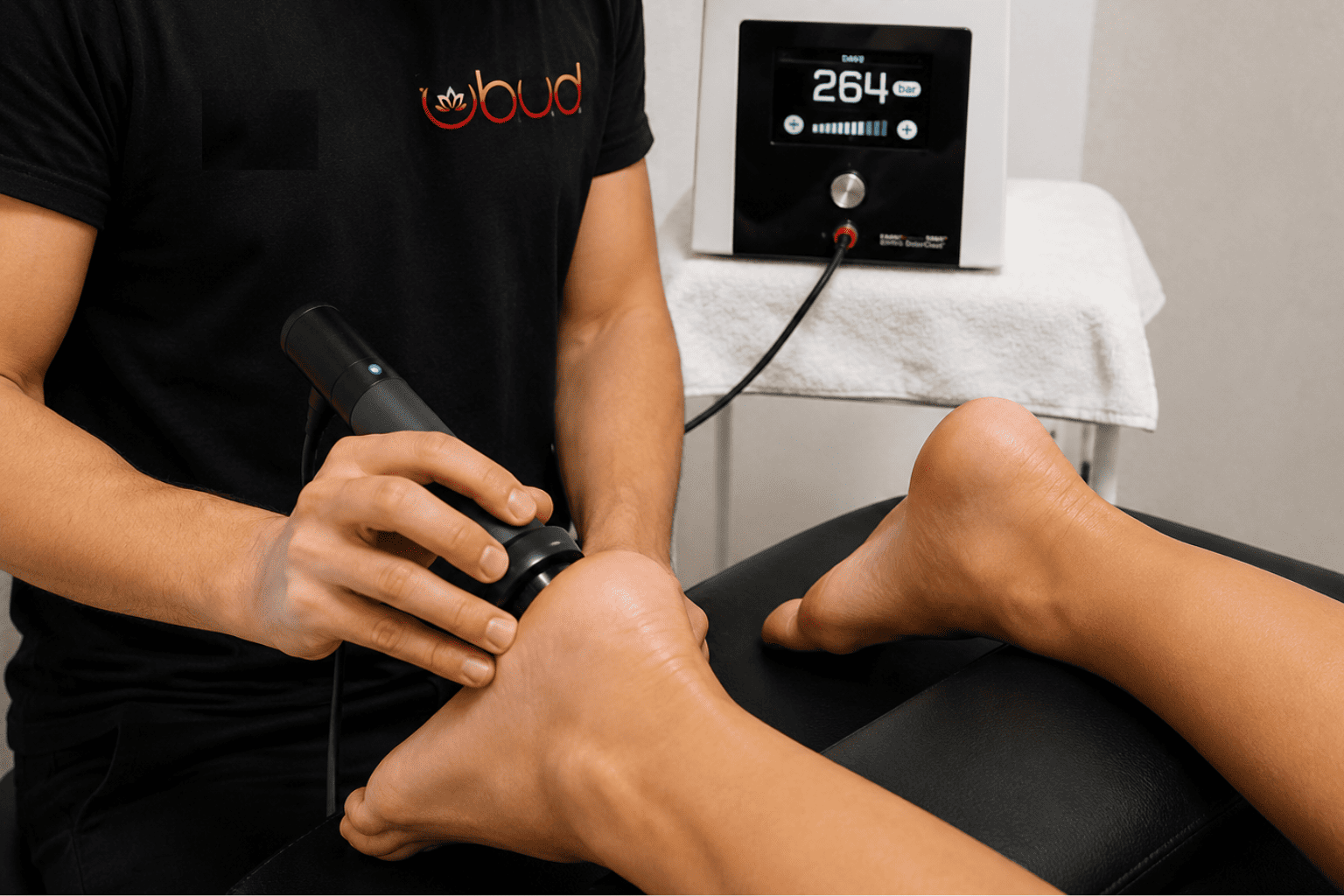
- Complementary techniques, such as shockwave therapy or invasive physiotherapy in persistent tendinopathies, when indicated.
- Return-to-running plan: progression in phases with clear criteria for increasing distance and pace.
You can find out more about our approach on the page about knee pain in Torremolinos and the one on sports injuries.
What can I do in the meantime?
- Temporarily reduce volume or intensity, rather than pushing through the pain.
- Avoid steep descents and intervals for a while if symptoms get worse.
- Stay active with lower-impact alternatives, such as cycling or swimming, if they do not cause pain.
- Check the condition of your running shoes and avoid sudden changes of model.
- Include strength work regularly, not just when an injury appears.
A useful rule of thumb is that mild discomfort during the run, which does not increase and disappears within the next 24 hours, is usually tolerable. If the pain gets worse, it is advisable to adjust the load and seek advice. These guidelines are general and do not replace an individual assessment.
Frequently asked questions about knee pain when running
Do I have to stop running if my knee hurts?
Not always. In many cases you can keep running with less volume or intensity while you work on recovery. The decision depends on the cause and on how the knee responds.
Does running wear out the knees?
In healthy people who train progressively, running is not associated with greater wear of the knee. Problems usually appear when the load increases too quickly.
Do knee supports help?
Some people feel relief with knee supports or strapping, but they do not treat the cause of the problem. They can be used as occasional support within a treatment plan.
Will changing running shoes solve the pain?
Sometimes it plays a part, but it is rarely the only cause. It is more important to review how training has changed and to work on strength.
Do I need an MRI scan?
In most cases it is not needed to start treatment. It is considered when there is suspicion of an injury to the meniscus, ligament, cartilage or bone, or if progress is not as expected.
Free first consultation at Centro Ubud, La Carihuela (Torremolinos). Message us on WhatsApp.

Physiotherapist specialising in the foot and ankle and musculoskeletal pain, educator of physiotherapists and founder of The Fisio Program. He works with Centro Ubud’s physiotherapy unit.
This article is for information only and does not replace an individual assessment by a healthcare professional.