

Metatarsal overload
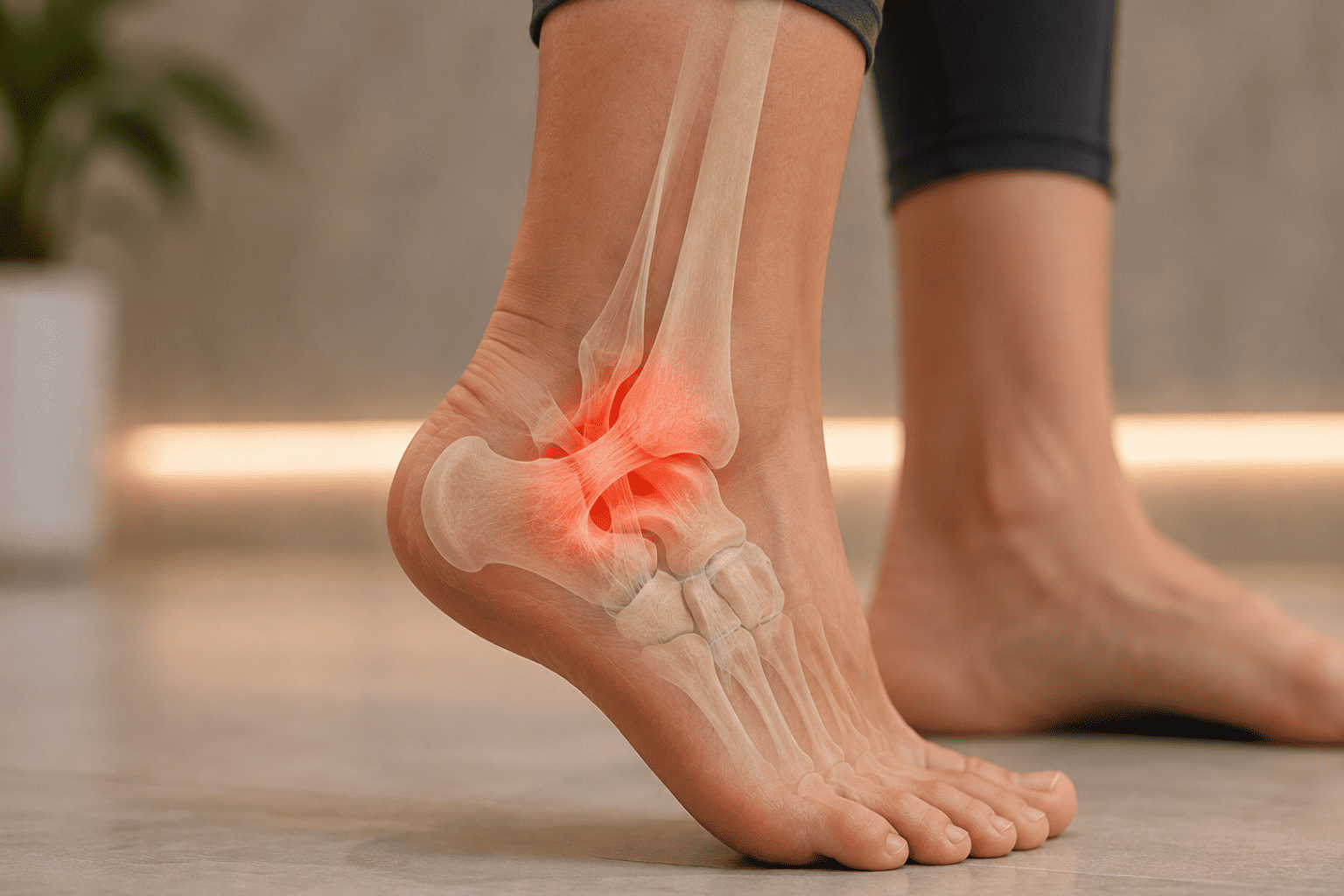
Excess pressure under the metatarsal heads due to foot shape or footwear.
Pain in the sole under your toes, as if you were stepping on a stone, or with burning and tingling. We identify which structure in the forefoot is overloaded and treat it with a foot-specific plan.
Metatarsalgia means pain in the area of the metatarsals, the front part of the sole just behind the toes. It is a descriptive term: what matters is finding out which structure hurts, because treatment varies a great deal from one cause to another.
The most common causes are mechanical overload of the metatarsal heads (due to foot shape, a longer metatarsal, a high-arched foot or a bunion that shifts load onto the central rays), injury to the plantar plate, which usually affects the second toe and can end up making it drift, and Morton’s neuroma, an irritation of a digital nerve between the metatarsals that causes burning, cramping or numbness in the toes and eases when you take your shoe off.
Narrow-toed or high-heeled shoes, a sudden increase in activity (lots of walking on holiday, taking up running) and weight gain are recurring factors. In runners and people who have greatly increased their load, a stress fracture also needs to be considered.
At Centro Ubud we combine examination of the foot and your gait with ultrasound, which lets us see the plantar plate, the intermetatarsal bursae and any neuroma. With a clear physiotherapy diagnosis we design a plan that combines offloading, exercise and, if indicated, invasive physiotherapy.
See a doctor if the pain is very localised over a bone after increasing your activity (possible stress fracture), if several joints are swollen with morning stiffness, if you have diabetes with loss of sensation or wounds, or if the area is red and hot.
Excess pressure under the metatarsal heads due to foot shape or footwear.
Irritation of a nerve between the toes, with burning, tingling or cramping.
An injury that causes pain under the toe and can make it drift or overlap.
See claw toes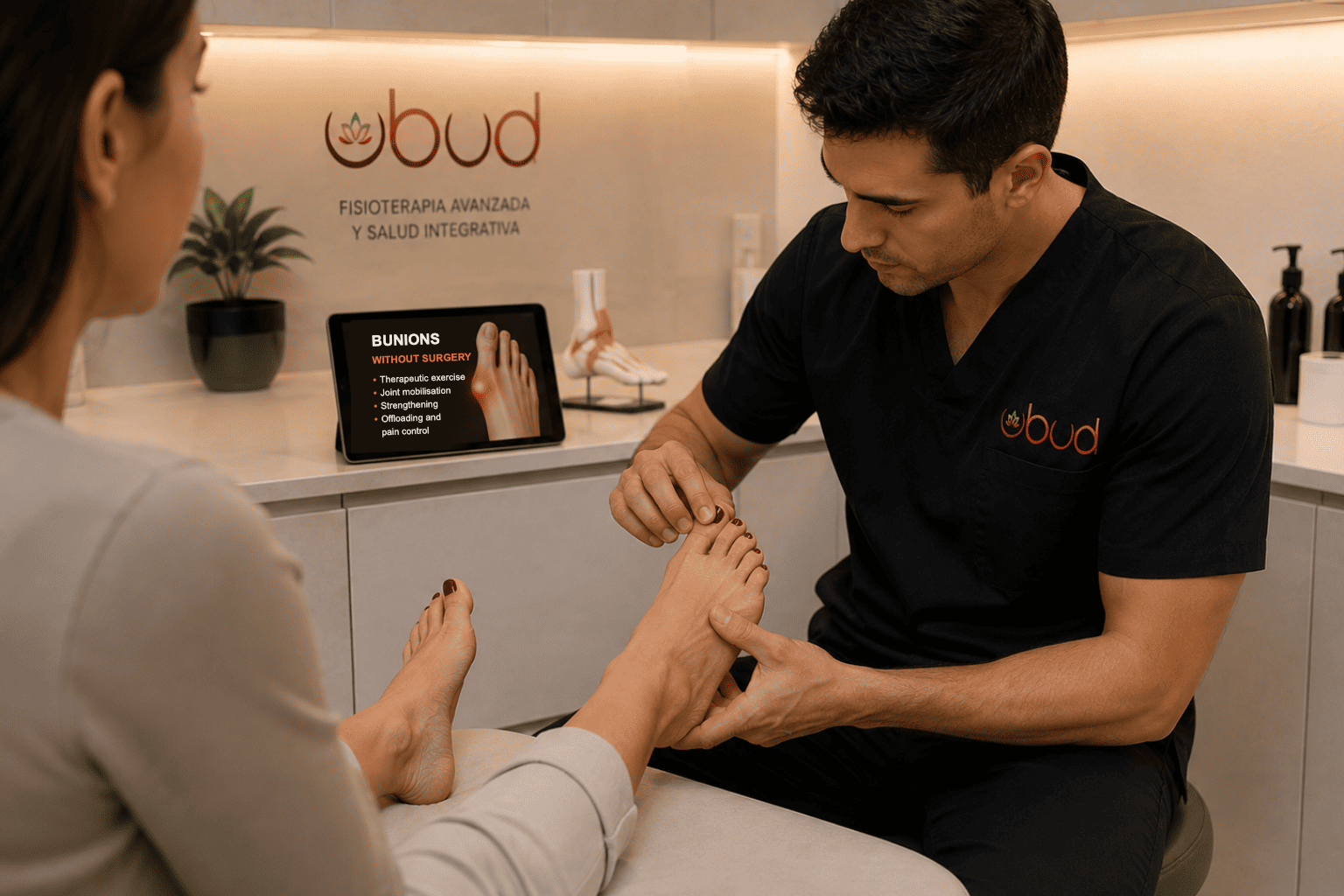
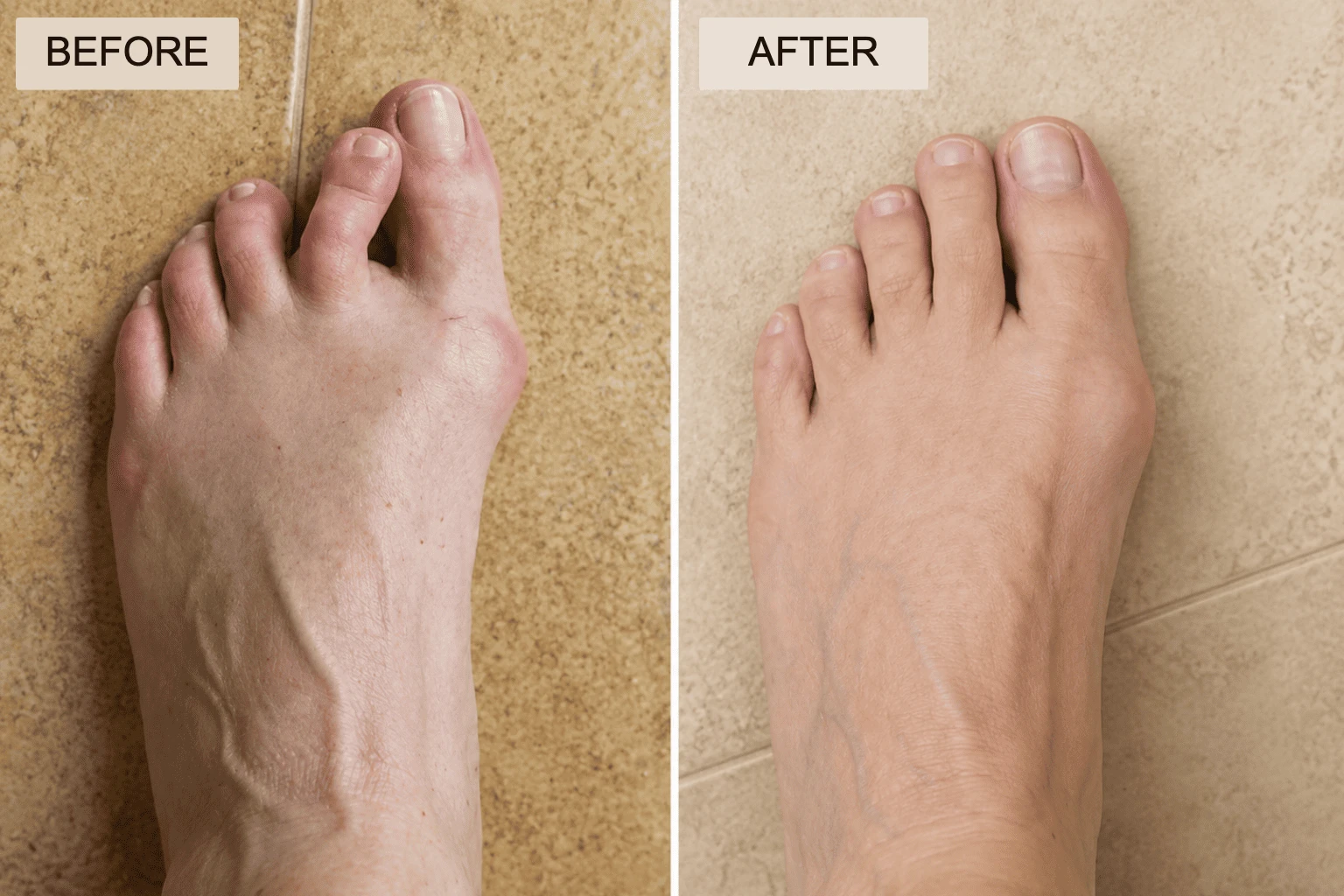
Hallux valgus can shift load onto the central metatarsals.
Examination of your foot, footwear and gait, with ultrasound to pinpoint the painful structure.
We explain the likely cause and plan offloading, exercise and techniques with an approximate number of sessions.
We gradually reintroduce walking, running or sport so the pain doesn’t come back.
Reduce pressure on the forefoot and improve the foot’s ability to tolerate it.
A wide toe box, a low heel and a sole that spreads the load; if you need insoles, we will advise you.
Exercises for the intrinsic foot muscles, the toes and the calf.
Percutaneous neuromodulation for Morton’s neuroma or dry needling for muscle overload, where indicated.
See invasive physiotherapyMobilisation of the forefoot and ankle joints to spread the load more evenly.
Tell us what you would like to improve and we will explain, with no obligation, which treatment suits you.
Calle Arenas, 12 · 29620 Torremolinos, Málaga · Get directions · Patient reviews
All treatments are subject to a prior professional assessment. Results are individual and may vary from person to person. Centro Ubud is an authorised healthcare centre in Torremolinos (Málaga). NICA 64610. Clínica UBUD S.L. · CIF B56756158.