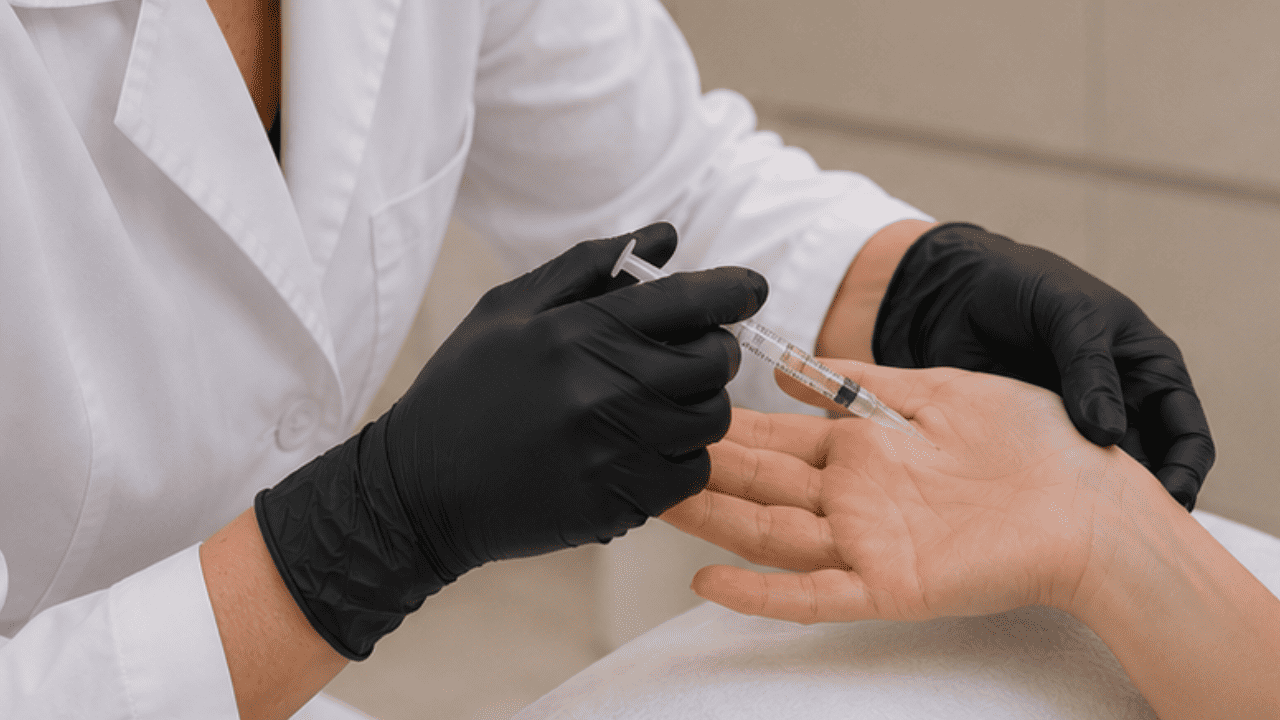
Facial harmonisation is a medical treatment that balances the proportions of the face by working on specific areas (cheekbones, chin, jawline or lips), whereas a full face is a global approach to the whole face that combines several techniques in a single plan to restructure and rejuvenate it naturally. At Centro Ubud, in La Carihuela (Torremolinos), every plan is designed by a doctor after a free assessment, always aiming for natural results that suit your features.
What is facial harmonisation?
Facial harmonisation is a set of minimally invasive aesthetic medicine techniques whose aim is to balance the proportions of the face. It is not about changing your face, but about correcting small imbalances that make some features stand out more than others: a chin with little projection, flat cheekbones, a poorly defined jawline or lips that are out of proportion with the rest.
Treatment usually focuses on one or several specific areas using hyaluronic acid of different densities, applied with a needle or cannula, and sometimes neuromodulators to relax muscles that pull the features downwards. You can see how we do it on our facial harmonisation in Torremolinos page.
What is a full face treatment and what does it include?
A full face, or global facial treatment, starts from a simple idea: ageing does not affect a single point but the whole face at once. Over the years we lose volume in the cheekbones and temples, bone is reabsorbed, ligaments relax and the skin loses firmness. The result is a more tired-looking face, with deeper folds and a less defined facial contour.
Instead of filling isolated wrinkles, a full face restores structural support in several areas (upper, middle and lower thirds) within one plan. It usually combines hyaluronic acid at anchor points, neuromodulators for expression and, if needed, techniques that improve skin quality. It can be done in a single session or spread over several.
How do facial harmonisation and full face differ?
Both share techniques and philosophy, but their goal and scope are different:
- Goal: harmonisation mainly seeks to balance proportions and define features; a full face also aims to give back the structure and support lost with age.
- Scope: harmonisation can focus on one or a few areas; a full face analyses and treats the whole face as a unit.
- Typical profile: harmonisation is common in younger people who want to improve their profile; a full face is usually indicated from around 40 or when there are already signs of laxity and volume loss.
- Planning: a full face usually requires more product spread over more points and sometimes several staged sessions.
In practice the line is not rigid: many harmonisations end up including several areas, and many full face treatments are, at heart, a global harmonisation of the face.
Who is each treatment for?
When is facial harmonisation usually the better fit?
It is a good option if you are happy with your skin but feel that one feature throws your face off balance. Common examples are a profile with a receding chin, a lack of definition at the angle of the jaw or cheekbones that are not very prominent. In these cases, techniques such as cheekbone enhancement or jawline definition can greatly improve harmony with little product.
When does a full face make more sense?
If when you look in the mirror you notice that your face has “dropped”, that you look tired even after a good night’s sleep or that your facial contour has lost sharpness, the problem is probably not one point but the structure. Treating only the wrinkles in these cases tends to give a heavy, unnatural result; restoring support globally usually works better.
How does the doctor plan the proportions of your face?
The most important part of the treatment happens before the first injection. During the free assessment, the doctor studies your face at rest and in movement, from the front, in profile and at three-quarters, and listens to what concerns you. From there they analyse:
- The relationship between the three facial thirds: forehead, middle area and lower area.
- The projection of the chin in relation to the lips and nose in profile.
- The shape of the facial contour and the definition of the jawline.
- The volume and position of the cheekbones, which support much of the middle third.
- Skin quality, muscle expression and symmetry.
- Differences related to sex and age: a male face and a female face are not harmonised in the same way.
With all this, a plan is proposed by priorities: which areas give the most with the least product and in what order they are best treated. Often, correcting the support of the cheekbones or chin indirectly improves areas such as the nasolabial fold without needing to fill them directly.
Free first consultation at Centro Ubud, La Carihuela (Torremolinos). Message us on WhatsApp.
What is recovery like after facial harmonisation or a full face?
These are outpatient treatments carried out with topical anaesthetic and, in most cases, you can return to your routine the same day. The most common effects are:
- Mild swelling for 24 to 72 hours, somewhat more in the lips.
- Small bruises at the injection points, which disappear within a few days.
- A feeling of tightness or of a “firm” area to the touch during the first few days.
As general advice, avoid intense exercise, strong heat (sauna, direct sun) and facial massages for the first 48 hours, and do not press on the treated areas. The result is assessed after about two weeks, once the swelling has gone down; at that point it is reviewed and, if needed, a small adjustment is made. If you notice severe pain, changes in skin colour or swelling that increases instead of decreasing, contact the clinic immediately.
How long do the results of facial harmonisation and full face last?
There is no exact figure that applies to everyone. In general terms, hyaluronic acid is gradually reabsorbed and its effects usually last from several months to just over a year, depending on the area treated, the type of product, your metabolism and habits such as smoking or sun exposure. Neuromodulators usually last a few months. That is why results vary from person to person and do not last forever: maintenance sessions are normally planned, which the doctor will adjust at each review.
How is a natural result achieved?
A natural result is one where people see you looking better and more rested, but cannot tell what you have had done. To achieve this, at Centro Ubud we follow clear principles: respect your features, work on structure before wrinkles, use the minimum amount needed and prefer several cautious sessions to a single excessive one. It also means saying no when a treatment is not right for you.
Who should not have these treatments?
There are situations in which they should be postponed or ruled out: pregnancy and breastfeeding, active infections or skin lesions in the area, uncontrolled autoimmune diseases, known allergy to any of the components, anticoagulant treatment without prior assessment or a history of reactions to fillers. That is why a full medical history with a doctor is essential, and you should never put yourself in the hands of non-medical staff.
Where can you have facial harmonisation or a full face in Torremolinos?
Centro Ubud is an authorised medical clinic in La Carihuela, Torremolinos, visited by patients from Málaga, Benalmádena and the whole Costa del Sol. All treatments are performed by a doctor, always after a free assessment in which it is decided whether you need a harmonisation, a full face or neither. If you would like to know what suits you, message us on WhatsApp and we will book you in.
Frequently asked questions
Does facial harmonisation hurt?
Discomfort is usually mild. Topical anaesthetic is applied and many products contain built-in anaesthetic, so most patients describe it as a feeling of pressure or a brief pinprick.
Can hyaluronic acid be reversed?
Yes. Hyaluronic acid can be dissolved with a specific enzyme if necessary, which provides a safety margin.
How many sessions does a full face need?
It depends on your starting point. Some people complete it in one session and others in two or three, a few weeks apart, so that the change is gradual and natural.
From what age can it be done?
Facial harmonisation can be indicated in young adults with specific imbalances; a full face usually makes more sense when the first signs of loss of support appear, often from around 35 or 40. What matters is not age but what the assessment shows.
Can I combine it with treatments for skin quality?
Yes, and it is often advisable, because improving the skin complements volume restoration. The doctor will tell you the most suitable order and timing between treatments.
Free first consultation at Centro Ubud, La Carihuela (Torremolinos). Message us on WhatsApp.

Written and reviewed by the medical team at Centro Ubud, an aesthetic medicine, advanced aesthetics and physiotherapy clinic in La Carihuela, Torremolinos.
This article is for information only and does not replace an individual assessment by a healthcare professional.