Legs swell more in the heat because the veins widen to release body heat and blood tends to pool around the ankles; if there is also venous insufficiency, long hours standing or sitting and little activity, fluid leaks into the tissues and heaviness and swelling appear, which usually improve with movement, raising the legs, local cooling and, if your doctor recommends them, compression stockings. In the Integrative Medicine consultation at Centro Ubud, in La Carihuela (Torremolinos), we approach it by first ruling out medical causes and then building realistic habits with you around movement, diet and rest, in coordination with our physiotherapists.
Why do my legs swell in the heat on the Costa del Sol?
In summer, and for much of the autumn in Torremolinos, Málaga or Benalmádena, the body needs to lose heat. To do so, the blood vessels in the skin dilate. In the legs, which bear the full pressure of gravity, this dilation makes it harder for the veins to return blood to the heart. Some fluid passes from the capillaries into the tissues and shows up as swelling in the ankles and feet, especially at the end of the day.
Add to this some very typical factors of coastal life: long periods standing at work, car or plane journeys, strolls along the seafront in unsupportive footwear, sweat that we do not always replace with water, and saltier meals.
What is venous insufficiency and how do I know if I have it?
Chronic venous insufficiency occurs when the valves in the leg veins do not close properly and blood tends to flow back down. It is very common, especially in women, from the age of 40, with a family history, after pregnancies or with excess weight. Its most common signs are:
- Heaviness, tiredness or a feeling of tightness in the legs that gets worse in the afternoon and with heat.
- Ankle swelling that improves overnight or when raising the legs.
- Visible spider veins or varicose veins.
- Night cramps, itching or a burning sensation.
- In more advanced stages, changes in skin colour (darker) near the ankle or wounds that are slow to heal.
The diagnosis is made by a doctor through examination and, when needed, a Doppler ultrasound.
Fluid retention or something more? Other causes of swollen legs
Behind swollen legs there can be different situations:
- Swelling from heat or from staying still for a long time: it affects both legs, is mild and improves with rest and cool conditions.
- Venous insufficiency: the most common cause of chronic ankle swelling.
- Lymphoedema or lipoedema: the first due to a problem with lymphatic drainage; the second, a painful, symmetrical build-up of fat in the legs, more common in women.
- Hormonal changes: in the premenstrual phase, in pregnancy or during the menopause many women notice more swelling.
- Medicines: some blood pressure medicines, anti-inflammatories or hormonal treatments can contribute to it. Never stop them on your own; talk to your doctor.
- Heart, kidney, liver or thyroid problems: less common, but important to rule out if the swelling is new, increasing or comes with other symptoms.
Integrative medicine consultation in person at Centro Ubud (La Carihuela, Torremolinos) or online by video call. Book your first visit on WhatsApp.
When should I see a doctor or go to A&E?
Some signs should not wait. Go to A&E or call 112 if you notice:
- Swelling in only one leg, especially if it comes on suddenly, with calf pain, warmth, redness or a firmer leg: it may be a deep vein thrombosis and it is an emergency.
- Sudden shortness of breath, chest pain, coughing up blood or dizziness, especially if your leg was swollen beforehand: it may be a pulmonary embolism.
- Swelling in both legs together with breathlessness when lying down or walking, or rapid weight gain over a few days.
- A red, hot and painful leg with fever (possible skin infection).
- Significant swelling in pregnancy with headache, blurred vision or high blood pressure.
Book an appointment with your GP if the swelling is persistent, worsens over time, leaves a mark for a long time when you press with your finger, wounds or skin colour changes appear, or you have a history of thrombosis. The risk of thrombosis increases after long journeys, surgery, immobilisation, pregnancy or hormonal treatments.
Which habits help reduce leg swelling in the heat?
Once a doctor has ruled out causes that need specific treatment, these habits make sense and are safe for most people:
Work the calf “pump”
The calf muscles act like a peripheral heart: every time they contract, they push blood upwards. Walking daily, swimming or strolling along the water’s edge (the cool water and its pressure help) is among the most useful things you can do. If you work sitting or standing, every 30–45 minutes do 15–20 heel raises or ankle circles.
Raise your legs and seek the cool
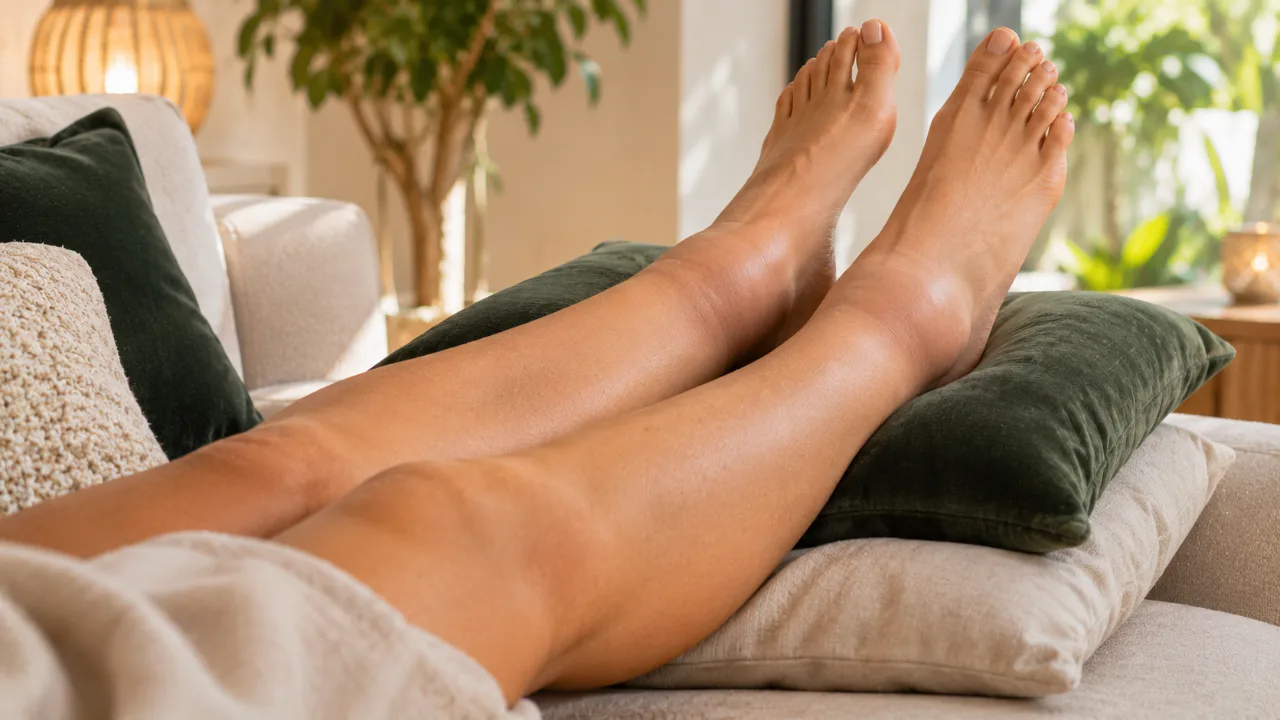
At the end of the day, lie down for 15–20 minutes with your legs above the level of your heart. Cool showers from the feet up to the knees, and avoiding the midday sun, very hot sand, saunas or very hot baths, also bring relief.
Compression stockings, if recommended
Graduated compression has good evidence for reducing the symptoms of venous insufficiency. The type and pressure should be tailored to you: not everyone can wear them (for example, if there are arterial problems), so ask for medical advice first.
Hydration and diet
Although it may seem contradictory, drinking too little makes retention worse. Drink water throughout the day, especially if you sweat. Cutting down on salt and ultra-processed foods and prioritising vegetables, fruit, pulses and nuts provides potassium and fibre, which support fluid balance and regular bowel habits. Good weight management also reduces the load on the venous system.
Clothing, footwear and posture
Avoid very tight clothing around the waist and groin, crossing your legs for long periods, and completely flat or very high-heeled shoes; a low, comfortable heel helps the calf work. On long journeys, get up, walk along the aisle and move your ankles often.
How can integrative medicine in Torremolinos help you?
In the integrative medicine consultation in Torremolinos at Centro Ubud, Dra. Paloma Gómez takes the time to understand your full history: symptoms, medication, hormones, digestion, sleep, physical activity and diet. From there she assesses whether further tests are needed with your doctor or specialist and proposes a personalised plan of habits.
This approach does not replace your medical treatment: it complements it. If your doctor or vascular surgeon has diagnosed venous insufficiency, you will continue with their recommendations, and we will work on the habits that support them. You can read more about our approach to circulation and swollen legs in Torremolinos.
In addition, the doctor works alongside our physiotherapists, who can prescribe tailored therapeutic exercise to improve calf function and, when indicated, apply lymphatic drainage in Torremolinos as support. Each person responds differently, and it depends on the initial assessment. The consultation is in person in La Carihuela and also online by video call if you live in Benalmádena, Málaga or outside the Costa del Sol. If you like, message us on WhatsApp and we will explain how it works.
Frequently asked questions
Is it normal for my ankles to swell in summer?
Mild swelling in both ankles at the end of a hot day is common and usually improves with rest, raised legs and cool conditions. If it is persistent, getting worse or affects only one leg, see your doctor.
Is swelling in only one leg dangerous?
It can be. A swollen, painful, warm or red leg, especially if it appears suddenly, may indicate a deep vein thrombosis and needs urgent attention the same day.
Does drinking more water help me retain less fluid?
Yes, staying well hydrated helps the body regulate fluids, especially in the heat. If you have a heart or kidney condition with fluid restriction, follow your doctor’s advice.
Are compression stockings suitable for everyone?
No. They are useful in venous insufficiency, but they are not indicated in some situations, such as certain arterial or skin problems. Ideally, a healthcare professional should advise you on the right type and pressure.
Does lymphatic drainage help with venous insufficiency?
It can relieve the feeling of heaviness as a complement, but it does not treat the venous cause. It should be indicated after an assessment and is not applied if thrombosis or infection is suspected.
Can I have the integrative medicine consultation online?
Yes. The consultation is in person in Torremolinos and also online by video call. Book your first consultation via WhatsApp.
Integrative medicine consultation in person at Centro Ubud (La Carihuela, Torremolinos) or online by video call. Book your first visit on WhatsApp.

Written and reviewed by the medical team at Centro Ubud, an aesthetic medicine, advanced aesthetics and physiotherapy clinic in La Carihuela, Torremolinos.
This article is for information only and does not replace an individual assessment by a healthcare professional.