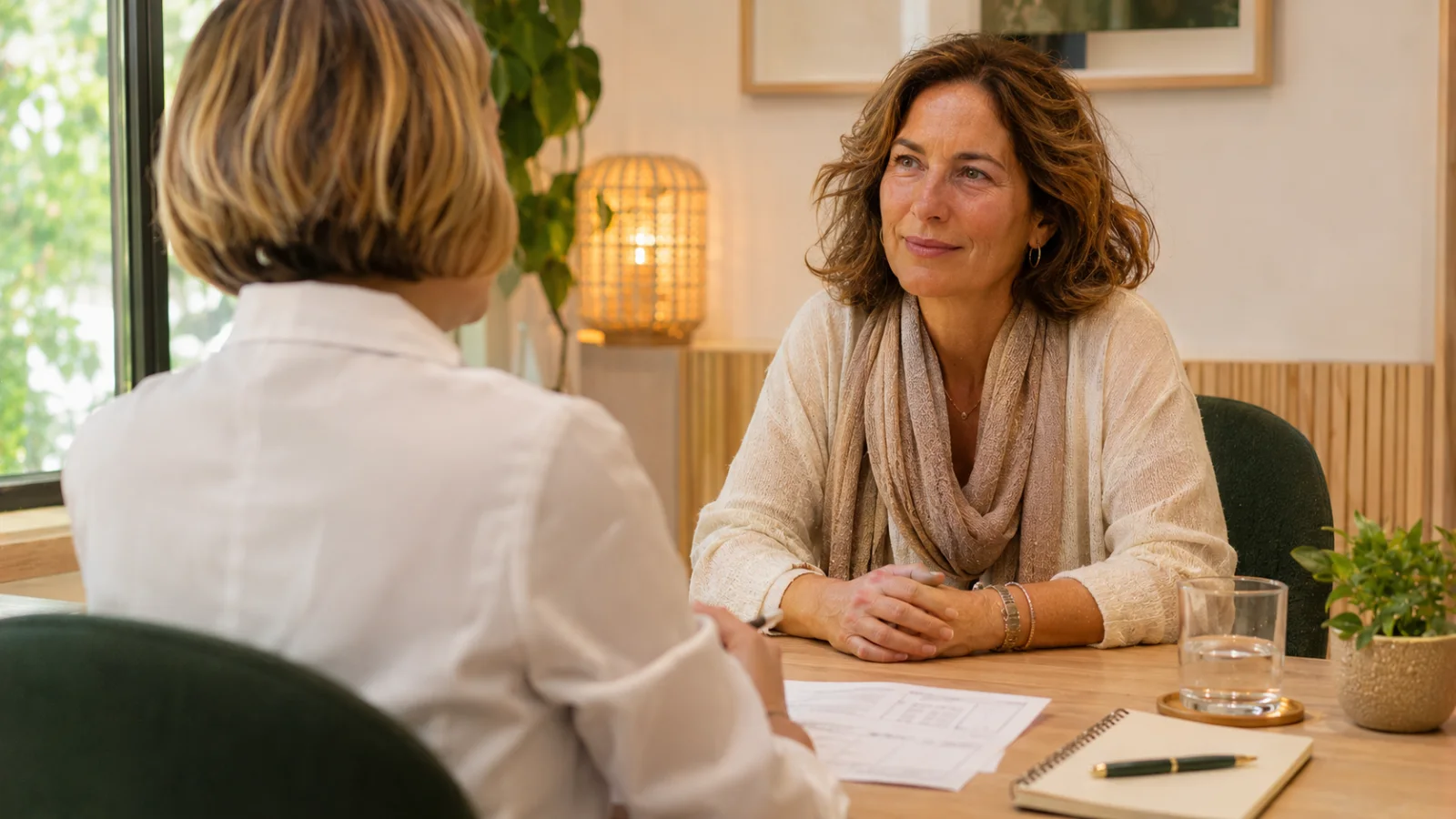
Integrative medicine is a way of practising conventional medicine that looks at the whole person: it combines evidence-based diagnosis and treatment with changes to diet, exercise, sleep and stress management that have also been shown to help. It is not alternative medicine and it does not replace your GP or your specialists. In the integrative medicine consultation at Centro Ubud, in La Carihuela (Torremolinos), Dr Paloma Gómez takes the time to review your full history and design a realistic plan with you, in person or online by video call.
What exactly is integrative medicine?
The term is used a lot and sometimes confusingly. Reference bodies such as the NCCIH, the US National Institutes of Health centre devoted to this field, describe it as care that brings together conventional medicine and certain complementary approaches in a coordinated way, provided there is reasonable data on safety and effectiveness. Put simply: it is medicine practised by a doctor, with time, that does not stop at the isolated symptom.
Many people with long-standing health problems feel they go from specialist to specialist and nobody puts the pieces together. Integrative medicine aims to do exactly that: organise the information, set priorities and support you through the changes. In practice, an integrative consultation usually includes:
- A long interview about your medical history, your current treatments, your diet, your sleep, your physical activity and your stress levels.
- A review of your previous blood tests and reports and, if needed, requests for justified additional tests.
- A written plan with clear priorities: what to change first, how to do it and when to review it.
- Coordination with other professionals: your GP, your specialists and, when it makes sense, the clinic’s physiotherapists.
What integrative medicine is not
It is just as important to know what it is not, because practices without scientific support are sometimes offered under this label. The Spanish Ministry of Health has a plan to protect health against pseudotherapies precisely to help patients tell them apart. A serious integrative consultation:
- Is not alternative medicine. It does not suggest abandoning your treatments or replacing diagnostic tests with unvalidated methods.
- Is not a miracle diet or a “cleanse” of the body. Your liver and kidneys already do that job; what does help is eating better, moving more and sleeping well.
- Is not a supplement shop. If one makes sense in your case, for example for a deficiency confirmed in a blood test, it is assessed individually and coordinated with the rest of your treatment.
- Is not a promise. Everyone responds differently; results vary and depend on the medical assessment.
The key idea is this: this approach does not replace your medical treatment: it complements it. If you take medication, do not change it on your own; any adjustment is decided by the doctor who prescribed it.
What has evidence and what does lifestyle add?
A good integrative consultation relies on what research supports and is honest about what it does not. Some examples:
- Fibromyalgia and chronic pain: adapted, progressive therapeutic exercise is one of the best-supported interventions in clinical guidelines, together with pain education and looking after sleep.
- Irritable bowel syndrome: the low-FODMAP diet, applied in phases with food reintroduction, helps many people identify what disagrees with them without over-restricting.
- Chronic insomnia: cognitive behavioural therapy for insomnia (CBT-I) is the first-line treatment according to guidelines.
- Menopause: hormone therapy is an effective option for many symptoms and is decided with your gynaecologist; diet, strength training and rest go alongside it.
- SIBO or Helicobacter pylori: these are diagnosed with medical tests and treated medically; diet helps you live better with the symptoms, but it does not replace that treatment.
Integrative medicine consultation in person at Centro Ubud (La Carihuela, Torremolinos) or online by video call. Book your first visit on WhatsApp.
When does it make sense to see an integrative medicine doctor in Torremolinos?
Many people do not know this kind of consultation exists. It usually makes sense if you recognise yourself in any of these situations:
- You have chronic pain or persistent inflammation and feel that nobody has looked at the whole picture.
- You have been diagnosed with fibromyalgia or live with fatigue that affects your daily life.
- You have digestive discomfort, abdominal bloating or suspected SIBO and want to organise tests, treatment and diet.
- You are in perimenopause or menopause and want to look after your bone and cardiovascular health and your sleep.
- You have a thyroid problem, frequent migraines, circulation problems or poor sleep, and want to work on the habits that influence them.
- You are looking for a realistic weight-management and metabolic health plan, without extreme diets.
We see people from Torremolinos, Benalmádena, Málaga and the rest of the Costa del Sol, as well as those who live further away and prefer an online consultation.
What is the first consultation like: in person in La Carihuela or online?
The first consultation is long and unhurried. We recommend you bring your reports, recent blood tests and a list of the medicines and supplements you take. The doctor will go over with you how your symptoms started, what you have already tried, what has helped and what has not, and what your diet, sleep and physical activity are like.
You can choose between an in-person consultation at Centro Ubud, in La Carihuela (Torremolinos), or an online consultation by video call. The online option is useful for follow-up or if you live far away; if a physical examination is needed, an in-person visit is recommended. At the end you will have a step-by-step plan and a review date.
What role does physiotherapy play in this approach?
When there is musculoskeletal pain, Dr Paloma Gómez works alongside Centro Ubud’s physiotherapists. Their way of working is global: good diagnosis and clinical reasoning, manual therapy when needed, ultrasound when you need it, invasive physiotherapy if indicated and, above all, therapeutic exercise adapted to you.
What can you start doing today?
In the meantime, there are small, safe changes that tend to help almost everyone:
- Move every day: walking at a comfortable pace along the seafront already counts. If you are in pain, start small and build up gradually.
- Look after your sleep schedule: go to bed and get up at similar times, and get natural light in the morning.
- Fill half your plate with vegetables and add pulses, fish, eggs or nuts; cut down on ultra-processed food and alcohol.
- Keep a symptom diary for a couple of weeks: meals, sleep, pain, digestion and mood. It is very useful in the consultation.
- Do not start supplements on your own without asking, especially if you take medication.
When should you see a doctor or go to A&E?
Integrative medicine is not for emergencies. Go to A&E or call 112 if you have chest pain, shortness of breath, sudden loss of strength or sensation, difficulty speaking, a sudden and very severe headache, vomiting blood or black stools. See your doctor soon if you notice unexplained weight loss, a fever that does not go down, blood in your stools, difficulty swallowing, pain that wakes you at night or tiredness that gets worse for no reason. If you have thoughts of harming yourself, call 024.
Frequently asked questions
Is integrative medicine the same as alternative medicine?
No. Integrative medicine is practised by a doctor, starts from conventional diagnosis and only incorporates approaches with data on safety and effectiveness. Alternative medicine aims to replace conventional medicine, which is something we do not propose.
Will I have to stop my medication?
No. You should never change your medication on your own. The plan adds to what your doctor has already prescribed, and any change is decided by the professional who prescribed it.
Can I have the consultation online if I do not live in Torremolinos?
Yes. The consultation is in person in La Carihuela, Torremolinos, and also online by video call, so you can have it from Málaga, Benalmádena, anywhere on the Costa del Sol or from home.
Do I need a referral or a previous diagnosis?
You do not need a referral. If you already have a diagnosis, reports or blood tests, bring them: they help you get more out of the consultation and avoid repeated tests.
How do I book an appointment with Dr Paloma Gómez?
Write to us on WhatsApp and we will tell you the available times, in person or online. Book your first consultation via WhatsApp and briefly tell us what concerns you.
Integrative medicine consultation in person at Centro Ubud (La Carihuela, Torremolinos) or online by video call. Book your first visit on WhatsApp.

Written and reviewed by the medical team at Centro Ubud, an aesthetic medicine, advanced aesthetics and physiotherapy clinic in La Carihuela, Torremolinos.
This article is for information only and does not replace an individual assessment by a healthcare professional.