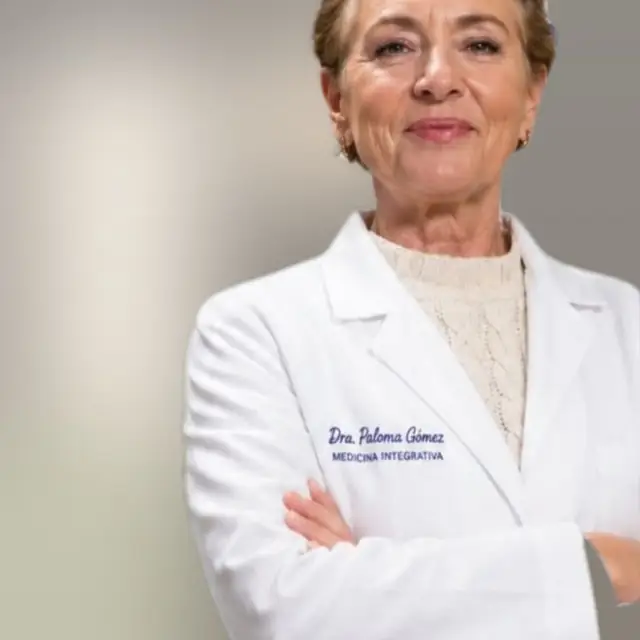
Hashimoto’s thyroiditis is an autoimmune condition in which the immune system gradually attacks the thyroid and can eventually cause hypothyroidism; its most typical symptoms are tiredness, feeling cold, weight gain, constipation, dry skin and low mood. Hypothyroidism is treated with levothyroxine, prescribed and adjusted by your endocrinologist, and diet does not replace it, but it can help you feel better and help the medication work properly. In the Integrative Medicine consultation at Centro Ubud, in La Carihuela (Torremolinos), we review your habits, diet, sleep and physical activity with you to complement your endocrinologist’s follow-up, never to replace it.
What exactly is Hashimoto’s thyroiditis?
It is the most common cause of hypothyroidism in Spain and is much more frequent in women. The body produces antibodies (the best known are anti-TPO and anti-thyroglobulin) that cause chronic inflammation of the gland. Over the years, the thyroid may produce less hormone and hypothyroidism appears, first mild (subclinical) and later more evident.
Having positive antibodies does not always mean you need medication: many people keep normal hormone levels for years with blood test check-ups. Your doctor decides whether to treat, and at what dose.
What symptoms does Hashimoto’s cause?
Symptoms appear when the thyroid starts to fail and can be very non-specific, which is why it often takes time to be suspected:
- Persistent tiredness, sleepiness and a feeling of running at half speed.
- Intolerance to cold, cold hands and feet.
- Moderate weight gain or difficulty with weight control.
- Constipation, slow digestion.
- Dry skin, hair loss, brittle nails.
- Low mood, difficulty concentrating, “brain fog”.
- Muscle or joint pain, stiffness.
- Menstrual changes and, in some cases, difficulty getting pregnant.
- Enlarged thyroid (goitre) or a feeling of pressure in the neck.
Many of these symptoms overlap with other problems such as anaemia, vitamin D deficiency, perimenopause, depression or chronic fatigue. That is why it is important not to blame everything on the thyroid and to look at the whole picture.
How is it diagnosed and treated in Torremolinos and Málaga?
Diagnosis is made with a blood test (TSH, free T4 and thyroid antibodies) and often with a thyroid ultrasound. Follow-up is carried out by your GP or endocrinologist, both in the public health system on the Costa del Sol and privately.
If there is hypothyroidism, the standard treatment is levothyroxine, a hormone identical to the one the thyroid makes. You should not stop it or change the dose on your own, even if you feel better or have changed your diet: any adjustment is decided by your endocrinologist based on blood tests. Our Integrative Medicine consultation does not replace your medical treatment: it complements it.
What role does diet play in Hashimoto’s?
It is worth being honest here: there is no “Hashimoto’s diet” that has been shown to halt the autoimmune disease. What we do know is that a suitable diet helps maintain good general health, prevent deficiencies that worsen tiredness and ensure levothyroxine is absorbed properly.
Should you give up gluten if you have Hashimoto’s?
Coeliac disease is more common in people with autoimmune thyroid disease, so it makes sense to rule it out with a blood test (anti-transglutaminase antibodies) before cutting out gluten, because if you stop it first the result may come back falsely negative. If you have coeliac disease, a strict gluten-free diet is essential.
If you do not have coeliac disease, the evidence is limited: the available studies are small and of variable quality, with inconsistent results on antibodies and no clear proven benefit on thyroid function. Cutting out gluten “just in case” may be a personal choice, but it is not a general recommendation, and doing it without planning can make your diet poorer.
Does taking selenium help?
Selenium is involved in thyroid function. Some trials have found that supplements reduce anti-TPO antibodies, but it is not clear that this improves symptoms. In addition, too much selenium carries risks. For this reason, routine supplementation is not recommended: the sensible approach is to discuss it with your doctor. A varied diet with fish, eggs and pulses usually provides what you need, and one or two Brazil nuts occasionally are enough; it is best not to overdo them.
And iodine?
In Spain, using iodised salt (in moderation) usually covers your needs. With Hashimoto’s it is not advisable to take iodine supplements, seaweed or “thyroid” preparations on your own initiative, because excess iodine can worsen thyroid function. The exception is pregnancy and breastfeeding, when your doctor or midwife will tell you what to do.
Other deficiencies worth checking
Tiredness in Hashimoto’s is sometimes not caused by the thyroid but by common associated deficiencies: iron (especially with heavy periods), vitamin B12 and vitamin D. They are detected with a blood test and corrected following your doctor’s advice.
Integrative medicine consultation in person at Centro Ubud (La Carihuela, Torremolinos) or online by video call. Book your first visit on WhatsApp.
How should you take levothyroxine so that it works well?
Small everyday details have a big influence on how the medication is absorbed and on keeping your blood tests stable:
- Take it on an empty stomach, with water only, and wait the time your doctor has told you (usually between 30 and 60 minutes) before breakfast.
- Coffee, soya, large amounts of fibre or grapefruit taken at the same time can reduce its absorption: keep them apart from the tablet.
- Calcium, iron and magnesium supplements and antacids should be taken several hours apart from levothyroxine.
- Tell your doctor before a blood test if you take biotin, as it can alter the results.
Practical diet and lifestyle tips
- Mediterranean pattern: vegetables and fruit every day, pulses several times a week, fish, extra virgin olive oil and nuts. It is the pattern with the best evidence for general health.
- Enough protein at every meal: it helps maintain muscle mass and satiety.
- Fibre and water for constipation, remembering to keep fibre apart from the tablet.
- Regular exercise, combining strength and aerobic activity, adapted to your energy levels. Here we can coordinate with the centre’s physiotherapists if you have muscle or joint pain.
- Sleep and stress: regular hours, natural morning light (in Torremolinos and Benalmádena the seafront promenade helps) and stress management techniques.
- Be wary of “miracle” thyroid supplements: some contain iodine or even undeclared thyroid hormone.
What do we do in the Integrative Medicine consultation at Centro Ubud?
In the first consultation with Dr Paloma Gómez we review your medical history, your blood tests and current treatment, your symptoms, diet, sleep, stress and physical activity. From there we suggest specific, realistic changes and, if we think it necessary, what to discuss with your endocrinologist. The response to these changes varies from person to person and depends on the individual assessment.
The consultation is in person in La Carihuela, Torremolinos, and also online by video call if you live elsewhere in Málaga or on the Costa del Sol. You can read more about the thyroid and Hashimoto’s consultation in Torremolinos or about our integrative medicine in Torremolinos. If you would like to book your first consultation, message us on WhatsApp.
When should you see a doctor or go to A&E?
Make an appointment with your doctor if you notice a lump or rapid growth in your neck, changes in your voice, difficulty swallowing, tiredness that is clearly getting worse, or if you are pregnant or trying to conceive and have Hashimoto’s (the dose usually needs an early review).
Go to A&E if you experience difficulty breathing, strong palpitations, chest pain, confusion, extreme drowsiness or significant swelling of the face and legs.
Frequently asked questions
Can Hashimoto’s be managed with diet alone?
No. If there is hypothyroidism, the treatment is levothyroxine prescribed by your doctor. Diet and habits help you feel better and help the medication work, but they do not replace it.
Do I need to follow a gluten-free diet?
It is only essential if you have coeliac disease, which should be ruled out with a blood test before changing your diet. Without coeliac disease, the evidence of benefit is limited and it is not generally recommended.
Is it good to take selenium for the antibodies?
It may reduce antibodies in some studies, but without a clear clinical benefit and with risks if taken in excess. Talk to your doctor before taking it.
Can I drink coffee if I take levothyroxine?
Yes, but not at the same time as the tablet. Wait the time your doctor recommends after taking it on an empty stomach.
Why am I still tired if my TSH is fine?
There may be other causes: anaemia, B12 or vitamin D deficiency, poor rest, stress, perimenopause or fatigue from another source. It is worth reviewing it as a whole with your doctor.
Does the Integrative Medicine consultation replace the endocrinologist?
No. We work in a complementary way: your endocrinologist continues to manage the diagnosis and medication, and we help you with diet and lifestyle.
Integrative medicine consultation in person at Centro Ubud (La Carihuela, Torremolinos) or online by video call. Book your first visit on WhatsApp.

Written and reviewed by the medical team at Centro Ubud, an aesthetic medicine, advanced aesthetics and physiotherapy clinic in La Carihuela, Torremolinos.
This article is for information only and does not replace an individual assessment by a healthcare professional.