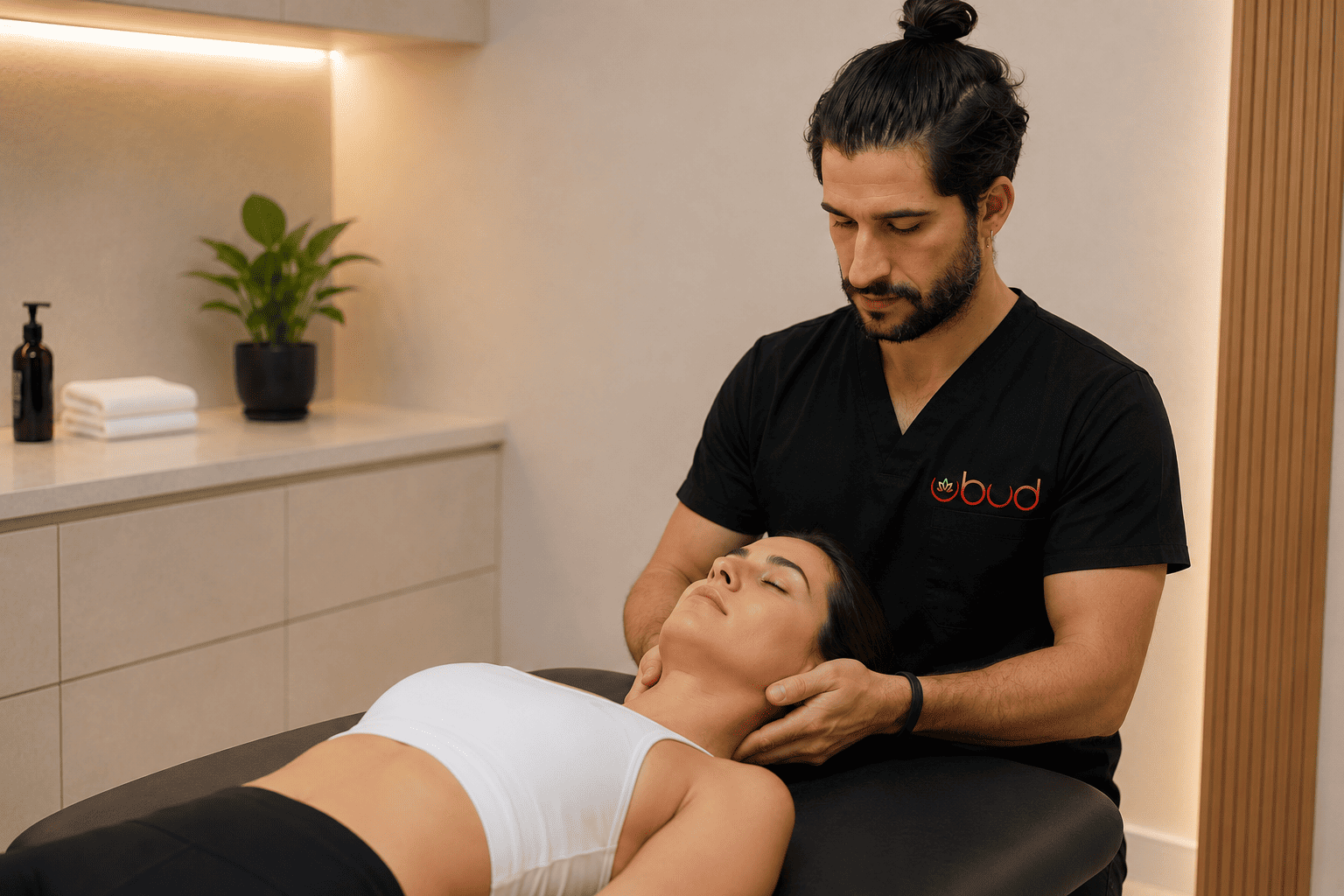
Rehabilitation after a knee replacement usually takes 3 to 6 months to get back to a comfortable everyday life, and up to 12 months to reach maximum strength and stability; the first 6 weeks are the most important for regaining flexion, extension and a safe gait. At Centro Ubud, in La Carihuela (Torremolinos), we approach every case with a thorough assessment and an individualised physiotherapy plan that adapts to your progress, your surgery and your goals.
Total knee replacement is one of the most common orthopaedic operations and offers excellent functional outcomes, but the surgery is only half the journey. The other half depends on well-planned, consistent and progressive rehabilitation. Here we explain its phases, which exercises are usually worked on, how long recovery takes and which signs should prompt you to contact your doctor.
How long does recovery from a knee replacement take?
There is no single timeframe: it varies with your age, your fitness before surgery, the type of prosthesis, how the operation went and how consistently you do your exercises. As a general guide, based on evidence and clinical practice:
- Weeks 0–2: pain and swelling control, first steps with a walking frame or crutches, and recovering extension.
- Weeks 2–6: progressive gain in flexion (usual goal: beyond 90°), quadriceps activation and more independent walking.
- Weeks 6–12: strengthening, balance, stairs and gradually weaning off walking aids.
- Months 3–12: consolidating strength and endurance, and returning to activities such as long walks, swimming or the exercise bike.
Many people drive again between weeks 4 and 8 (always with the surgeon’s approval) and return to a desk job at around 6–8 weeks. The feeling of a natural “new knee” can take up to a year.
What are the phases of rehabilitation after a knee replacement?
Phase 1: hospital and the first two weeks
Rehabilitation starts early, often on the day of surgery or the day after. The aim is to move safely, reduce swelling and avoid complications such as stiffness or thrombosis. Work focuses on quadriceps contraction, ankle movement (pumping), full knee extension and transfers: getting out of bed, sitting in a chair and using the bathroom.
Phase 2: regaining mobility (weeks 2 to 6)
This is the critical phase for flexion and extension. The scar and tissues are still remodelling and, if range of motion is not worked on, the knee can become stiff. Here physiotherapy combines active exercises, manual mobilisation when needed and swelling control.
Phase 3: strength and control (weeks 6 to 12)
Once mobility is on track, the focus shifts to strengthening the quadriceps, hamstrings, glutes and calves, balance and gait quality. Stairs, partial squats and weight-bearing exercises are introduced.
Phase 4: return to activity (from the third month)
Work is directed towards your specific goals: strolling along the La Carihuela promenade, travelling, looking after your grandchildren or getting back in the pool. Progressive therapeutic exercise is the key tool at this stage.
Which exercises are done for knee flexion and extension?
They should always be prescribed and tailored after an assessment, but these are some of the most common in the first weeks:
- Passive extension: lying or sitting with the heel resting on a cushion and the knee “in the air”, letting gravity help straighten it.
- Isometric quadriceps contraction: pressing the back of the knee into the couch for 5–10 seconds.
- Heel slides: lying on your back, sliding the heel towards your bottom to bend the knee in a controlled way.
- Seated flexion: on a chair, sliding the foot back under the seat and holding for a few seconds.
- Straight leg raise: once the quadriceps activates well, lifting the straight leg a few centimetres.
Some discomfort during exercise is expected, but intense pain that does not ease within one or two hours means the load needs adjusting. Full extension is as important as flexion: a knee that does not fully straighten alters your gait and overloads the hip and back.
Free first consultation at Centro Ubud, La Carihuela (Torremolinos). Message us on WhatsApp.
How are strength and walking regained after the prosthesis?
Quadriceps weakness is one of the most persistent problems after surgery and can last for months if it is not specifically trained. That is why strengthening must be progressive and measurable: sit-to-stand from a chair, step-ups, glute bridges, resistance band exercises and, later on, the exercise bike.
As for walking, the goal is not just to walk, but to walk well: landing on the heel, straightening the knee as you step and distributing weight symmetrically. You progress from a walking frame to two crutches, then to one (on the side opposite the operated knee) and finally to walking unaided, depending on your balance and strength.
Is home physiotherapy useful in the first weeks?
Yes, very much so. In the first weeks travelling to a clinic can be uncomfortable or unsafe, especially if you live in a flat without a lift or depend on someone else to get around. Home physiotherapy in Torremolinos lets you start earlier, work in your own environment (your bed, your bathroom, your stairs) and fit the plan to your daily life. In Torremolinos, Benalmádena and the surrounding area it is a particularly practical option during the first month; afterwards, most patients continue at the clinic to progress in strength and balance.
How do we approach knee rehabilitation at Centro Ubud?
Our physiotherapists work globally. We start with a good assessment and clinical reasoning: range of motion, strength, swelling, scar, gait and your goals. From there we combine manual therapy when needed to improve mobility, ultrasound when tissues need to be assessed or treatment guided, invasive physiotherapy if indicated and, above all, therapeutic exercise adapted to each phase. You can find out more about our approach to rehabilitation in Torremolinos.
Results vary from person to person and depend on the assessment, the surgery and your consistency. That is why we review the plan regularly and coordinate it with your orthopaedic surgeon’s instructions. If you would like to get started, message us on WhatsApp.
Which warning signs mean you should see a doctor?
Some discomfort, swelling and local warmth are normal for weeks. However, contact your surgeon or go to A&E if you notice:
- A fever above 38 °C, chills or general malaise.
- A wound that is red, hot, oozing or opening.
- Calf pain, sudden swelling of the leg or redness of the calf (possible thrombosis).
- Shortness of breath, chest pain or a sudden cough (possible pulmonary embolism: this is an emergency).
- Pain that gets progressively worse instead of better, or a sudden inability to bear weight.
- Loss of mobility that worsens despite the exercises, or a marked feeling of instability.
If months after the operation you still have persistent discomfort, a specific knee pain assessment can help identify whether the cause lies in strength, mobility, soft tissues or other structures.
Frequently asked questions
How many degrees of flexion should I have after a knee replacement?
For everyday activities around 90–110° of flexion is usually enough (sitting, climbing stairs, getting up from a chair). Ideally you reach 90° by around week six and keep improving afterwards, although every case is different.
Is it normal for the knee to still be swollen at three months?
Yes, mild swelling can last 3 to 6 months, especially at the end of the day or after more activity. If the swelling is sudden, painful or accompanied by intense warmth and fever, consult your doctor.
How many physiotherapy sessions will I need?
It depends on your starting point and your progress. Typically follow-up is more frequent in the first 6–8 weeks and more spaced out afterwards, always combined with daily exercises at home.
When will I be able to walk without crutches?
Many people walk unaided between weeks 4 and 8, although it depends on balance, strength and the surgeon’s instructions. What matters is walking without a limp, not doing it as soon as possible.
Can I play sport with a knee replacement?
Yes, low-impact activities such as walking, swimming, cycling, golf or gentle hiking are recommended. High-impact sports or those with jumps and sharp turns are usually discouraged; discuss it with your orthopaedic surgeon.
What happens if I don’t do the rehabilitation?
The risk of stiffness, quadriceps weakness, limping and persistent pain increases. The prosthesis replaces the joint, but muscle strength and mobility have to be regained through active work.
Free first consultation at Centro Ubud, La Carihuela (Torremolinos). Message us on WhatsApp.
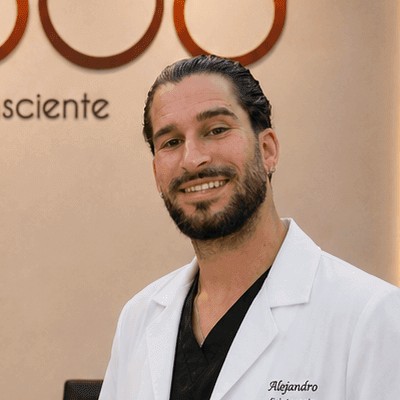
Physiotherapist specialising in the foot and ankle and musculoskeletal pain, educator of physiotherapists and founder of The Fisio Program. He works with Centro Ubud’s physiotherapy unit.
This article is for information only and does not replace an individual assessment by a healthcare professional.