

Hip (trochanteric)
Pain on the outside of the hip, closely linked to the gluteal tendons and compressive positions.
See hip painPain on the outside of the hip when lying on your side, in the shoulder when lifting your arm or in the knee when kneeling. We use ultrasound to see what is going on and treat the cause, not just the inflammation.
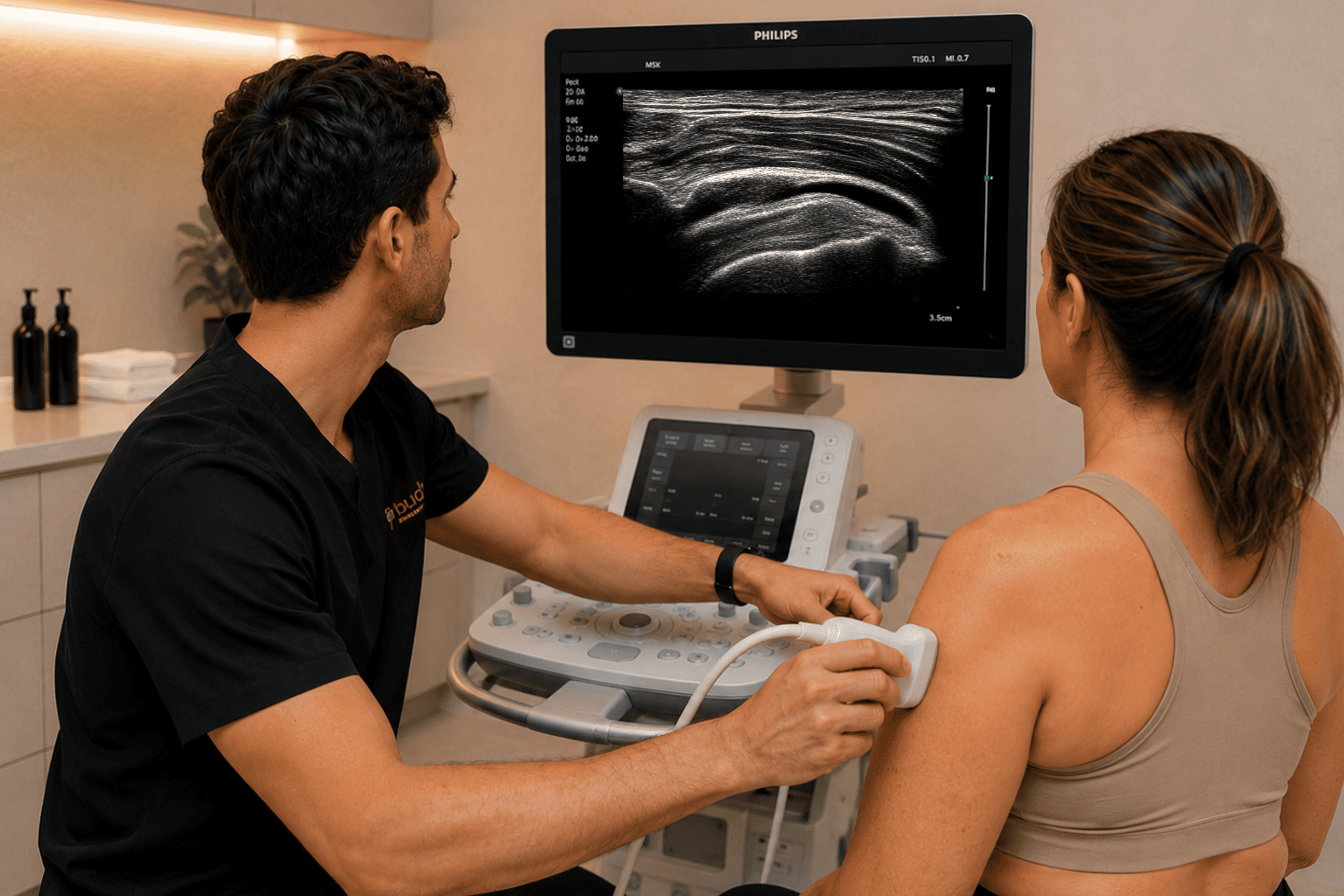
Bursae are small fluid-filled sacs that reduce friction between bones, tendons and skin. When they become irritated by overload, sustained compression or a knock, they swell and become painful: that is bursitis.
In many areas the bursa is not the only culprit. On the outside of the hip, what used to be called “trochanteric bursitis” is usually greater trochanteric pain syndrome, in which the gluteal tendons play a leading role. In the shoulder, the subacromial bursa is often irritated together with the rotator cuff. That is why treating only the inflammation means the pain comes back.
Ultrasound lets us see in clinic whether the bursa is distended, how the nearby tendons look and whether there are other findings. With that information, treatment focuses on reducing compression, adjusting load and progressively strengthening the muscles involved.
Not all bursitis is treated the same way: a very swollen, red and hot bursa at the elbow or knee may be infected and needs medical assessment before physiotherapy.
Nor do we expect bursitis to settle with rest alone: once the pain is under control, the key is restoring the area’s ability to tolerate walking, climbing stairs, lifting your arm or kneeling without relapses.
If the area is red, hot and very swollen, you have a fever or feel generally unwell, or there was a wound nearby, see a doctor: it may be infected bursitis. We will refer you if we detect it.
Pain on the outside of the hip, closely linked to the gluteal tendons and compressive positions.
See hip pain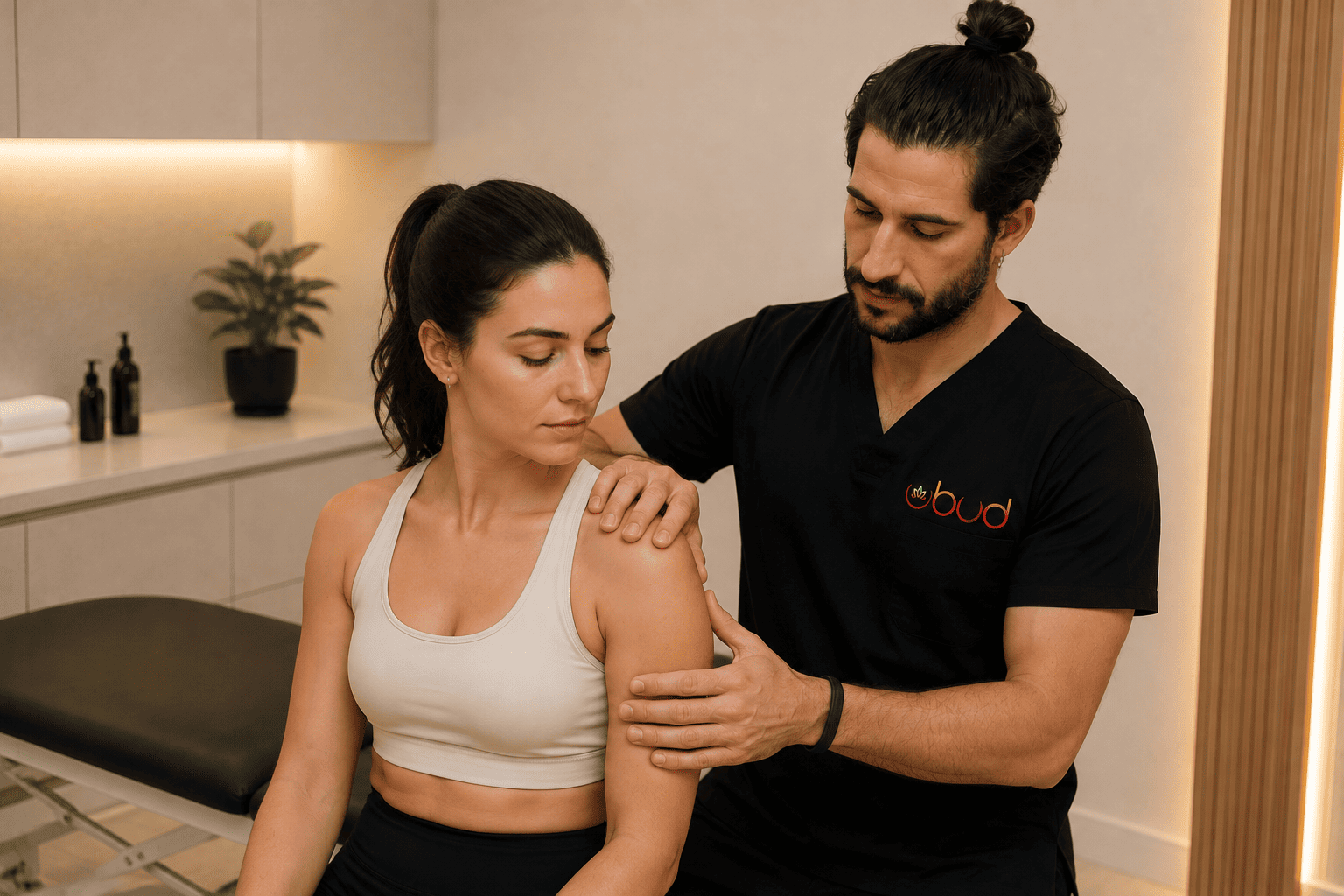
Pain when raising the arm, often associated with the rotator cuff.
Olecranon and prepatellar bursitis from repeated leaning or rubbing.

We use ultrasound to assess the tendinopathy that often accompanies bursitis.
Examination and ultrasound to look at the bursa and surrounding tendons and rule out signs that need referral.
We explain which positions and loads irritate the area and design a plan with an approximate number of sessions.
We move from controlling the pain to strengthening, so the bursa is no longer being compressed.
Less compression, better load management and stronger tendons.
Avoiding crossing your legs, sleeping on the affected side or prolonged leaning while it improves.
Progressive strengthening of the glutes, rotator cuff or other muscles involved.
Useful add-ons for some persistent cases of bursitis and tendinopathy.
See shockwave therapyWe check how the bursa and tendons are progressing during treatment.
Tell us what you would like to improve and we will explain, with no obligation, which treatment suits you.
Calle Arenas, 12 · 29620 Torremolinos, Málaga · Get directions · Patient reviews
All treatments are subject to a prior professional assessment. Results are individual and may vary from person to person. Centro Ubud is an authorised healthcare centre in Torremolinos (Málaga). NICA 64610. Clínica UBUD S.L. · CIF B56756158.