
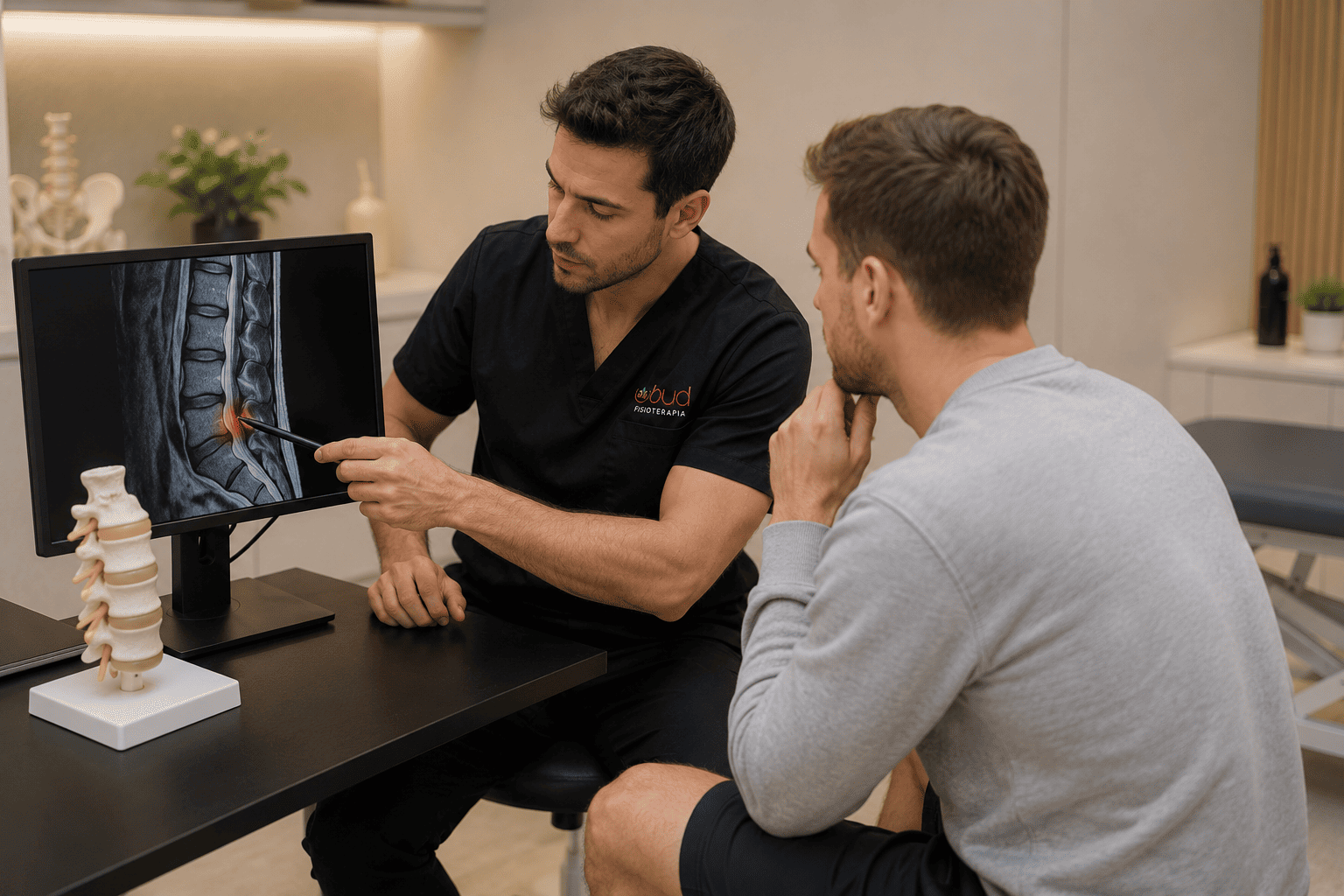
Lumbar herniation
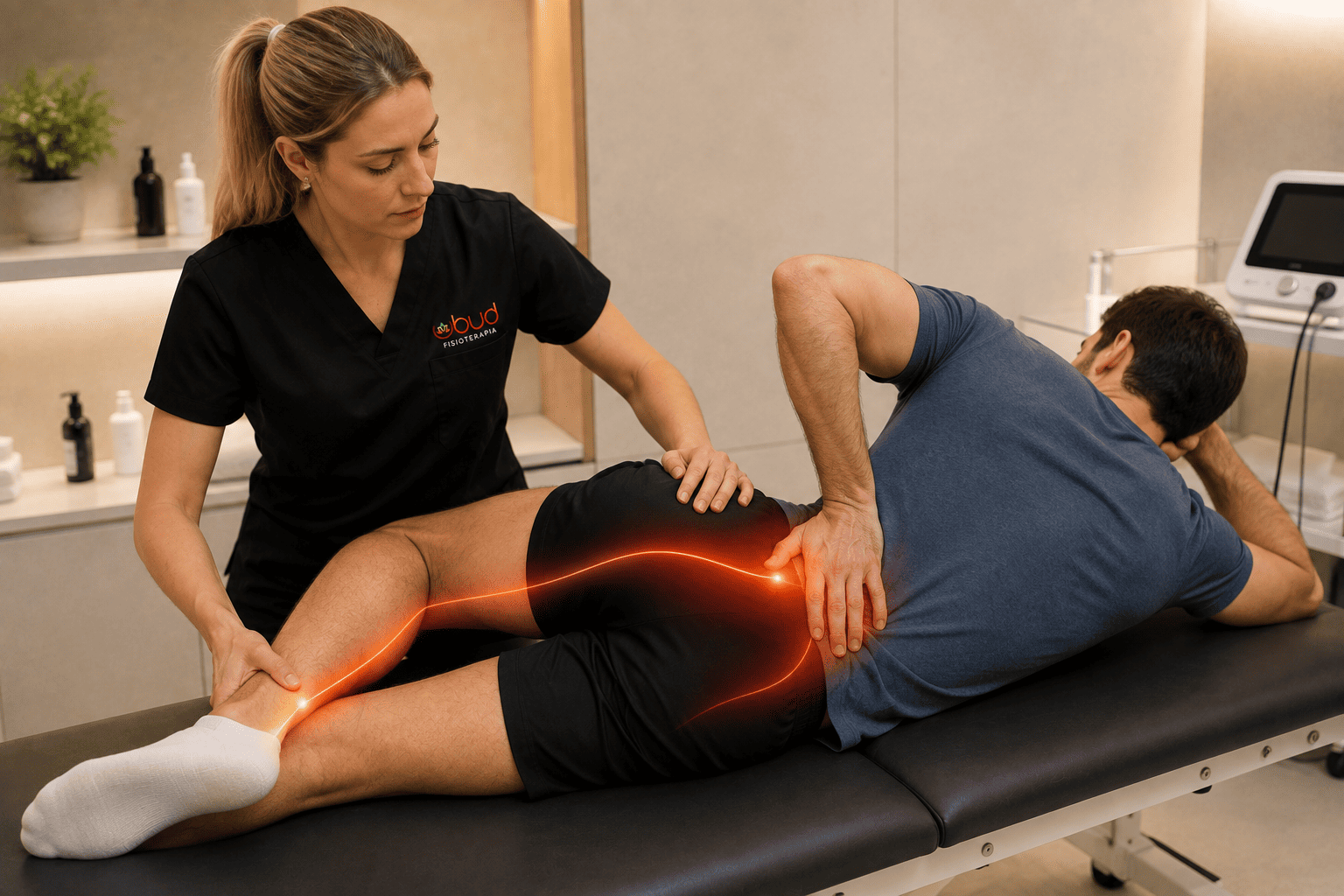
Low back pain and often pain radiating down the leg due to irritation of a nerve root.
A herniated disc on an MRI scan doesn’t necessarily mean surgery. We explain what it means in your case and support you with active conservative treatment, based on exercise and regaining confidence in movement.
Intervertebral discs act as shock absorbers between the vertebrae. When part of the inner core moves outwards we talk about a bulge or protrusion (the disc bulges out) or a herniation or extrusion (the material pushes through the outer layer). It can happen in the lower back, causing back pain and sciatica, or in the neck, with neck pain radiating into the arm.
This is important to know: many people with no pain at all have bulges or herniations on an MRI scan. What matters is not just the image, but whether it matches your symptoms and what we find on examination. What is more, the natural course is usually favourable and some herniations shrink or are reabsorbed over time.
That is why clinical guidelines recommend starting with conservative treatment: clear information, staying active, tailored exercise and techniques to control pain. Most people improve without needing an operation. Surgery is reserved for specific situations assessed by a medical specialist.
At Centro Ubud we review your scans, if you have them, and carry out a full neurological and functional examination to design a progressive plan, different for a lumbar herniation and a cervical one.
The following need urgent medical assessment: loss of bladder or bowel control, numbness in the genital area, worsening weakness, clumsiness in the hands or unsteadiness when walking with cervical herniations. If we detect these signs we refer you without delay.
Low back pain and often pain radiating down the leg due to irritation of a nerve root.
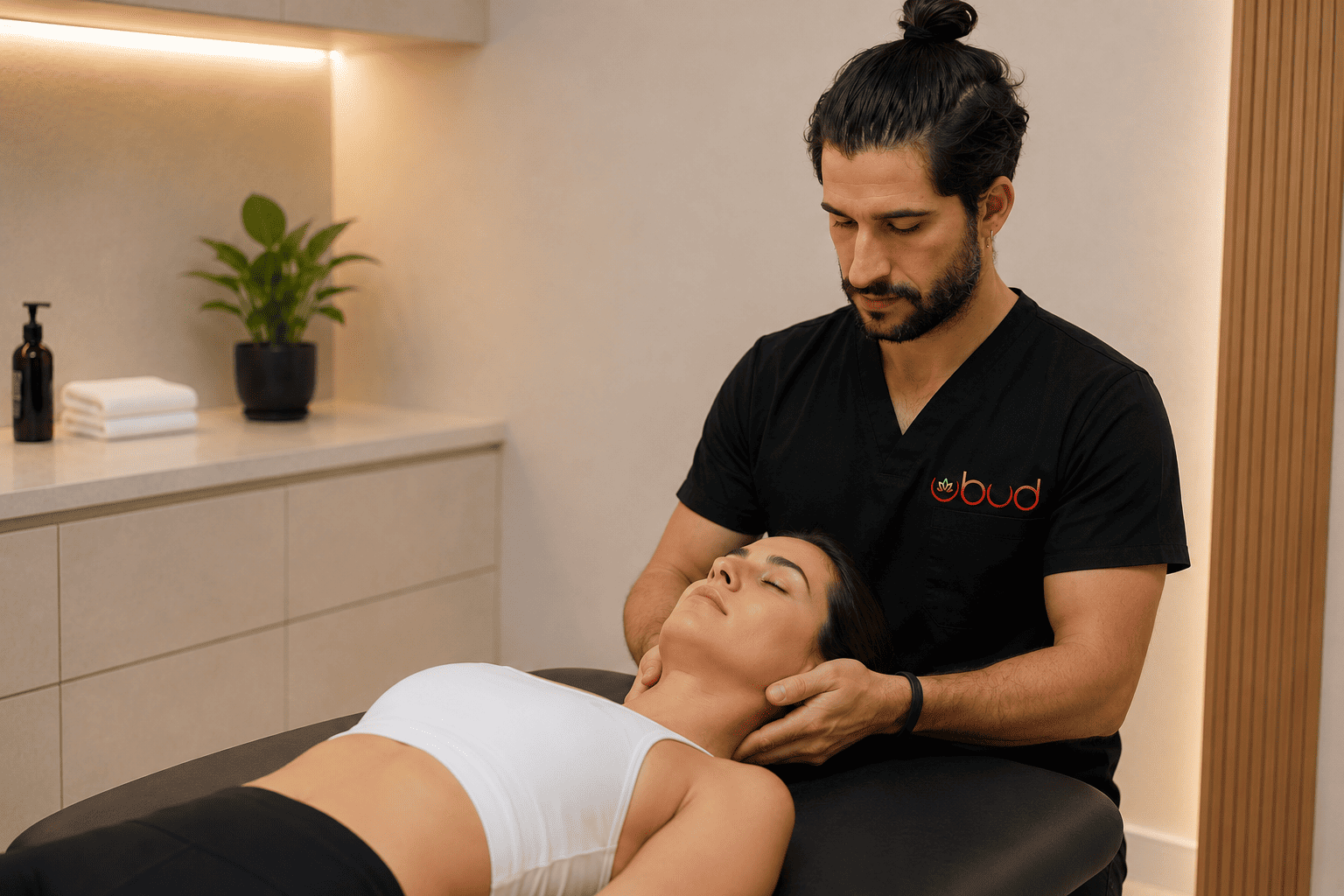
Neck pain that may radiate to the shoulder, arm or hand, with tingling.
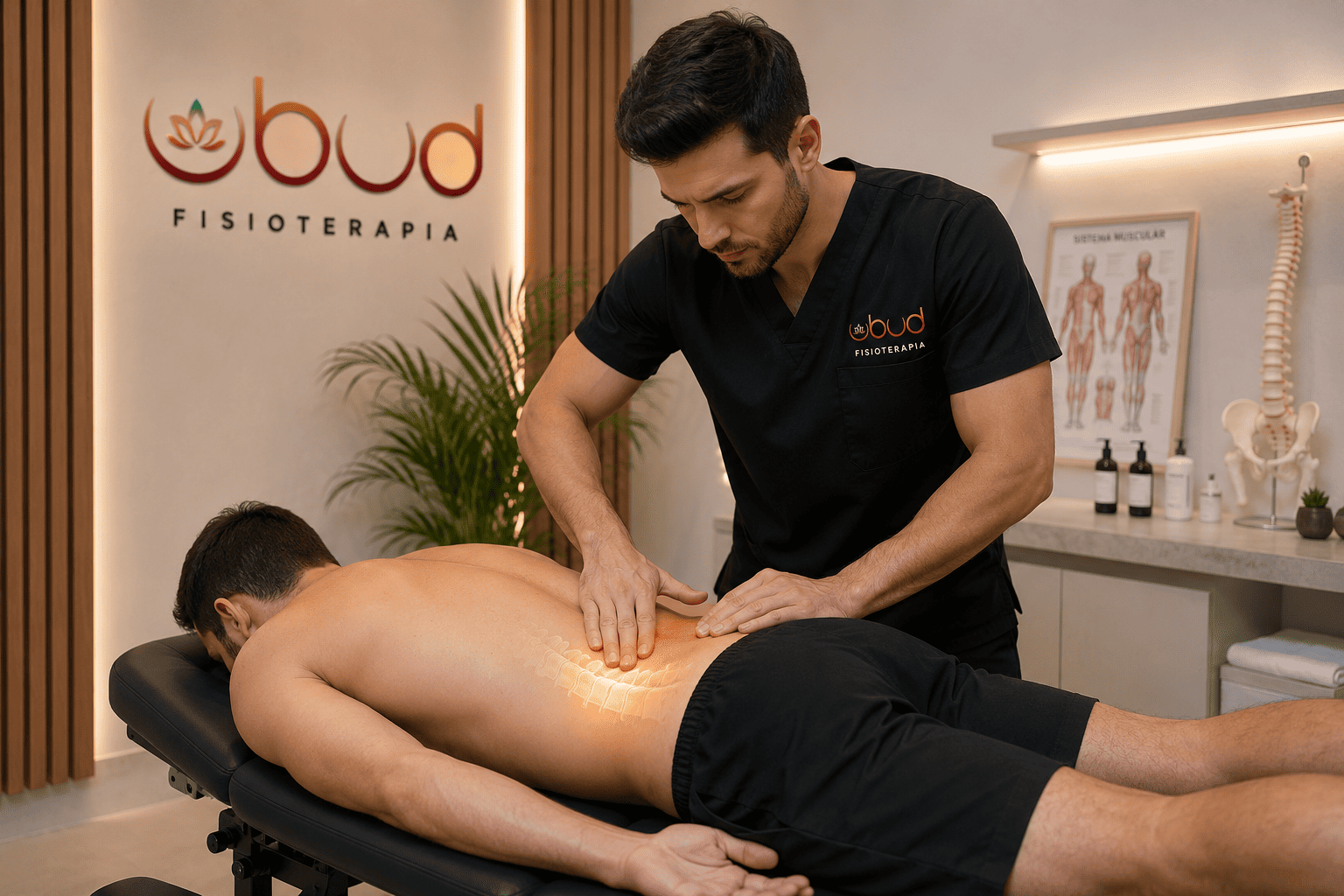
Common disc changes that don’t always explain the pain; we assess them in context.
We review your scans, examine strength, sensation and reflexes and assess which movements ease or worsen your symptoms.
We explain what your herniated disc means, what you can do and give you an approximate number of sessions.
We move from controlling the pain to regaining strength, mobility and confidence for your activities.
An active approach: relieve pain and, above all, restore your spine’s capacity.
Understanding the herniation reduces fear of movement, one of the factors that most often makes pain chronic.
A progressive mobility and strength programme adapted to the stage and how irritable the area is.
Ultrasound-guided percutaneous neuromodulation in selected cases of persistent radicular pain.
See invasive physiotherapyAdd-ons to reduce pain in the most sensitive phases, never as the only treatment.
Tell us what you would like to improve and we will explain, with no obligation, which treatment suits you.
Calle Arenas, 12 · 29620 Torremolinos, Málaga · Get directions · Patient reviews
All treatments are subject to a prior professional assessment. Results are individual and may vary from person to person. Centro Ubud is an authorised healthcare centre in Torremolinos (Málaga). NICA 64610. Clínica UBUD S.L. · CIF B56756158.