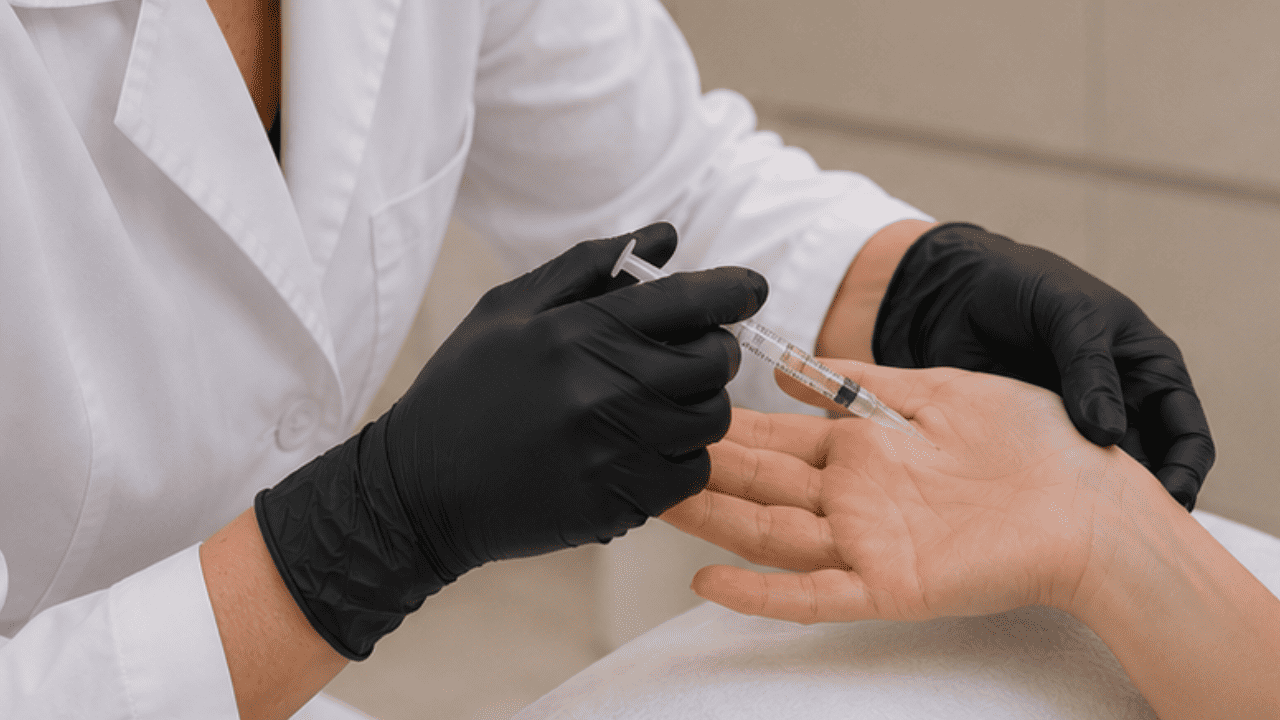
Thread lifts use fine, absorbable sutures (usually made of polydioxanone, PDO) that a doctor places under the skin to gently reposition tissues with mild or moderate laxity and to stimulate collagen production; the effect usually lasts between 12 and 18 months, although it varies with the type of thread, the skin and each person’s habits. At Centro Ubud, in La Carihuela (Torremolinos), thread lifts are recommended and performed by a doctor after a free assessment in which we decide with you whether they are the best option or whether another treatment would suit you better.
What exactly are tension threads?
They are threads made of biocompatible material, similar to those used for stitches in surgery, placed in the subcutaneous tissue using very fine cannulas or needles. Over the following months the body absorbs them completely and, during that process, a repair response is triggered that encourages new collagen to form around the thread.
They work in two ways: an immediate mechanical effect, more or less noticeable depending on the type of thread, and a gradual biostimulating effect that improves skin firmness and quality over the following weeks. They do not add volume or relax muscles: they act on the support structure of the tissues.
What types of tension threads are there?
Without going into commercial brands, threads are classified mainly by their material and their shape:
- By material: polydioxanone (PDO) is the most widely used and is absorbed in about six months; there are also polylactic acid or polycaprolactone threads, which are absorbed more slowly and provide a somewhat longer collagen stimulus.
- Smooth or monofilament threads: these do not lift; instead they are placed in a mesh pattern to improve skin texture and firmness. They are often used on the neck, cheeks or areas with fine lines.
- Barbed or cone threads: these have small barbs or cones that anchor into the tissue and allow a repositioning effect. They are the ones used for the jawline, the mid-face or the tail of the eyebrow.
- Screw or braided threads: these provide a little more support in specific areas, such as folds or small hollows.
The doctor chooses the type, gauge and number of threads according to your anatomy, the degree of laxity and what you want to achieve. Several types are almost always combined in the same plan.
Who are thread lifts suitable for?
The ideal candidate is someone, usually between 35 and 60 years old, with mild or moderate laxity and skin of reasonable thickness and quality. They are particularly useful when you notice that:
- Your facial contour has lost definition and marionette lines or “jowls” are starting to show.
- Your cheeks have dropped slightly and the nasolabial fold looks deeper.
- The tail of your eyebrow has dropped and your eyes look more tired.
- Your neck shows early skin laxity.
If you have significant laxity, a lot of excess skin or marked sagging of the deeper tissues, threads fall short and the honest thing is to consider other alternatives. If you would like to know all the options, our page on facial laxity in Torremolinos explains how we approach each degree.
What is the procedure like at Centro Ubud, Torremolinos?
It all starts with a free medical assessment. We review your medical history, the medication you take, the quality of your skin and the structure of your face, and we explain realistically what can be achieved. If threads are suitable, on the day of treatment the process usually goes like this:
- Design: the doctor marks the vectors on the skin, that is, the direction in which the threads will be placed.
- Local anaesthetic: it is applied at the entry points so that the procedure is comfortable.
- Insertion: the threads are inserted with fine cannulas through small entry points, with no incisions or stitches.
- Adjustment and check: symmetry is checked and the excess ends are trimmed.
The session takes between 30 and 60 minutes depending on the areas treated, and you can go home on your own. We carry it out in our authorised medical clinic, with sterile, single-use material. If you would like to know more about the treatment, you will find further information on our page about thread lifts in Torremolinos.
Free first consultation at Centro Ubud, La Carihuela (Torremolinos). Message us on WhatsApp.
What is recovery like after a thread lift?
Recovery is usually quick, although it is worth planning for. During the first few days it is common to notice:
- Mild swelling and a feeling of tightness, especially when opening your mouth wide or making facial expressions.
- A small bruise at the entry points.
- Slight irregularities or dimples that usually disappear within one or two weeks.
The usual recommendations are to sleep on your back for a few days, and to avoid facial massage, long dental treatments, intense exercise, saunas and very wide facial movements for two or three weeks, without pressing on the area. If you notice increasing pain, intense redness, local warmth or fever, contact the doctor as soon as possible, as these may be signs of infection.
Many people return to their social and working lives within two or three days. The repositioning effect is visible from the start, but the improvement in skin quality becomes noticeable between the first and third month.
How long do thread lifts last?
A PDO thread is absorbed in about six months, but the collagen it generates remains for longer. That is why, in general, the effect lasts between 12 and 18 months, and somewhat longer with slower-absorbing materials. How long it lasts depends on your age, skin thickness, degree of laxity, sun exposure, smoking and changes in weight. Results vary from person to person and are not permanent: ageing continues, and it is usual to plan maintenance sessions if you have liked the result.
Can they be combined with collagen biostimulators?
Yes, and it is often the most logical combination. Threads provide support and direction to the tissues, while collagen biostimulators improve skin density and firmness more globally. Combined in a staged plan, they tend to achieve more natural and longer-lasting results than either on its own. They can also be complemented with hyaluronic acid to restore volume or with neuromodulators for expression lines, always according to what is decided at the assessment.
Thread lift or surgical facelift?
Threads do not replace a facelift. A surgical facelift repositions the deep layers of the face and removes excess skin, so it is indicated when laxity is advanced; its effect is more intense and longer-lasting, but it requires an operating theatre, anaesthesia and a longer recovery. Threads are a minimally invasive option for mild or moderate laxity, for those looking for a subtle improvement or wanting to delay surgery. At Centro Ubud we also offer plastic surgery, so if at the assessment we see that threads will not give you what you are looking for, we will tell you clearly.
Who should not have a thread lift?
There are situations in which the treatment is not indicated or should be postponed:
- Pregnancy and breastfeeding.
- Active skin infections or lesions in the area, such as cold sores or inflamed acne.
- Active autoimmune diseases or blood clotting disorders.
- Anticoagulant treatment, unless specifically assessed by a doctor.
- A tendency towards keloid scarring.
- Permanent fillers in the area to be treated.
- Poorly controlled diabetes or a weakened immune system.
- Severe laxity or unrealistic expectations.
That is why a thorough medical history is essential before any treatment.
Frequently asked questions
Does a thread lift hurt?
It is performed under local anaesthetic, so most people describe it as a tolerable discomfort. Afterwards there may be tightness or tenderness for a few days, which can usually be managed with ordinary painkillers.
Can the threads be felt under the skin?
When properly placed, they should not be visible or palpable at rest. In very thin skin a thread may be felt to the touch during the first few weeks; if this persists, the doctor will check it.
When are the results visible?
There is an initial effect from day one, but the most natural result can be seen once the swelling goes down, two to four weeks later, and it keeps improving until the third month thanks to the collagen stimulus.
Can I have a thread lift if I live in Málaga or Benalmádena?
Yes. We see patients from Torremolinos, Málaga, Benalmádena and the whole Costa del Sol. To book your free assessment, message us on WhatsApp.
How often can they be repeated?
A new session is usually considered when the effect begins to fade, between 12 and 18 months later. The doctor will assess in each case whether it is best to repeat, combine with other treatments or wait.
What are the risks of a thread lift?
The most common ones are mild and temporary: bruising, swelling, asymmetry or small irregularities. Less often, a thread may extrude or an infection may occur. Choosing an experienced doctor and following the aftercare instructions greatly reduces these risks.
Free first consultation at Centro Ubud, La Carihuela (Torremolinos). Message us on WhatsApp.

Written and reviewed by the medical team at Centro Ubud, an aesthetic medicine, advanced aesthetics and physiotherapy clinic in La Carihuela, Torremolinos.
This article is for information only and does not replace an individual assessment by a healthcare professional.