

Tendons
Tendinopathies of the shoulder, elbow, knee, Achilles or glutes and how they progress.
See tendinitisSeeing what we treat. Ultrasound lets us examine tendons, muscles, ligaments and nerves in real time during your physiotherapy assessment and guide invasive techniques with precision.
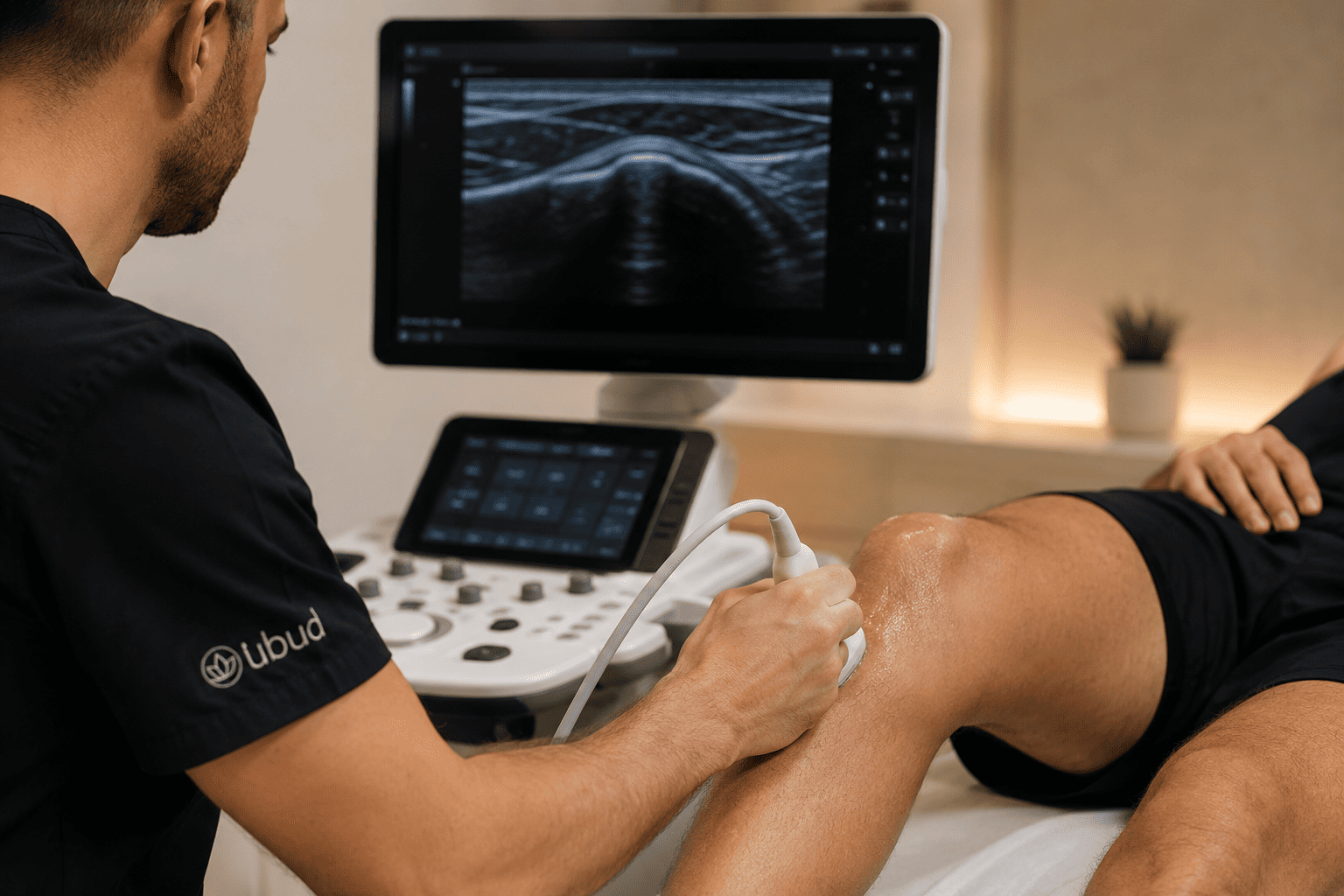
Musculoskeletal ultrasound uses sound waves to produce images of soft tissues. It emits no radiation, is non-invasive and, above all, is dynamic: we can watch a tendon or nerve while you move the joint, compare it with the healthy side and relate what we see to what you feel.
In physiotherapy we use it as one more tool in the assessment: it complements the interview and physical examination, helps us shape the physiotherapy diagnosis and decide which techniques make sense in your case. It also lets us track how an injury is progressing during treatment.
Its second major use is guiding invasive techniques. With ultrasound we see the needle in real time during dry needling, percutaneous electrolysis or neuromodulation, which brings precision in reaching the target tissue and safety in avoiding structures such as blood vessels or nerves.
It is important to know its limits: ultrasound can’t see inside bone or deep structures in some joints, and many findings also appear in people with no pain. That is why we always interpret the image alongside your symptoms. It does not replace medical imaging when that is indicated, and if we see something that needs investigating, we refer you to your doctor.
For you, the benefit is practical: you leave the assessment with a better understanding of what is going on, why we suggest some techniques and not others, and with a reference point to check later whether the tissue and, above all, your function have improved. Ultrasound doesn’t decide on its own: it is one piece of clinical reasoning that we always explain to you.
Ultrasound in physiotherapy is part of the functional assessment and is not a radiology report. If you have severe night pain, growing lumps, fever or significant trauma, we will direct you to a medical assessment.
Tendinopathies of the shoulder, elbow, knee, Achilles or glutes and how they progress.
See tendinitis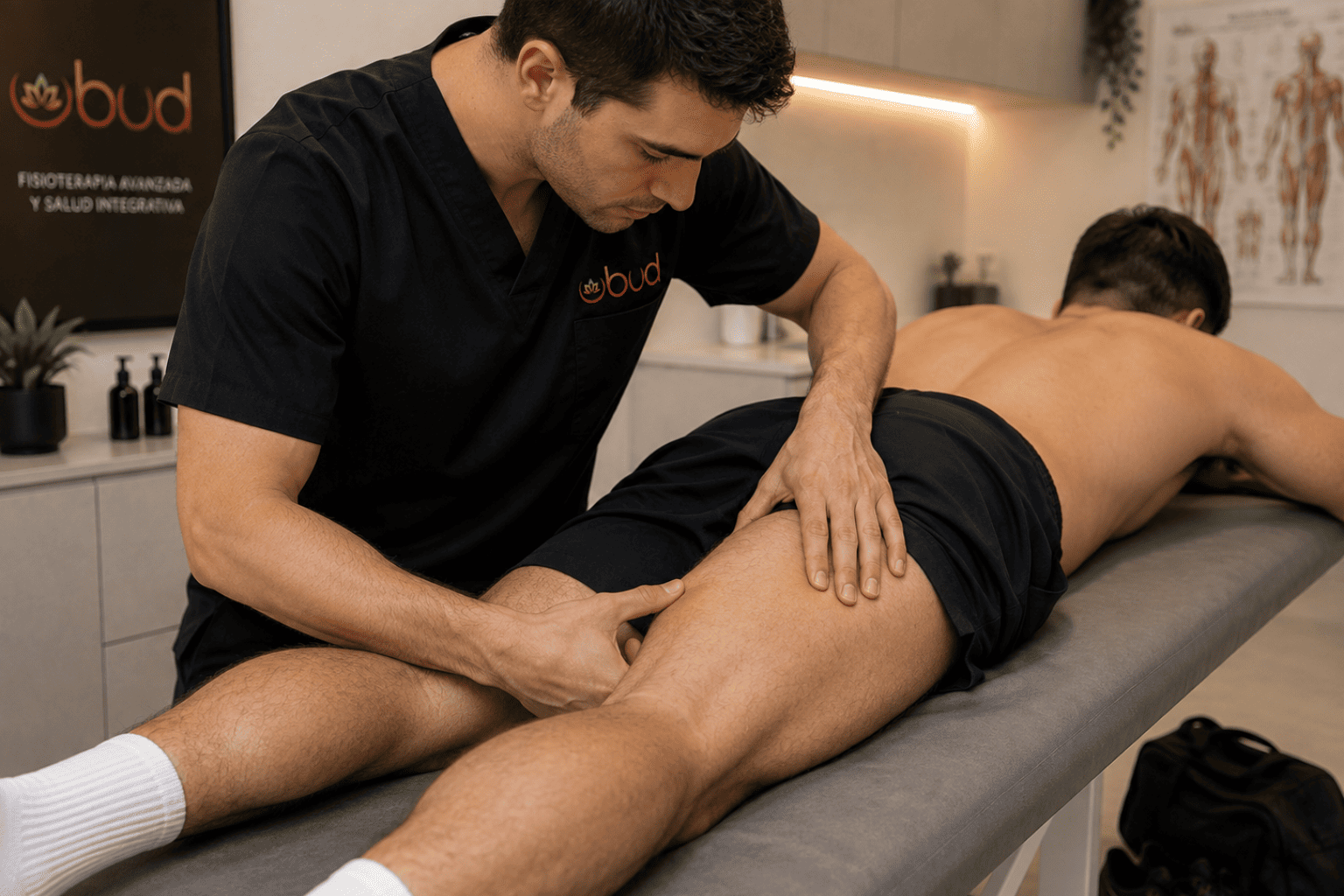
Muscle tears, haematomas and how they heal during rehabilitation.
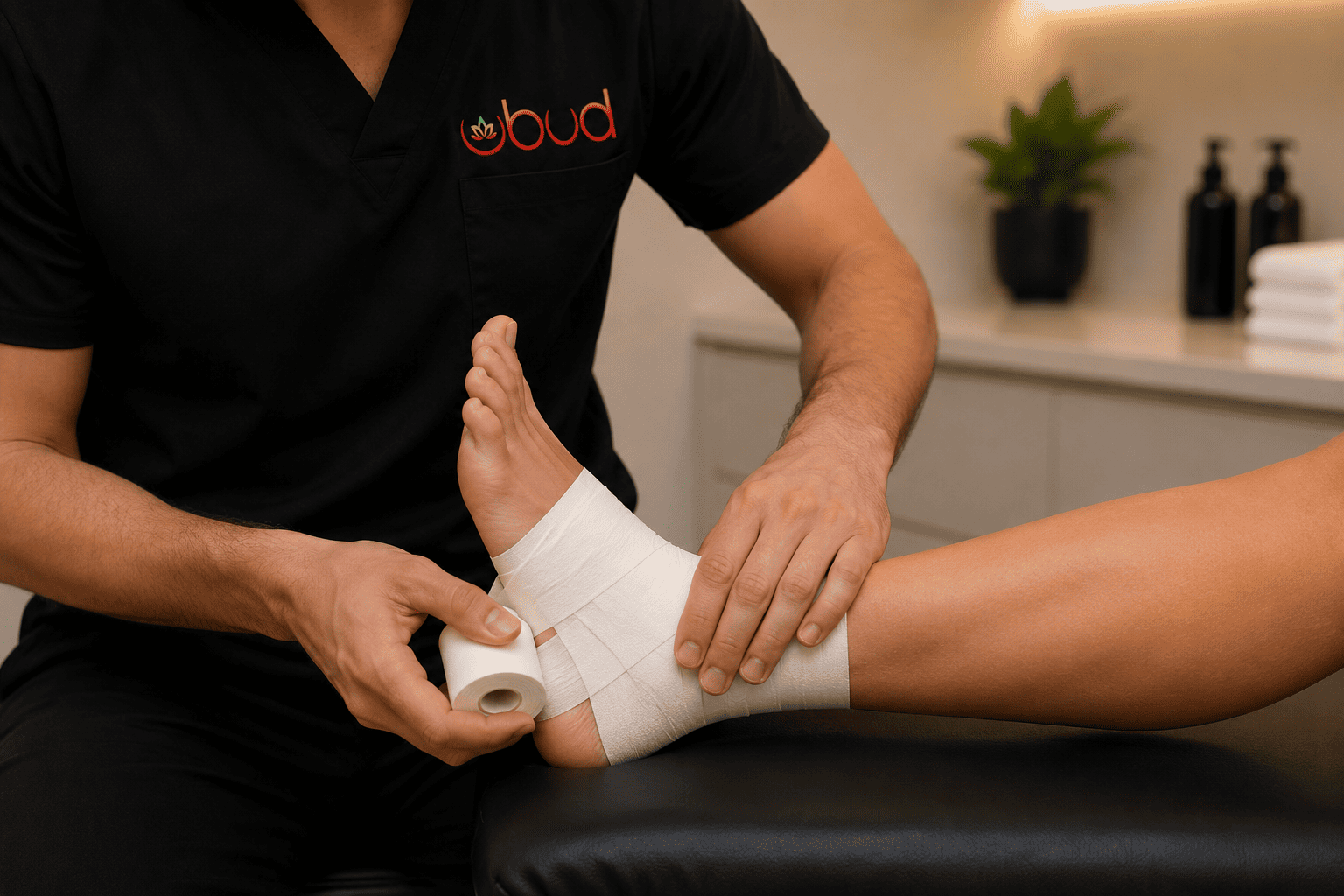
Sprains, bursitis and the plantar plate of the foot.
Assessment of entrapments and guidance for percutaneous neuromodulation.
Interview and physical examination; ultrasound is added when it provides useful information for your case.
We relate the image to your symptoms and explain what we see clearly, right there on the screen.
We plan your treatment and, if invasive techniques are used, perform them under ultrasound guidance.
A tool for making better decisions and treating more precisely.
We see the tissues in motion and compare them with the healthy side.
Dry needling, EPI and neuromodulation with visual control of the needle.
See invasive physiotherapyWe compare images throughout treatment alongside your functional improvement.
Seeing the image helps you understand the problem and get involved in your treatment.
Tell us what you would like to improve and we will explain, with no obligation, which treatment suits you.
Calle Arenas, 12 · 29620 Torremolinos, Málaga · Get directions · Patient reviews
All treatments are subject to a prior professional assessment. Results are individual and may vary from person to person. Centro Ubud is an authorised healthcare centre in Torremolinos (Málaga). NICA 64610. Clínica UBUD S.L. · CIF B56756158.