Shockwave therapy is a physiotherapy technique that applies acoustic pulses to the tissues to stimulate their biological response and modulate pain. It is used mainly for persistent tendon and fascia injuries, such as plantar fasciitis, patellar tendinopathy or lateral epicondylalgia. It is not a stand-alone treatment and it does not work the same way for everyone: it is usually more useful when it forms part of a plan that includes exercise and load management. At Centro Ubud, in Torremolinos, we recommend shockwave therapy after an individual assessment.
What is shockwave therapy and how does it work?
Shockwave therapy (also known by its English initials, ESWT) consists of transmitting high-energy mechanical waves of very short duration through the skin to the injured tissue. Despite the name, it has nothing to do with electricity.
The proposed mechanisms include stimulating tissue repair processes, changes in local circulation and an effect on the perception of pain. Research is still advancing, but for several specific injuries there is reasonable scientific support for its use.
What types of shockwave therapy are there?
In physiotherapy, two modalities are mainly discussed:
- Focused shockwaves: concentrate the energy on a point at a given depth. They allow us to work on more specific and deeper areas.
- Radial shockwaves: the energy spreads out from the surface and covers a wider area, with less depth. They are widely used for superficial tendinopathies and muscle tissue.
The choice between them, as well as the application parameters, depends on the injury, its location and each patient’s response.
Which injuries is shockwave therapy indicated for?
The most common indications in musculoskeletal physiotherapy are:
- Long-standing plantar fasciitis or fasciopathy. You can read more on our page about plantar fasciitis in Torremolinos.
- Achilles tendinopathy, both in the mid-portion of the tendon and at its insertion into the heel.
- Patellar tendinopathy, common in sports involving jumping.
- Lateral epicondylalgia (the well-known “tennis elbow”).
- Calcific tendinopathy of the shoulder and other rotator cuff tendinopathies.
- Greater trochanteric pain syndrome, on the outer side of the hip.
- Trigger points and persistent muscle overload, in certain cases.
As a general rule, it is considered when the problem has not improved enough with initial measures, such as exercise and adapting activity. For more information on tendon injuries, you can see our page on tendinitis and tendinopathies.
When should shockwave therapy not be applied?
Like any technique, it has contraindications and precautions that are reviewed during the assessment. Among the most common:
- Pregnancy.
- Clotting disorders or anticoagulant treatment, depending on the case.
- Tumours or infections in the area of application.
- Direct application over bone growth areas in children and adolescents.
- Areas close to large blood vessels, major nerves or the lungs.
- Pacemakers or other implanted devices, depending on the area and the equipment.
- Recent acute injuries, such as a tendon rupture.
For this reason it is essential to tell the physiotherapist about your medical history and usual medication before starting treatment.
Free first consultation at Centro Ubud, La Carihuela (Torremolinos). Message us on WhatsApp.
What is a shockwave session like?
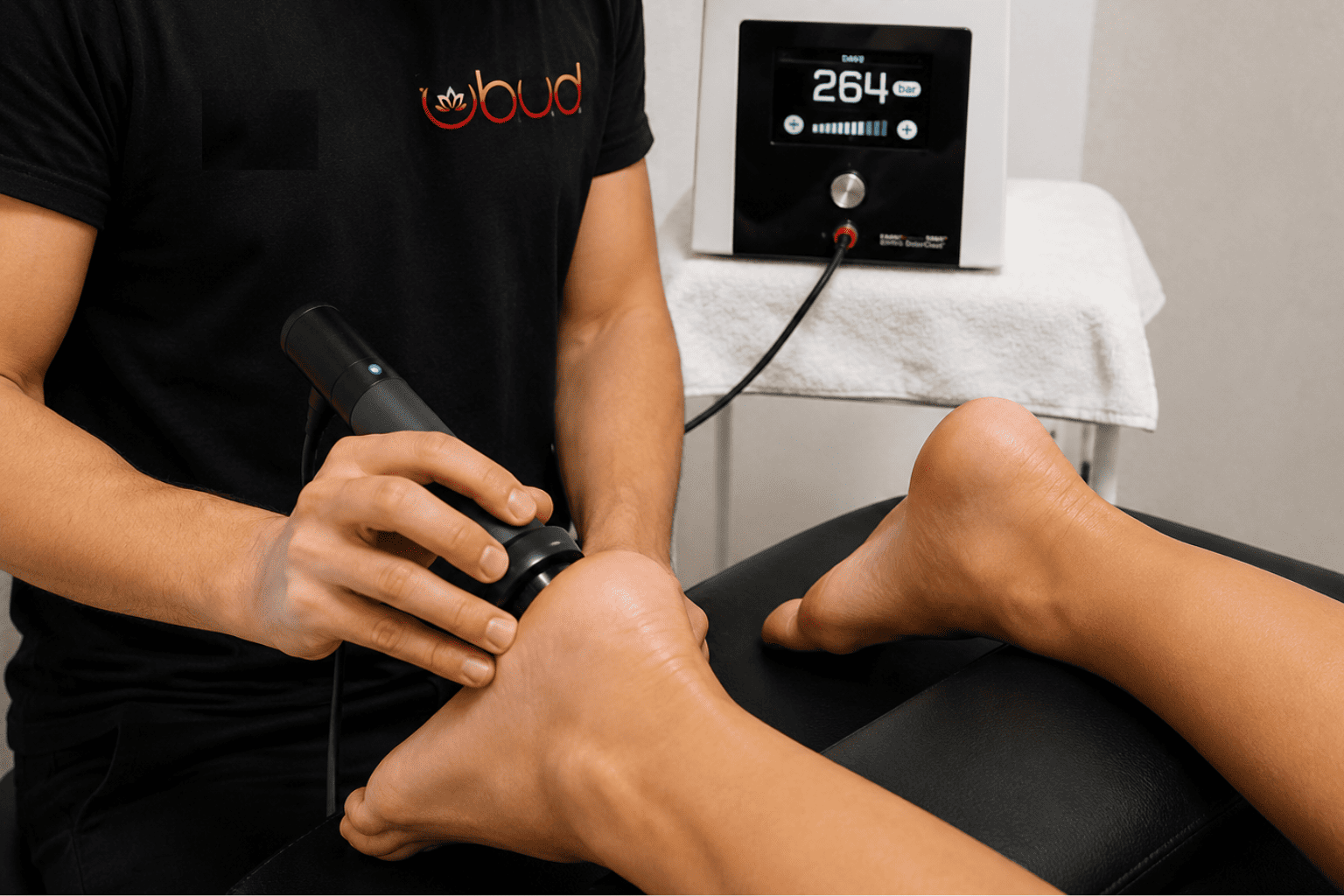
Before the first application, a full assessment is carried out to confirm that the technique is indicated. The session itself is usually brief:
- The treatment area is located through examination and, when useful, with the help of ultrasound.
- A conductive gel is applied to the skin.
- The physiotherapist places the applicator on the area, adjusting the intensity and the number of pulses.
- During the application the patient is asked about their sensations so that the intensity can be adapted to their tolerance.
The application of the waves usually lasts a few minutes, although the full session normally includes other techniques and a review of the prescribed exercise.
Does shockwave therapy hurt?
During the application it is common to feel mild to moderate discomfort, especially in the most sensitive area. The intensity is adjusted so that it is tolerable. After the session there may be some tenderness, redness or, less frequently, small bruises, which usually resolve within a day or two.
How many sessions are needed and when are the effects noticed?
The number of sessions varies depending on the injury and the individual response. Many protocols involve several spaced sessions, usually about a week apart. Some people notice changes after the first applications and others need more time, as tissue adaptation processes are slow.
It is important to have realistic expectations: shockwave therapy is not an instant solution and the response varies from person to person. Its role is usually to help the tissue tolerate load better and to let the patient progress in their exercise programme.
Why combine shockwave therapy with exercise?
In tendinopathies and plantar fasciopathy, progressive therapeutic exercise is one of the pillars of treatment. Shockwave therapy can help reduce pain and stimulate the tissue, but if load capacity is not worked on, the problem tends to come back when you return to your usual activity.
For this reason, in our physiotherapy unit shockwave therapy is integrated into a plan that includes exercise, education about the injury, activity adjustments and, when indicated, other techniques such as manual therapy or invasive physiotherapy.
What should I do after a session?
- Keep up your daily activity, avoiding intense effort in the treated area during the first 24-48 hours, unless advised otherwise.
- Continue with the prescribed exercises, adjusting the intensity if there is more tenderness.
- Tell us at the next session how the area has responded, so that the parameters can be adapted.
If you have questions about which medication is or is not advisable after the session, ask your doctor or your physiotherapist.
Frequently asked questions about shockwave therapy
Is shockwave therapy suitable for all injuries?
No. It has specific indications, mainly in persistent tendinopathies and fasciopathies. For other injuries its usefulness is limited or has not been demonstrated.
Can it be applied to a recent injury?
In general it is not applied to recent acute injuries, such as ruptures or sprains in their first days. Its use is usually reserved for problems that have been present for longer.
Can I do sport during the treatment?
Often yes, by adapting the volume and intensity. The physiotherapist will advise which activity is appropriate at each stage.
Does shockwave therapy break up calcifications?
In calcific tendinopathy of the shoulder it can help improve symptoms and, in some cases, contribute to the reabsorption of the calcification, but the response is variable and does not always occur.
Do I need an imaging test beforehand?
Not always. Clinical examination is essential and ultrasound can provide useful information. If there are doubts about the diagnosis, appropriate medical assessment will be recommended.
Free first consultation at Centro Ubud, La Carihuela (Torremolinos). Message us on WhatsApp.
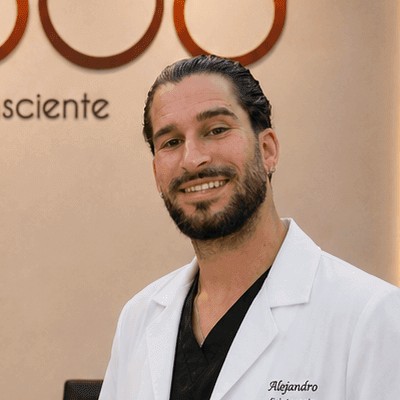
Physiotherapist specialising in the foot and ankle and musculoskeletal pain, educator of physiotherapists and founder of The Fisio Program. He works with Centro Ubud’s physiotherapy unit.
This article is for information only and does not replace an individual assessment by a healthcare professional.