Female hair loss (alopecia) is a loss of hair density or of hair in women, and it can have very different causes: hormonal, genetic, nutritional, stress-related or due to scalp conditions. Treatment depends on the type of alopecia, so a correct diagnosis is essential before starting. At Centro Ubud, in Torremolinos (Málaga), we assess each case to guide you towards the most suitable options, which may include medical treatment, PRP or hair mesotherapy.
Is it normal for my hair to fall out?
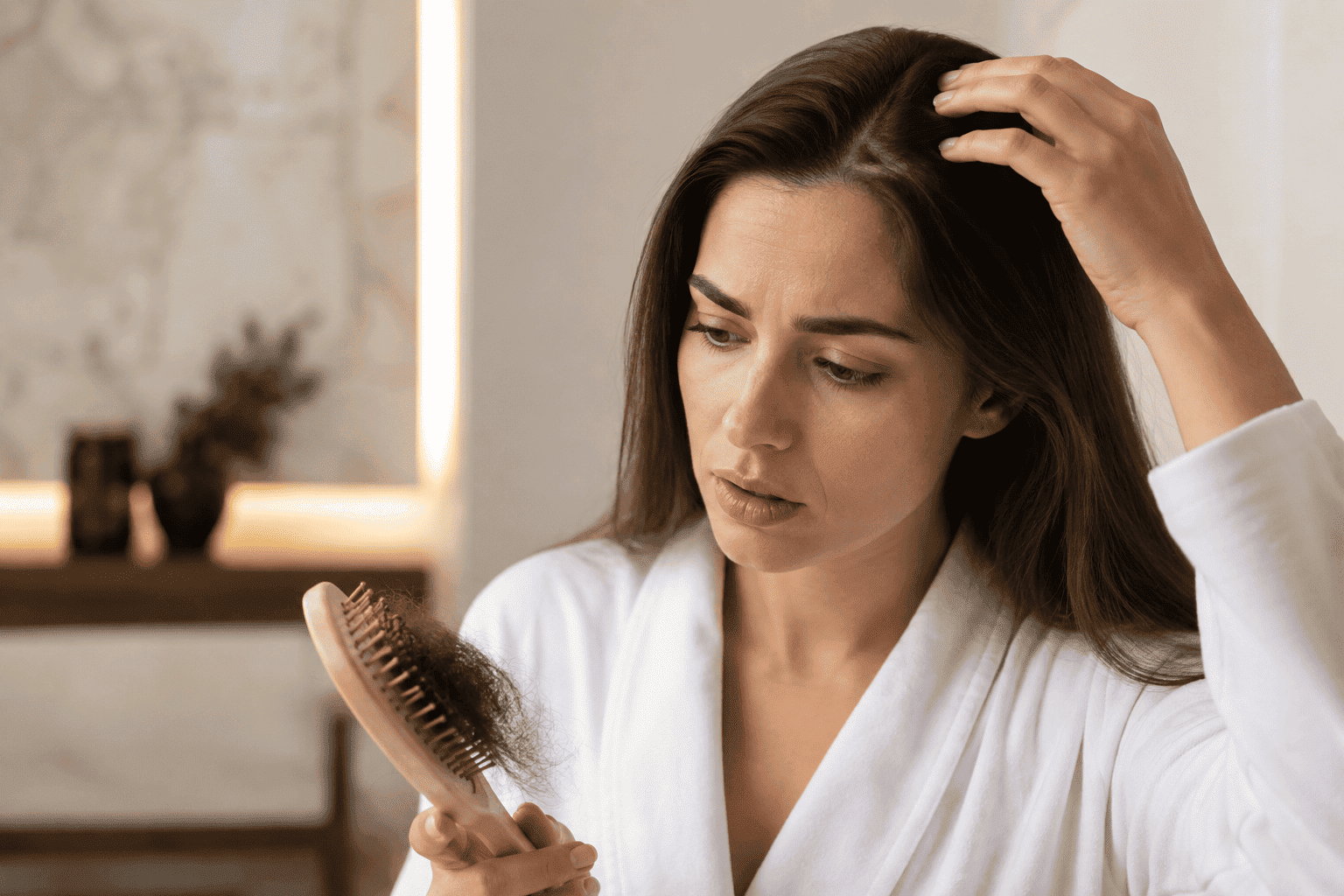
Losing hair every day is normal. Hair grows in cycles and, at any given time, some follicles are in a resting phase and shed to make way for a new hair. In addition, in autumn many people notice slightly more shedding. What is not normal is marked shedding for weeks, the feeling that your ponytail is getting thinner, that your parting is widening or that your scalp is more easily visible. In those cases it is worth seeking advice.
What are the causes of female hair loss?
Female androgenetic alopecia
This is the most common cause of progressive loss of density in women. It has a genetic and hormonal component, and causes miniaturisation of the hair: the follicles produce increasingly fine, short hairs. Unlike in men, in women the frontal hairline is usually preserved and the loss is diffuse on the top of the head, with a widening parting. It can start in youth, but it is more evident after the menopause.
Telogen effluvium
This is intense, diffuse shedding that usually appears two or three months after a trigger: the postpartum period, a period of significant stress, an illness with fever, surgery, a very restrictive diet, or starting or stopping certain medicines. It is usually reversible once the cause is corrected, although it can become chronic or coexist with androgenetic alopecia.
Hormonal and nutritional causes
Thyroid problems, polycystic ovary syndrome, the changes of the menopause and nutritional deficiencies, especially iron deficiency, are frequently linked to hair loss in women.
Other types of alopecia
Alopecia areata causes bald patches, more or less suddenly. Traction alopecia appears because of hairstyles that pull on the hair continuously. And there are scarring alopecias, in which the follicle is permanently destroyed, which require early diagnosis and treatment by dermatology. Signs such as itching, pain, redness or flaking on the scalp should be checked without delay.
How is female hair loss diagnosed?
The diagnosis combines several steps:
- Detailed medical history: when it started, what the shedding is like, pregnancies, menstrual cycle, diets, stress, illnesses and medication.
- Examination of the scalp and of the pattern of loss.
- Trichoscopy: a magnified examination that shows the thickness of the hairs, miniaturisation and signs of inflammation.
- Blood tests when indicated, to assess iron, thyroid or other parameters, and a hormonal study if there is clinical suspicion.
- In specific cases, a biopsy or referral to dermatology may be needed.
This process makes it possible to distinguish between temporary shedding and progressive loss, and avoids using treatments that will not help. You can see how we approach the assessment on our page about hair loss and alopecia.
Free first consultation at Centro Ubud, La Carihuela (Torremolinos). Message us on WhatsApp.
What treatments exist for female hair loss?
Correcting the cause
If there is an iron deficiency, a thyroid problem or another disorder, treating it is the first step. In telogen effluvium, identifying and correcting the trigger is usually the most important thing.
Medical treatment
In androgenetic alopecia, the basic treatment is usually medication. Minoxidil, in topical or oral forms at the doctor’s discretion, is one of the most widely used. In some cases the doctor may consider medicines that act on the hormonal component. All of them require a prescription, follow-up and consistency, and some are not suitable during pregnancy or when trying to become pregnant.
Hair PRP
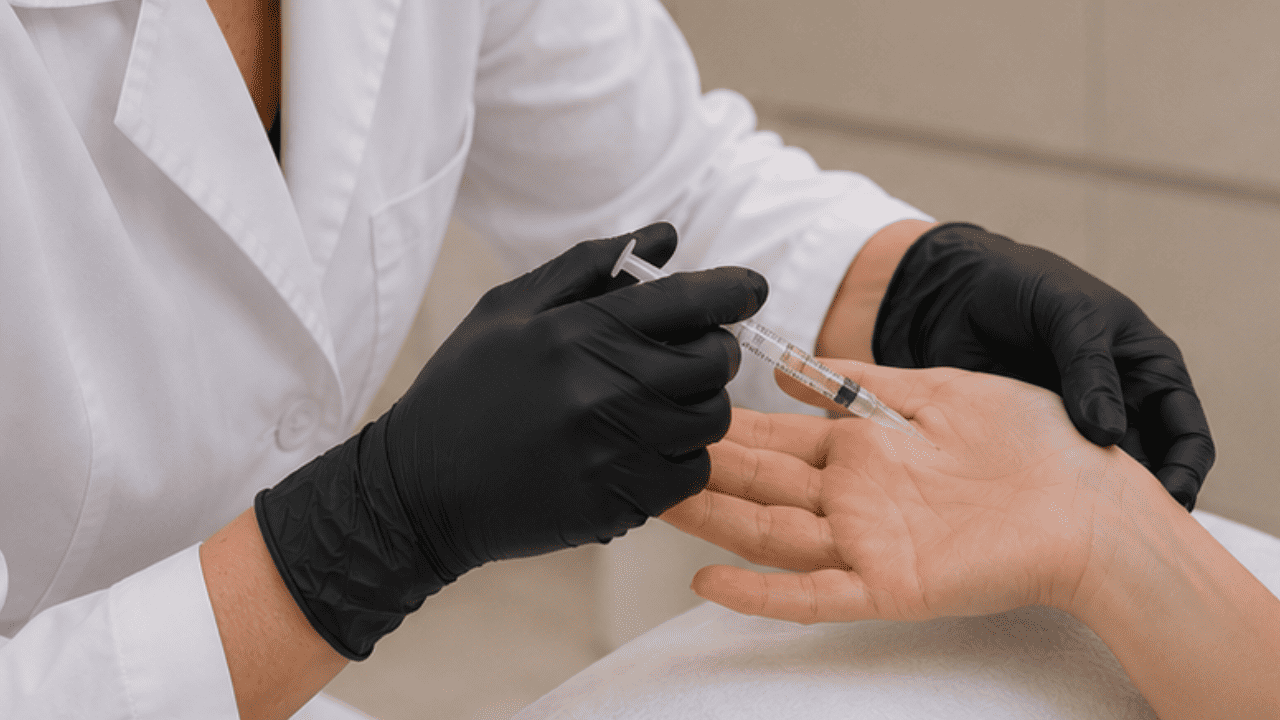
Platelet-rich plasma is obtained from a small sample of the patient’s own blood, which is processed to concentrate the platelets and is injected into the scalp. It is used as a complementary treatment in androgenetic alopecia with the aim of improving hair density and thickness. The response varies and several sessions are usually needed. More information on our page about hair PRP in Torremolinos.
Hair mesotherapy
This consists of micro-injections into the scalp of substances such as vitamins, amino acids or other active ingredients, with the aim of supporting follicle health. It is also considered a complement to medical treatment. You can read more about hair mesotherapy.
Care and habits
A balanced diet, avoiding very restrictive diets, reducing hairstyles that pull on the hair, using heated tools in moderation and looking after the scalp all help to support any treatment, although on their own they do not halt androgenetic alopecia.
Why is it not a good idea to start treatment on your own?
When faced with hair loss it is tempting to try shampoos, supplements or lotions without seeking advice. The problem is that each type of alopecia needs a different approach: a supplement does not correct androgenetic alopecia, and a scarring alopecia that is not diagnosed in time can leave permanent loss. In addition, some supplements with high doses of certain vitamins can alter test results or may not be suitable for everyone. For this reason, before investing time in treatments, it is better to know exactly what is happening.
How long does it take to see improvement?
Hair grows slowly, so treatments need time. In general, changes are assessed after several months of consistent treatment. At the start, some treatments can cause temporary shedding that is part of the process. Results vary from one woman to another and, in androgenetic alopecia, the aim is usually to slow the loss and improve density, with treatment maintained over time. You can find out about our hair treatments.
Frequently asked questions about female hair loss
Can female hair loss be solved?
It depends on the type. Telogen effluvium usually recovers once the cause is corrected. Androgenetic alopecia is chronic, but it can be controlled with ongoing treatment.
Can stress make hair fall out?
Yes. A period of intense stress can trigger telogen effluvium, which is usually noticed a few months later.
Is it normal to lose a lot of hair after giving birth?
It is common and is usually temporary. If the shedding goes on for a long time or density does not recover, it is worth seeking advice.
Is hair PRP suitable for all types of alopecia?
No. It is used mainly as a complement in androgenetic alopecia. In other types it may not be indicated, which is why a prior diagnosis is necessary.
Do I need blood tests?
In many cases yes, to rule out iron deficiency, thyroid disorders or other causes. The doctor will tell you which tests are needed.
Free first consultation at Centro Ubud, La Carihuela (Torremolinos). Message us on WhatsApp.

Written and reviewed by the medical team at Centro Ubud, an aesthetic medicine, advanced aesthetics and physiotherapy clinic in La Carihuela, Torremolinos.
This article is for information only and does not replace an individual assessment by a healthcare professional.