Hair loss can have very different causes, such as androgenetic alopecia, stress, hormonal changes, nutritional deficiencies or certain illnesses. Identifying the origin is the first step, because the treatment depends on the cause. Hair PRP (platelet-rich plasma) is one of the options that can be considered in certain cases, always as part of an individual plan. At Centro Ubud in Torremolinos (Málaga), we carry out a hair assessment before proposing any treatment.
Is it normal to lose hair?
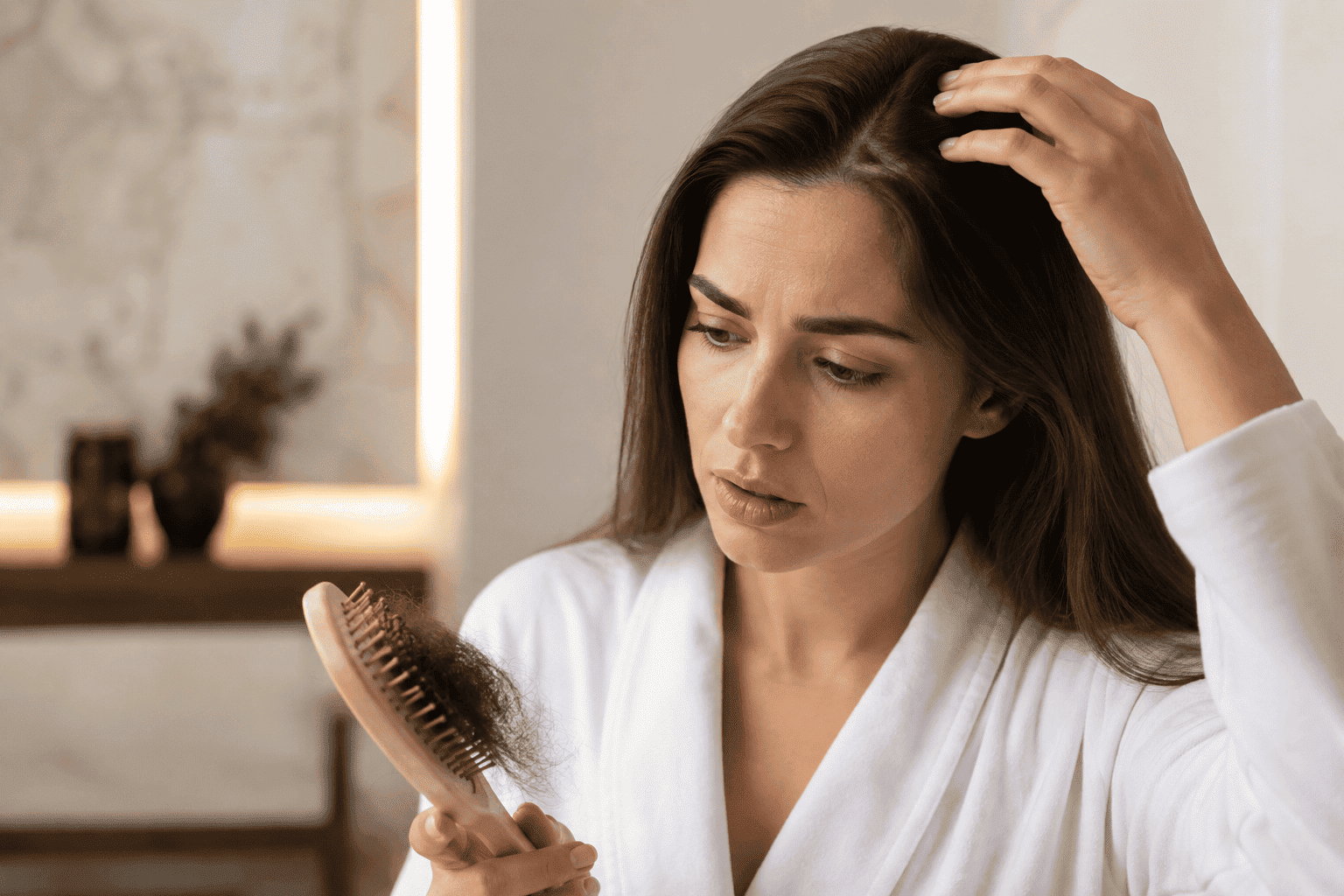
Losing a certain amount of hair every day is part of the natural hair cycle, which goes through phases of growth, rest and shedding. What is worrying is when the shedding increases noticeably, the hair feels less dense, the parting widens, or receding hairlines or areas with thinner hair appear.
What are the causes of hair loss?
Androgenetic alopecia
This is the most frequent cause in both men and women. It has a genetic and hormonal component, and causes a progressive thinning of the hair (miniaturisation). In men it usually shows as a receding hairline and loss at the crown; in women, as reduced density on the top of the head and a widening parting, usually with the frontal hairline preserved.
Telogen effluvium
This is diffuse and often sudden shedding that can appear weeks or months after a trigger: intense stress, a high fever, surgery, the postpartum period, very restrictive diets or changes in medication. It is often temporary, although it should be investigated.
Hormonal changes
In women, stages such as the postpartum period or the menopause, or conditions such as thyroid problems or polycystic ovary syndrome, can influence hair loss. Sometimes a specific medical work-up is needed.
Nutritional deficiencies
A lack of iron, certain vitamins or insufficient protein intake can affect the hair. A blood test can help to detect this, and supplements should not be taken without medical advice.
Other causes
There are other types of alopecia, such as alopecia areata (patchy), traction alopecia caused by very tight hairstyles, or some scarring alopecias, which require assessment and, at times, follow-up by dermatology.
Differences between hair loss in women and men
- Pattern: in men, a receding hairline and crown thinning predominate; in women, diffuse loss in the central area.
- Hormonal factors: in women, stages such as the postpartum period or the menopause play a prominent role.
- Associated causes: in women it is more common for several causes to coexist, such as an effluvium and androgenetic alopecia, so the work-up is usually broader.
How is hair loss assessed?
A hair assessment includes an interview about when the hair loss began, family history, medication, recent changes and habits. The scalp and hair are examined, often with the help of trichoscopy, to assess hair density and thickness. Depending on the case, it may be useful to request or review blood tests. With all of this, the cause is identified and the most suitable plan is proposed. You can find out more on our page about hair loss and alopecia in Torremolinos.
Free first consultation at Centro Ubud, La Carihuela (Torremolinos). Message us on WhatsApp.
Treatments for hair loss
There is no single treatment for everyone. Depending on the cause, the plan may include:
- Treatment of the underlying cause, such as correcting a deficiency or managing a hormonal problem with the relevant specialist.
- Topical or oral medical treatments prescribed by a doctor, when indicated.
- Hair PRP, in selected cases.
- Hair mesotherapy, which consists of micro-injections into the scalp.
- Hair care and lifestyle recommendations.
Often, a combination of several strategies is what suits each patient best. All our treatments are in the section on hair treatments.
What is hair PRP and how does it work?
PRP, or platelet-rich plasma, is obtained from a small sample of the patient’s own blood. After it is centrifuged, the fraction of plasma with the highest concentration of platelets, which contain growth factors, is separated. This plasma is injected into the scalp through small injections in the areas with lower density.
The aim is to stimulate the hair follicles to encourage thicker hair and slow the progression of the loss. The available studies show promising results, especially in androgenetic alopecia, although the response varies between people and not all patients are good candidates.
What is a hair PRP session like?
- Collection of a small amount of blood, similar to a blood test.
- Processing of the sample to obtain the plasma.
- Preparation and disinfection of the scalp.
- Injection of the plasma into the areas to be treated.
A protocol of several initial sessions is usually planned and, depending on progress, maintenance sessions. After the session there may be tenderness or slight redness of the scalp for a short time.
Who can benefit from hair PRP?
It is usually considered for people with androgenetic alopecia in the early or intermediate stages, or with weakened hair. It is not suitable in every situation: some blood disorders, certain treatments or active scalp infections may rule it out. That is why a prior assessment is essential. More details on our page about hair PRP in Torremolinos.
When will I notice results?
Hair grows slowly, so changes are not immediate. It is usual to assess progress after several months of treatment, comparing with the starting point. Results vary from one person to another and depend on the cause, how long the problem has been present and how consistently the plan is followed.
Frequently asked questions about hair loss and hair PRP
Does hair PRP hurt?
It can be slightly uncomfortable in some areas of the scalp, but it is generally well tolerated and measures are taken to make it more comfortable.
Is PRP suitable for all types of alopecia?
No. It is mainly considered for androgenetic alopecia and weakened hair. Other types of alopecia require a different approach.
When should I seek advice about hair loss?
If you notice more shedding than usual for several weeks, a loss of density or bald patches, an assessment is advisable.
Can PRP be combined with other treatments?
Yes, it is common to combine it with medical treatments or with hair mesotherapy, depending on what is decided after the assessment.
Does stress-related hair loss recover?
In many cases telogen effluvium improves once the trigger has gone, but it is advisable to confirm this and rule out other causes.
Would you like us to assess your case?
If you are worried about hair loss and are looking for a hair treatment in Málaga or on the Costa del Sol, we can look into your case. At Centro Ubud, at C/ Arenas 12 (La Carihuela, Torremolinos), we see patients by appointment. Message us on WhatsApp at +34 602 544 143 and we will explain what the first assessment involves and what availability we have.
Free first consultation at Centro Ubud, La Carihuela (Torremolinos). Message us on WhatsApp.

Written and reviewed by the medical team at Centro Ubud, an aesthetic medicine, advanced aesthetics and physiotherapy clinic in La Carihuela, Torremolinos.
This article is for information only and does not replace an individual assessment by a healthcare professional.