It is worth seeing a physiotherapist for lower back pain when the discomfort lasts more than a few days, limits your activities or keeps coming back. The treatments with the best scientific support combine education, adapted therapeutic exercise and manual therapy, and in some cases complementary techniques. At Centro Ubud in Torremolinos, we assess each case individually to design a plan tailored to your situation.
Why does the lower back hurt?
Lower back pain is one of the most frequent reasons for consulting a physiotherapist. In most cases it is what is called non-specific low back pain: no specific, serious injury is identified that explains it, but rather a combination of factors that make the back more sensitive.
Factors that can play a part include:
- Overload from exertion, sustained postures or sudden changes in activity.
- Lack of physical activity and low general fitness.
- Jobs involving many hours of sitting or, on the contrary, handling loads.
- Stress, poor rest and worry about the pain, which can increase sensitivity.
- Previous episodes of low back pain.
In a smaller percentage of cases the pain is related to a herniated disc irritating a nerve root, to spinal canal stenosis or to other specific causes. That is why an assessment that helps to understand the problem properly is important.
One reassuring fact: imaging findings such as “degenerated discs” or “protrusions” are very common in people without pain. Their presence does not always explain the symptoms or imply a poor prognosis.
When should you see a physiotherapist for lower back pain?
Many episodes of low back pain improve within a few days or weeks if you stay active. Even so, it is advisable to consult a physiotherapist if:
- The pain lasts more than one or two weeks without improving.
- It stops you from working, sleeping or carrying out your usual activities.
- The pain radiates into the buttock or leg.
- You have had several episodes and want to prevent them from recurring.
- You are afraid to move or do not know which activities are safe.
- You want to return to sport with confidence after an episode of pain.
Warning signs: when to see a doctor first
There are uncommon situations that require urgent medical assessment. See your doctor or go to the emergency department if lower back pain is accompanied by:
- Progressive loss of strength in one or both legs.
- Changes in bladder or bowel control, or loss of sensation in the genital area.
- Fever, unexplained weight loss or general malaise.
- Pain after a significant injury.
- Severe, constant pain that does not change with rest or posture, especially at night.
At the first physiotherapy assessment these signs are also checked so that you can be referred to a doctor when necessary.
What does the physiotherapist do in the first session?
The first visit is for understanding your case. It includes an interview about how the pain began, what makes it worse or relieves it, your job, your physical activity and your goals. A physical examination then follows: mobility, strength, neurological tests when indicated, and analysis of the movements that cause you discomfort.
With this information, we explain what is happening and propose a treatment plan with specific goals. You can find more details on our page about lower back pain treatment in Torremolinos.
Free first consultation at Centro Ubud, La Carihuela (Torremolinos). Message us on WhatsApp.
Which treatments work for lower back pain?
There is no single technique that works for everyone. Current clinical guidelines agree that the most effective approach is active and combined. In our physiotherapy unit we mainly work with:
Pain education
Understanding why the back hurts, and knowing that in most cases there is no serious damage, helps to reduce fear of movement and makes recovery easier. It is a central part of the treatment, not an add-on.
Therapeutic exercise
Adapted exercise is one of the pillars with the most evidence in low back pain, especially when it persists. It is prescribed progressively according to your level and your goals, and includes work on strength, mobility and control. What matters is not so much a particular type of exercise as that it is right for you and that you keep it up over time.
Manual therapy
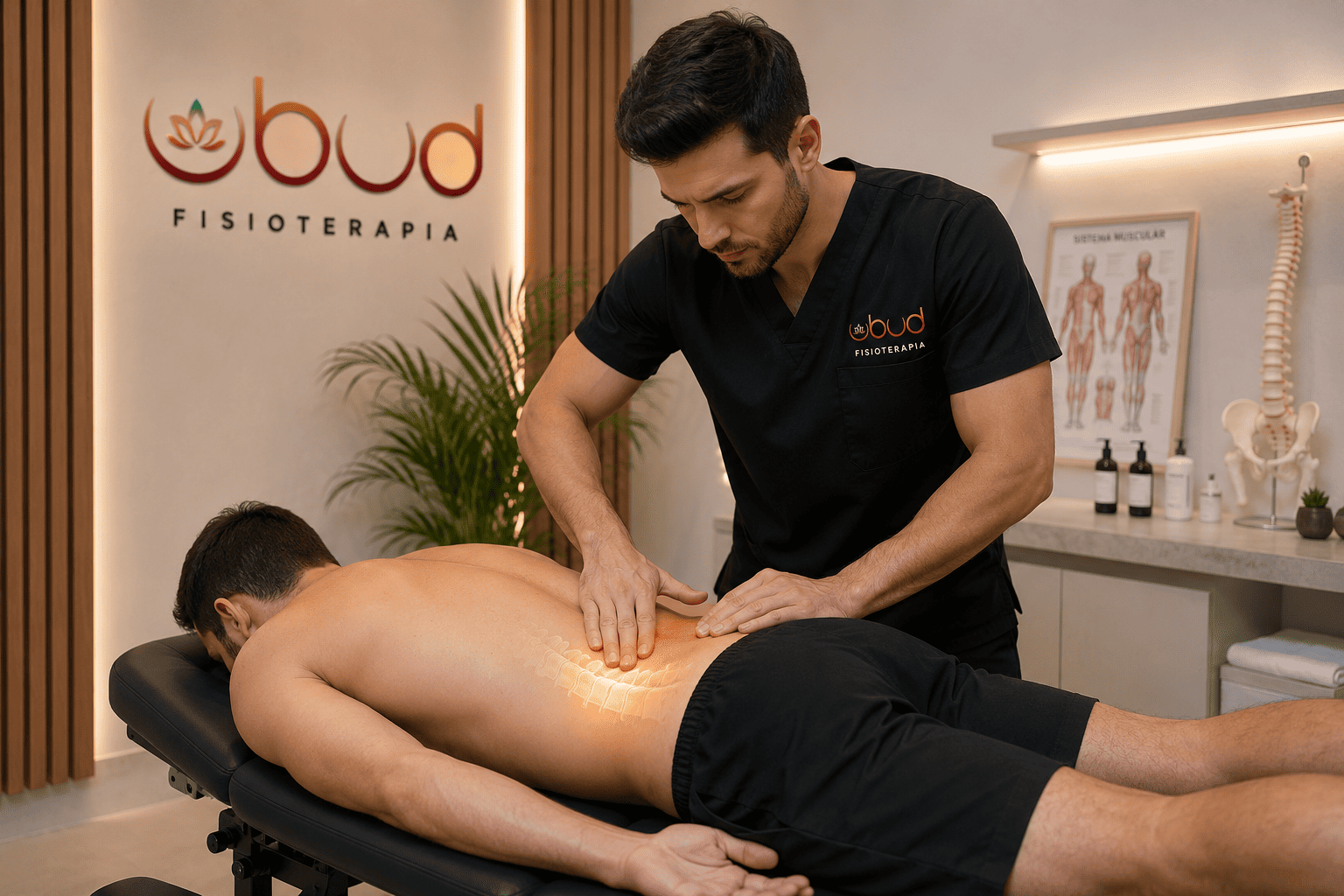
Manual techniques, such as joint mobilisation or soft tissue work, can help to relieve pain in the short term and to regain movement. They are most valuable when combined with exercise.
Invasive physiotherapy
In some patients, techniques such as dry needling or ultrasound-guided percutaneous neuromodulation can form part of the treatment to modulate pain and make active work easier. Whether they are appropriate is decided after the assessment. More information at invasive physiotherapy in Torremolinos.
Activity advice and habits
Staying active within what is tolerable, looking after your rest, taking breaks if you spend a lot of time sitting and gradually returning to physical activity are measures that influence how things progress.
What about bed rest?
We now know that prolonged bed rest does not help in most cases of low back pain and can even delay recovery. It is normal to reduce your activity somewhat on the most intense days, but it is advisable to return to movement as soon as possible, gradually.
How many sessions will I need?
It depends on the type of pain, how long it has been present and your goals. A recent episode may require only a few sessions focused on education and guidance, whereas persistent pain usually needs a longer exercise programme. It is usual to review progress periodically and adjust the plan.
Frequently asked questions about lower back pain
Do I need an MRI before seeing a physiotherapist?
In most cases, no. Imaging tests are reserved for specific situations assessed by the doctor. The physiotherapist can begin treatment after a clinical examination.
Is walking good when you have lower back pain?
For many people, walking at a comfortable pace is a good way to stay active. If it clearly increases the pain, it is advisable to adjust the distance or discuss it with us.
Can lower back pain come back?
Yes, repeated episodes are common. Staying physically active and following an exercise programme helps you manage them better.
Can a herniated disc be treated with physiotherapy?
Many herniated discs progress favourably with conservative treatment. The physiotherapist will assess your case and refer you to a doctor if necessary.
What is the difference between low back pain and sciatica?
Low back pain is pain in the lower part of the back. Sciatica refers to pain that radiates down the leg following the path of the sciatic nerve.
Would you like us to assess your case?
If you have lower back pain and are looking for a physiotherapist in Torremolinos who will assess your case in detail, we can help. At Centro Ubud, at C/ Arenas 12 (La Carihuela, Torremolinos), we see patients by appointment. Message us on WhatsApp at +34 602 544 143 and we will explain what the first assessment involves and what availability we have.
Free first consultation at Centro Ubud, La Carihuela (Torremolinos). Message us on WhatsApp.

Physiotherapist specialising in the foot and ankle and musculoskeletal pain, educator of physiotherapists and founder of The Fisio Program. He works with Centro Ubud’s physiotherapy unit.
This article is for information only and does not replace an individual assessment by a healthcare professional.