Bruxism is the habit of clenching or grinding your teeth, during the day or while you sleep, and it is one of the most common causes of jaw pain and temporomandibular joint (TMJ) disorders; physiotherapy, coordinated with your dentist, helps to reduce pain, improve jaw movement and teach you how to manage the factors that keep it going. At Centro Ubud, in La Carihuela (Torremolinos), we approach it with a thorough assessment of your jaw, your neck and your habits in order to design a treatment tailored to you.
What is bruxism and how is it related to the TMJ?
The temporomandibular joint connects the lower jaw to the skull, just in front of the ear. When the muscles that move it overwork, or the joint itself becomes irritated, what is known as a temporomandibular disorder (TMD) appears.
Bruxism is not a disease in itself, but an activity of the chewing muscles. There are two types:
- Sleep bruxism: grinding or clenching your teeth while you sleep.
- Awake bruxism: clenching your teeth or keeping your jaw tense during the day, often while concentrating, driving, using the computer or at stressful moments.
Not everyone who clenches their teeth has pain, and not all jaw pain is caused by bruxism. That is why a good assessment is key.
What are the symptoms of jaw or TMJ pain?
Symptoms vary a great deal from person to person. The most common are:
- Pain in the jaw, the temple or in front of the ear, which tends to get worse when chewing or in the morning.
- Clicking, popping or grating sounds when opening or closing the mouth.
- Difficulty opening the mouth fully, or a feeling that the jaw “catches” or shifts to one side when opening.
- Tired or stiff facial muscles on waking.
- Headaches, especially around the temples.
- A blocked feeling in the ear, ringing or earache without infection.
- Sensitive or worn teeth.
Is it serious if my jaw clicks or cracks?
In most cases, a click without pain or locking is no cause for alarm: it is common and usually related to the position of the articular disc. It is worth getting it checked if it comes with pain, if the jaw locks (you cannot open or close it) or if the noise appeared suddenly after a knock.
Why can bruxism cause headaches and neck pain?
The chewing muscles, such as the masseter and the temporalis, can refer pain to the temple, the forehead or around the eye. That is why many people with bruxism suffer from tension headaches, especially on waking.
In addition, the jaw and the cervical spine work in a closely related way. Head posture, tension in the neck muscles and the sensitivity of structures in the upper neck can influence facial pain, and vice versa. It is common for someone with TMJ pain to also have neck discomfort, and in those cases treating only one of the two areas usually falls short. If that sounds like you, you may be interested in our page on physiotherapy for neck pain in Torremolinos.
What causes bruxism and TMJ disorders?
It is usually a combination of factors rather than a single cause:
- Stress and anxiety: one of the factors most associated with daytime clenching.
- Sleep quality: sleep bruxism is linked to micro-arousals, snoring and, in some cases, sleep apnoea.
- Habits: chewing gum, biting pens or nails, resting your chin on your hand.
- Caffeine, alcohol or tobacco use, and some medications.
- Injuries to the face or jaw.
Free first consultation at Centro Ubud, La Carihuela (Torremolinos). Message us on WhatsApp.
How does physiotherapy help with bruxism and jaw pain?
Physiotherapy is one of the pillars of conservative treatment for temporomandibular disorders. The aim is not to “eliminate” bruxism, but to reduce pain, restore comfortable jaw movement and give you tools to manage the overload. At Centro Ubud our physiotherapists take a global approach, and treatment is always adapted to what we find in the assessment. You can find more details on our page on physiotherapy for jaw and TMJ pain in Torremolinos.
What does a physiotherapy assessment of the TMJ involve?
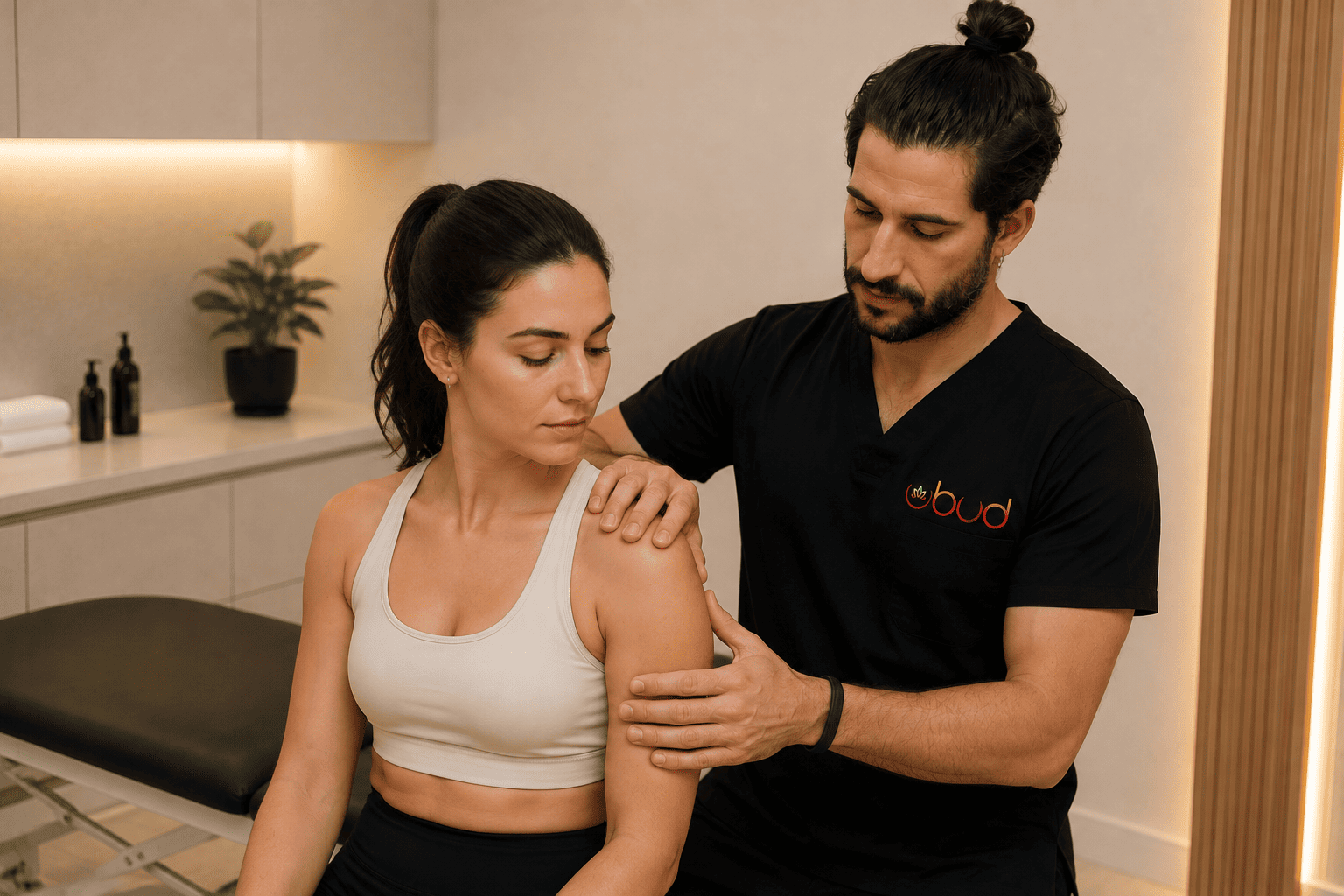
Everything starts with a good diagnosis and clinical reasoning. We will ask you when the pain appears, how you sleep, about your habits and your stress levels. We then examine mouth opening, joint sounds, the sensitivity of the chewing and neck muscles, and head posture. When needed, we use ultrasound imaging to look at the tissues and refine the assessment. This allows us to decide whether the problem is muscular, joint-related, cervical or mixed, and whether you should be referred.
What does manual therapy for the jaw consist of?
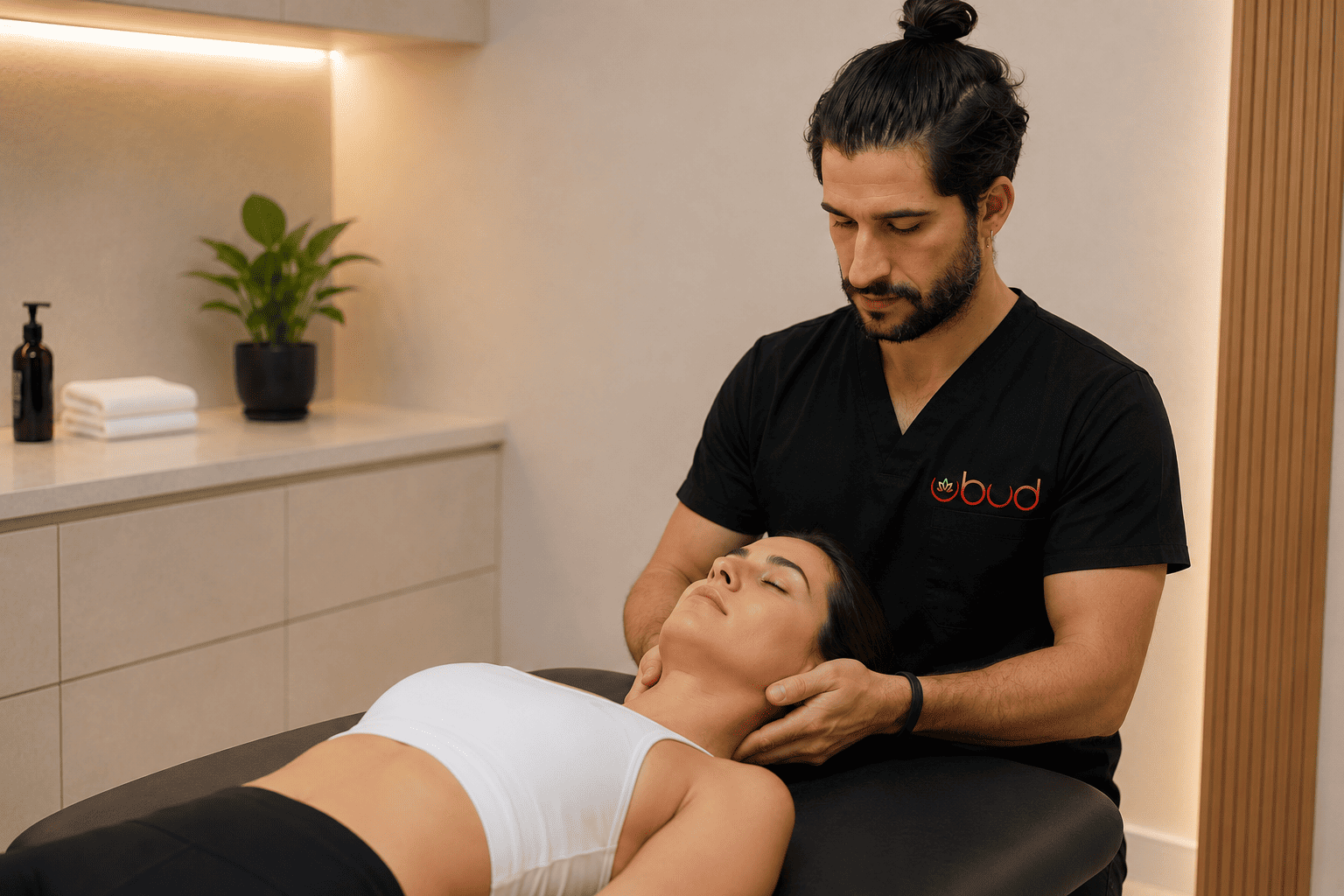
When indicated, manual therapy on the chewing muscles, the joint and the cervical spine helps to reduce sensitivity, relax the muscles and improve mobility.
When is dry needling used for bruxism?
If the assessment reveals relevant myofascial trigger points in the masseter, the temporalis or the neck muscles, and there are no contraindications, we may consider dry needling in Torremolinos or other invasive physiotherapy techniques. It is only applied when indicated, with sterile material and after explaining to you what it involves.
Which exercises and self-care tips help?
Therapeutic exercise is key to maintaining improvement. We teach you jaw control and coordination exercises, gentle mobility work and exercises for the neck muscles, adapted to your case. We also work on self-care guidelines:
- Jaw resting position: lips together, teeth apart and tongue resting gently on the roof of the mouth.
- Reminders during the day to notice whether you are clenching.
- A softer diet during painful phases, avoiding chewing gum and very hard foods.
- Good sleep hygiene and active breaks if you work at a screen.
What role does stress play in bruxism?
Stress is not the only factor, but it is one of the most important, especially in daytime clenching. Learning to recognise when you clench and to release the tension makes a big difference. Breathing, relaxation, physical activity and, if needed, psychological support complement physiotherapy very well.
Do I need an occlusal splint? Coordinated care with your dentist
An occlusal splint is prescribed and adjusted by your dentist. Its main function is to protect the teeth from wear and, in some people, to reduce the load on the joint at night. It does not “cure” bruxism, but it can be very useful combined with physiotherapy. Ideally, care is coordinated: the dentist assesses the mouth, the teeth and the need for a splint, while the physiotherapist treats muscular, joint and neck pain and helps you change habits. If you live in Torremolinos, Benalmádena or anywhere on the Costa del Sol, we can coordinate with your usual dentist.
When should I see a doctor or dentist?
See your doctor or dentist, before or alongside physiotherapy, if you notice:
- A locked jaw that stops you from opening or closing your mouth.
- Severe pain after a blow or accident.
- Fever, facial swelling or earache with discharge.
- Toothache, swollen gums or loose teeth.
- Loss of sensation in the face, or pain that does not change with anything or gets progressively worse.
- A new, very severe headache or one accompanied by neurological symptoms.
- Loud snoring or pauses in breathing during sleep.
How long does TMJ pain take to improve with physiotherapy?
It depends on each person, how long the problem has been going on and the factors involved. Many people notice improvement in the first few weeks, but results vary and depend on the assessment and on consistency with the exercises and guidelines. If you have jaw pain in Torremolinos or around Málaga, message us on WhatsApp and we will explain how the first assessment works.
Frequently asked questions
Can bruxism be cured?
Bruxism is a muscular activity that can come and go depending on stress, sleep and habits. Rather than “curing” it, the aim is to manage it, protect the teeth and reduce pain. With a combined approach, most people improve their quality of life.
Can a physiotherapist treat the TMJ?
Yes. Physiotherapists trained in orofacial and neck pain treat temporomandibular disorders through assessment, manual therapy, therapeutic exercise and, when indicated, invasive techniques, in coordination with the dentist.
Does dry needling in the jaw hurt?
It can cause brief discomfort and sometimes muscle soreness for one or two days. It is only used if indicated after the assessment and there are no contraindications, such as clotting disorders or an intense fear of needles.
Do I have to stop using my splint if I have physiotherapy?
No. The splint and physiotherapy are compatible and complement each other. Any change in how you use the splint should be decided by your dentist.
Free first consultation at Centro Ubud, La Carihuela (Torremolinos). Message us on WhatsApp.

Physiotherapist specialising in the foot and ankle and musculoskeletal pain, educator of physiotherapists and founder of The Fisio Program. He works with Centro Ubud’s physiotherapy unit.
This article is for information only and does not replace an individual assessment by a healthcare professional.