Most shoulder pain in adults is caused by rotator cuff tendinopathy or subacromial pain, and the treatment with the best evidence is progressive loading therapeutic exercise, together with a thorough assessment and, when indicated, other physiotherapy techniques. At Centro Ubud, in La Carihuela (Torremolinos), we take a global approach to the shoulder: we listen to your history, examine you, use ultrasound when needed and design a plan tailored to you.
What is the rotator cuff and why does the shoulder hurt?
The rotator cuff is a group of four muscles (supraspinatus, infraspinatus, teres minor and subscapularis) whose tendons surround the head of the humerus. Their job is to keep the joint centred while you move your arm, especially when lifting it overhead or rotating it.
When these tendons receive more load than they can tolerate, or stop receiving the load they need to stay strong, rotator cuff tendinopathy appears. People used to talk a lot about “tendinitis” or “impingement”, but we now know that in most cases there is no acute inflammation and no bone “pinching” the tendon, but rather a tendon that has lost load capacity and become sensitive. That is why many clinicians prefer to speak of rotator cuff related shoulder pain or subacromial pain.
What are the most common causes of rotator cuff pain?
There is rarely a single cause, but rather a combination of factors:
- Sudden changes in load: taking up swimming, padel or tennis, painting the house or moving home after a period of low activity.
- Repeated overhead movements at work or in sport, very common in hospitality, construction, hairdressing or racket sports, so popular on the Costa del Sol.
- Age: from 40–50 onwards tendons change and tolerate load spikes less well. Many people even have partial tears without any pain.
- Lack of strength and endurance in the shoulder and shoulder blade muscles.
What are the symptoms of rotator cuff tendinopathy?
The most typical symptoms are:
- Pain at the side and front of the shoulder, sometimes spreading down the arm but not beyond the elbow.
- Pain when lifting the arm out to the side, especially in an “arc” between 60 and 120 degrees.
- A feeling of weakness or that the arm “doesn’t respond” as it used to.
- Night pain, especially when lying on the affected shoulder.
Why does my shoulder hurt more at night?
Night pain is very common and often causes a lot of worry. Lying on your side compresses the area and increases pressure on already sensitive tendons; in addition, at night there are fewer stimuli to distract the nervous system, so pain is perceived more. Sleeping on your back or on the healthy side, with a pillow under the painful arm, usually helps. If night pain is intense, constant and does not change with position, it is worth getting it checked, as it may point to a different problem.
Free first consultation at Centro Ubud, La Carihuela (Torremolinos). Message us on WhatsApp.
How is shoulder pain diagnosed in physiotherapy?
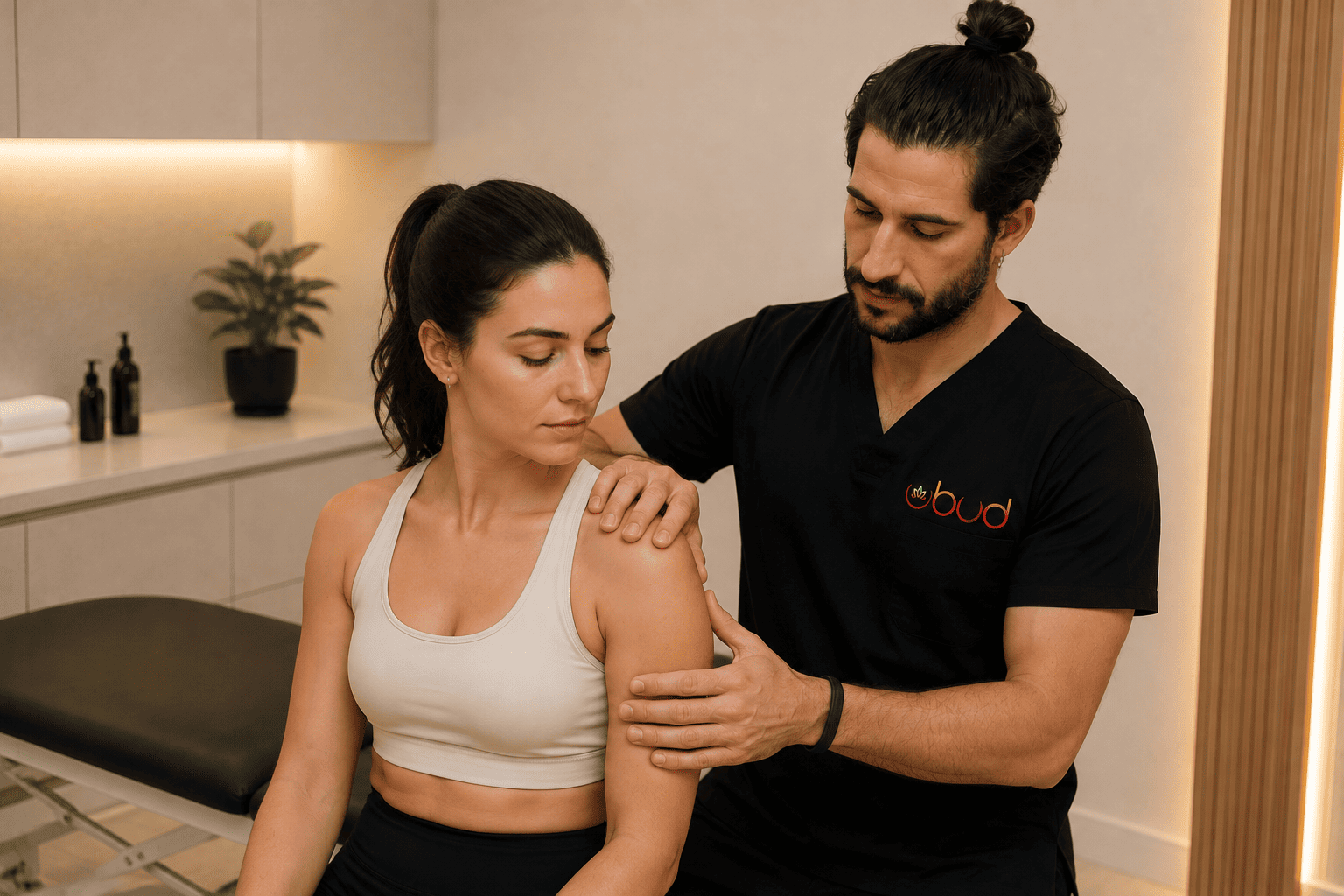
A good diagnosis starts with a detailed conversation: when it started, what makes it worse, how you sleep, what you do for a living and what sport you play. We then examine movement, strength, clinical tests, the neck and the shoulder blade, because shoulder pain sometimes comes from the cervical spine.
The aim is to rule out other conditions that look similar but are treated differently, such as adhesive capsulitis or “frozen shoulder” (a major loss of passive movement), instability, osteoarthritis or pain referred from the neck.
Is a shoulder ultrasound scan necessary?
Not always. Rotator cuff tendinopathy is diagnosed mainly through clinical examination. Even so, musculoskeletal ultrasound is a very useful tool when there is doubt, when pain does not progress as expected or when a tear is suspected. That said, the image is always interpreted alongside the examination: many findings on ultrasound or MRI do not cause pain.
What is the best physiotherapy treatment for the rotator cuff?
At Centro Ubud our physiotherapists work globally: good diagnosis and clinical reasoning, manual therapy when needed, ultrasound when you need it, invasive physiotherapy if indicated and, above all, therapeutic exercise.
Progressive loading exercise: the foundation of treatment
The treatment with the strongest scientific backing for rotator cuff tendinopathy is therapeutic exercise with progressive loading. Tendons adapt to load: if we dose it well, they regain capacity and pain decreases. A typical programme includes:
- Pain control phase: isometric or low-load exercises in comfortable positions, adjusting daily activity without complete rest.
- Strength phase: external and internal rotations with a resistance band or dumbbell, raises and shoulder blade muscle work, gradually increasing resistance.
- Functional phase: overhead exercises, faster and closer to your work or sport (padel, swimming, gym).
- Return to full activity and guidelines to prevent relapses.
It is normal to feel some discomfort during the exercises. As a general guide, mild discomfort that settles within the following 24 hours is acceptable; if pain clearly increases the next day, we adjust the load.
Manual therapy and other supporting techniques
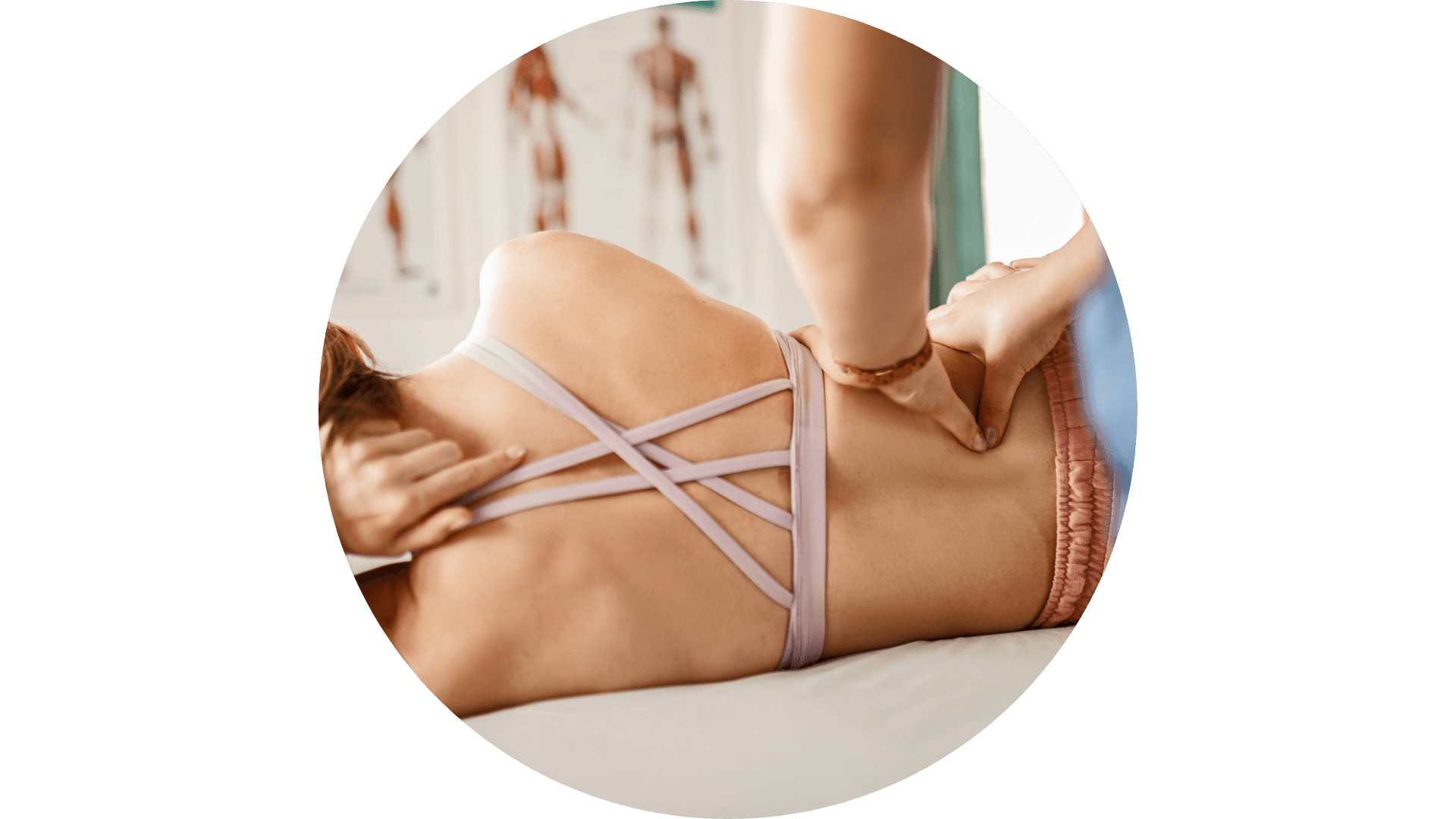
Manual therapy and understanding what is happening to you can help reduce pain and improve mobility in the short term, which makes it easier to do the exercises.
When are shockwave therapy or invasive physiotherapy indicated?
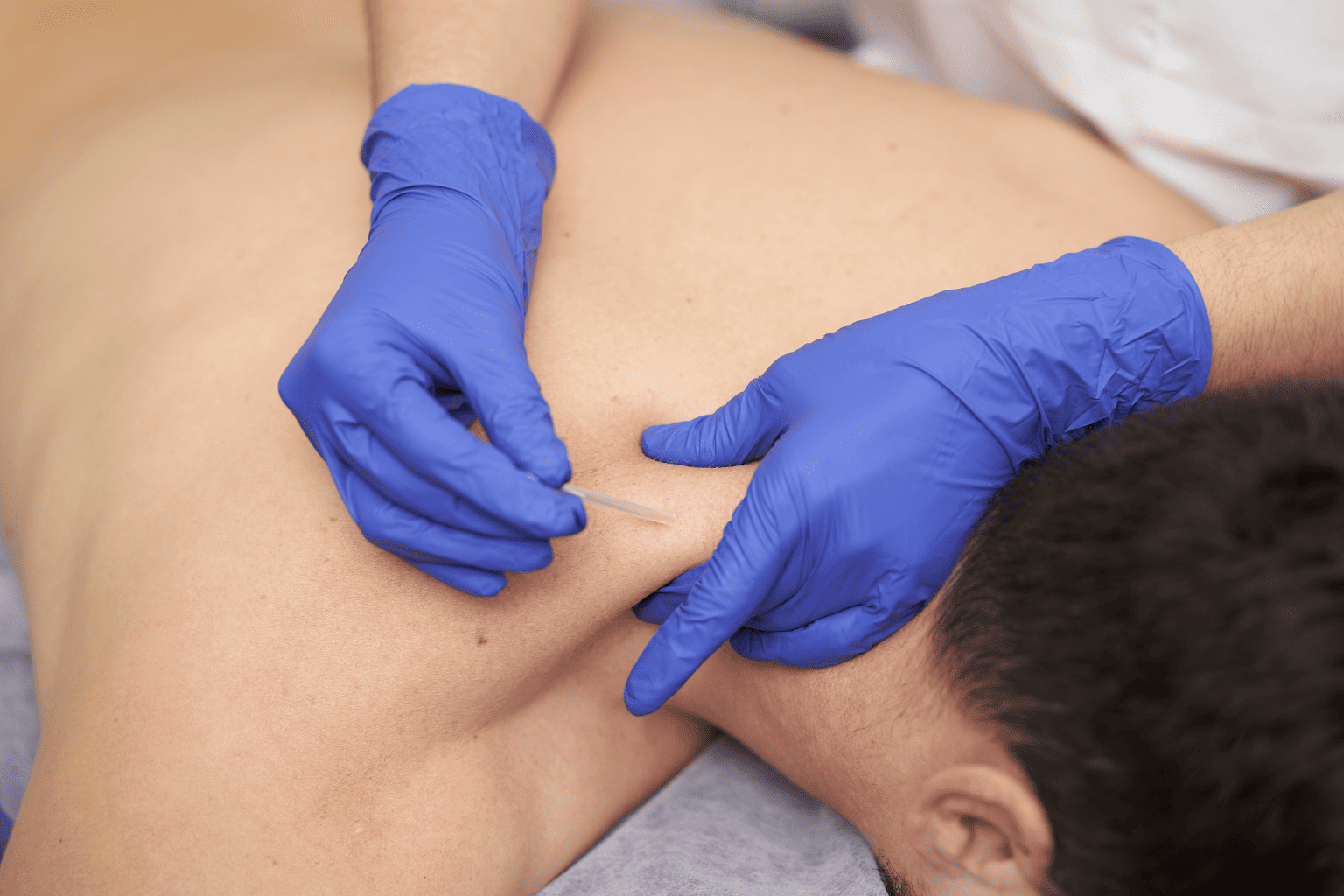
In some cases, especially with calcific tendinopathy or when pain persists despite a good exercise programme, shockwave therapy can be a complementary option. Ultrasound-guided invasive physiotherapy, such as percutaneous electrolysis or dry needling, may also be considered in selected cases after an assessment. None of these techniques replaces exercise: they complement it.
If you would like to learn more about how we treat this kind of problem, you can visit our page on shoulder pain in Torremolinos or the one on tendinitis and tendinopathies.
When should I see a doctor about shoulder pain?
Physiotherapy is the first step in most cases, but you should see a doctor or go to A&E if:
- You have had a fall or a blow and suddenly cannot lift your arm.
- There is deformity, significant swelling, redness or warmth in the shoulder.
- You have a fever, feel generally unwell or have unexplained weight loss.
- The pain is constant, very intense at night and nothing changes it.
- You notice tingling, loss of strength in the hand or pain running down the whole arm.
- The pain comes on with exertion, shortness of breath or chest pressure (in that case, go to A&E immediately).
If there is no improvement after a few months of well-delivered treatment, or a full tear is suspected in an active person, we arrange referral to an orthopaedic specialist.
How long does rotator cuff tendinopathy take to heal?
It depends on each person: how long you have had pain, your activity level, your general health and how consistent you are with the exercises. As a rough guide, many people notice improvement in the first few weeks, but tendon adaptation requires several months of progressive work. Results vary and always depend on the initial assessment. If you are in Torremolinos, Benalmádena or Málaga and would like an assessment, message us on WhatsApp.
Frequently asked questions
Is rest or movement better for shoulder pain?
Complete rest does not usually help and can weaken the tendon further. The best approach is to temporarily reduce the movements that hurt most and keep moving with adapted exercises.
Can I keep playing padel with rotator cuff tendinopathy?
Often yes, by adjusting intensity, frequency or certain shots such as the smash. Your physiotherapist will help you decide how much load is right at each stage.
Do injections cure the rotator cuff?
Injections may relieve pain in the short term in some cases, but they do not improve the tendon’s capacity. Whether they are indicated is a decision for the doctor and, if they are carried out, it is advisable to combine them with exercise.
If I have a rotator cuff tear, do I need surgery?
Not necessarily. Many partial tears, and even some full tears in older people, respond well to an exercise programme. The decision is made individually together with the orthopaedic specialist.
Is osteopathy a good option for shoulder pain?
Centro Ubud does not offer osteopathy. We believe that a physiotherapist, who combines clinical diagnosis, ultrasound, manual therapy, invasive techniques and therapeutic exercise, is the most complete option for treating shoulder pain.
Free first consultation at Centro Ubud, La Carihuela (Torremolinos). Message us on WhatsApp.

Physiotherapist specialising in the foot and ankle and musculoskeletal pain, educator of physiotherapists and founder of The Fisio Program. He works with Centro Ubud’s physiotherapy unit.
This article is for information only and does not replace an individual assessment by a healthcare professional.