To choose a physiotherapist in Torremolinos, make sure they are a registered health professional who takes the time to assess you thoroughly, explains what is wrong and why, and combines manual therapy, tools such as ultrasound when needed and, above all, therapeutic exercise with measurable goals. At Centro Ubud, in La Carihuela (Torremolinos), this is how we work: with a complete assessment and a global treatment plan tailored to you.
Choosing well matters. Back pain, a tendinopathy or a sports injury can improve a great deal with the right approach, or drag on for months with sessions that never address the root of the problem. This guide helps you know what to look for before booking, whether you live in Torremolinos, Málaga, Benalmádena or anywhere else on the Costa del Sol.
Why is it important for the physiotherapist to be a registered health professional?
Physiotherapy is a regulated health profession in Spain. To practise, you need a university degree in Physiotherapy and registration with the relevant professional college. This is not a mere formality: it guarantees accredited training in anatomy, physiology, pathology and treatment, and gives you peace of mind that whoever treats you is bound by a professional code of ethics.
Be wary of anyone offering “therapeutic massage” or injury treatment without a health qualification. You can ask the clinic directly whether its team is made up of registered physiotherapists; a reputable clinic will happily confirm it.
What should a good first physiotherapy assessment include?
The first session says a lot about a physiotherapist. A complete assessment usually includes:
- A detailed clinical interview: how the problem started, what makes it worse or better, your daily activity, your sport, your work and your medical history.
- Physical examination: mobility, strength, motor control, specific tests and palpation of the structures involved.
- Review of previous tests: medical reports, X-rays or MRI scans if you have them.
- Clinical hypothesis: which structure or mechanism best explains your symptoms.
If at your first visit you are put on the treatment couch with barely a question asked, that is a bad sign. Without a sound physiotherapy diagnosis there is no effective treatment.
What is clinical reasoning and why does it matter to you?
Clinical reasoning is the process by which the physiotherapist brings together all the information from your assessment to decide which treatment makes most sense in your particular case. Two people with “knee pain” may need completely different approaches. A good professional does not apply the same protocol to everyone: they adapt, reassess and adjust the plan according to your progress.
Does your physiotherapist explain what is wrong with you?
Understanding your problem is part of the treatment. Evidence shows that educating patients about pain, load and prognosis reduces fear of movement and improves adherence to treatment. Your physiotherapist should explain in plain words which structure is involved, why it hurts, what you can do and what is best avoided for now, and roughly how long recovery may take, bearing in mind that every case is different.
If you leave the clinic without knowing what you have or what to do at home, an essential part of the process is missing.
When is ultrasound useful in physiotherapy?
Musculoskeletal ultrasound lets us see muscles, tendons, ligaments and nerves in real time. In the hands of a trained physiotherapist, it is a very valuable tool to:
- Assess the condition of a tendon or a muscle injury.
- Observe how a structure behaves during movement.
- Guide invasive physiotherapy techniques with precision.
- Monitor how the injury evolves throughout treatment.
It is not needed in every case, but having an ultrasound scanner at the clinic makes a difference when you do need it. At Centro Ubud we use musculoskeletal ultrasound in Torremolinos when it provides useful information for your diagnosis and treatment.
Free first consultation at Centro Ubud, La Carihuela (Torremolinos). Message us on WhatsApp.
What role do manual therapy and invasive physiotherapy play?
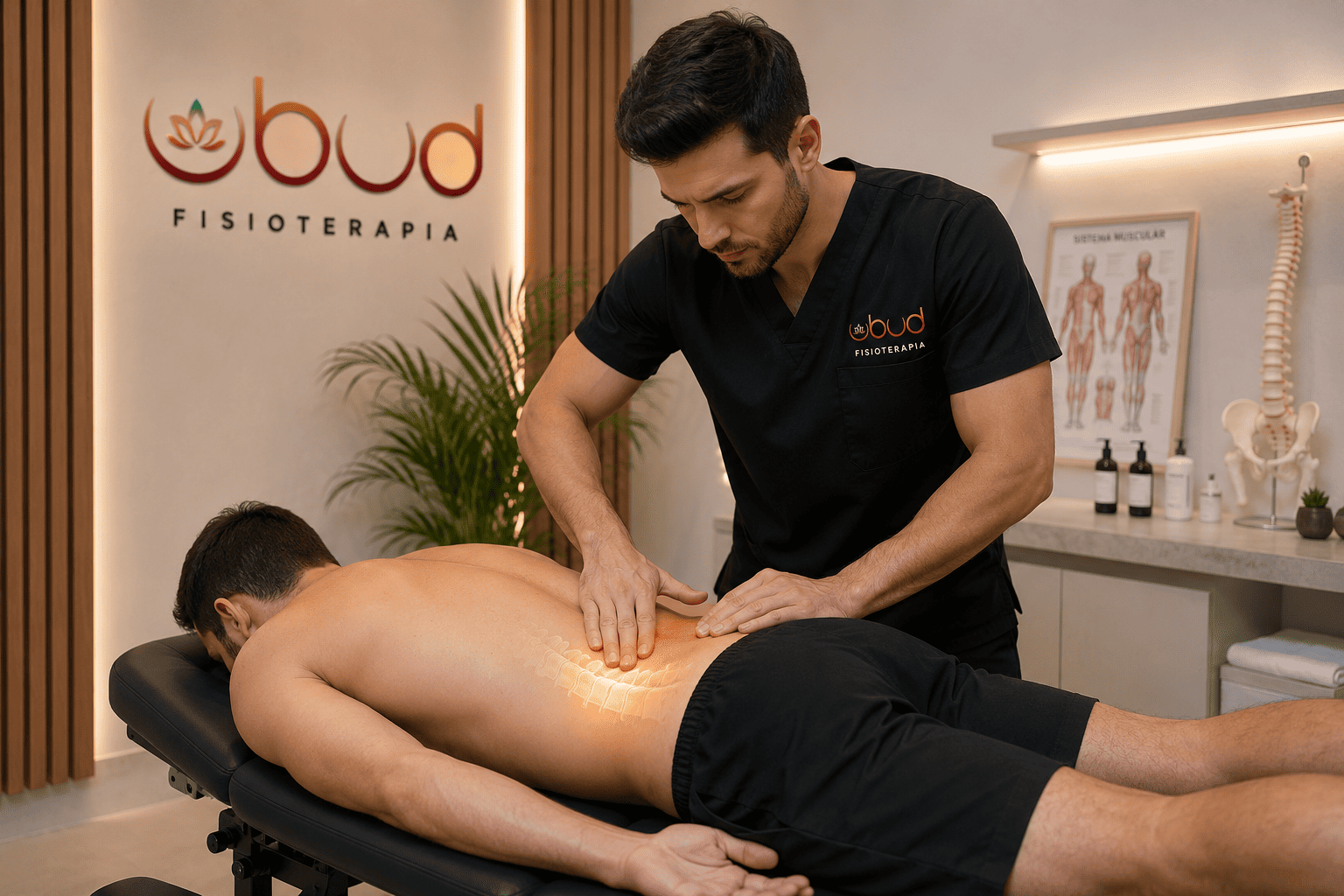
Manual therapy (joint mobilisations, soft tissue techniques, neurodynamics) can relieve pain and improve mobility, especially in the early stages. It is a useful tool, but it is rarely enough on its own.
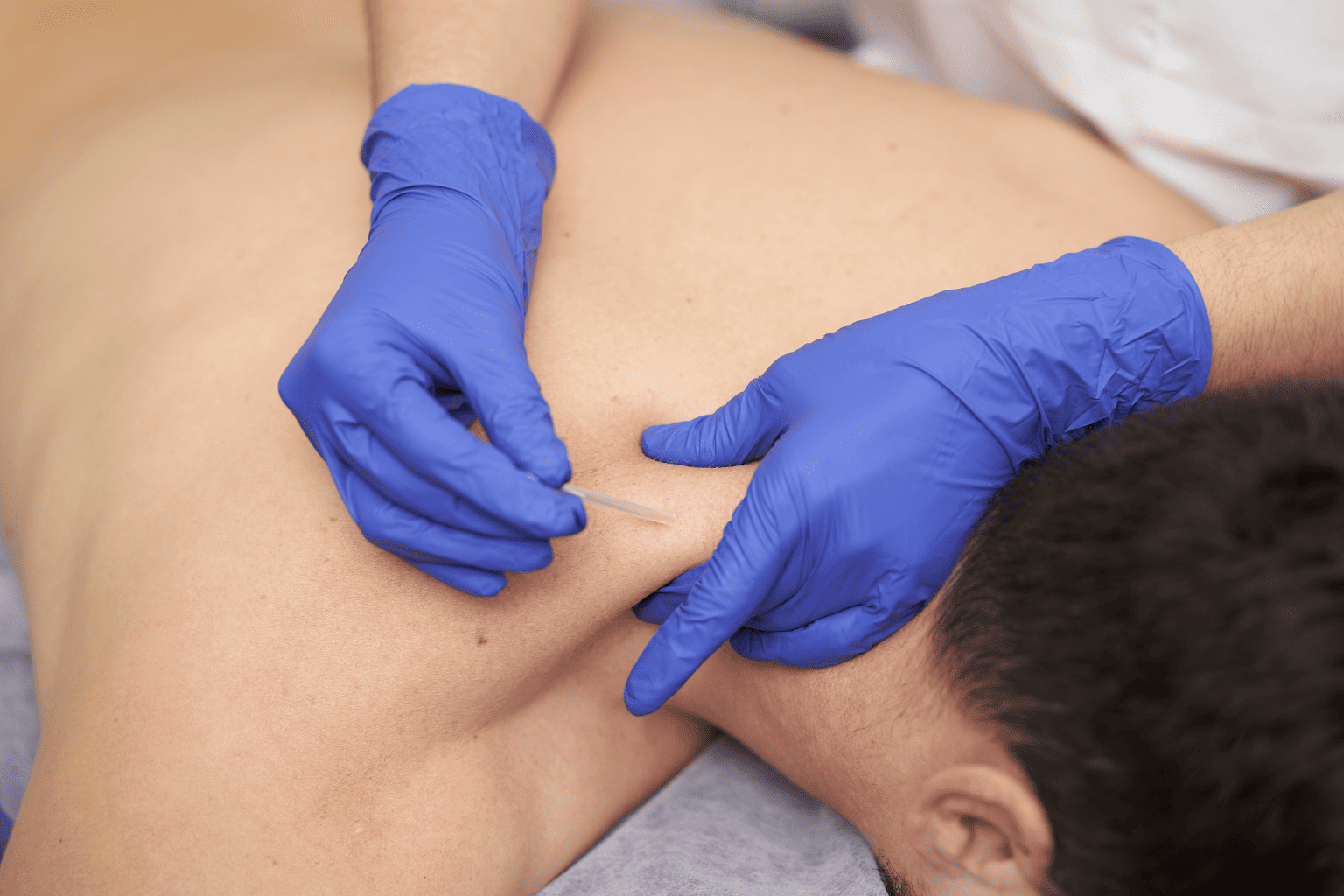
Invasive physiotherapy includes techniques such as dry needling or percutaneous electrolysis, which are applied with a fine needle to myofascial trigger points or tendons. It is only indicated in certain cases, after an assessment, and must always be carried out by a physiotherapist with specific training, ideally guided by ultrasound. You can find out more on our invasive physiotherapy in Torremolinos page.
The key is that the physiotherapist chooses the technique to suit your case, not your case to suit the technique they know best.
Why is therapeutic exercise essential?
Most musculoskeletal injuries improve more lastingly when treatment includes exercise. Therapeutic exercise helps you regain strength, helps tissues tolerate load better, improves movement control and reduces the risk of relapse. Clinical guidelines support this for very common problems such as low back pain, tendinopathies and knee osteoarthritis.
A good physiotherapist will teach you exercises adapted to you, correct your technique and progress them over time. At our clinic, therapeutic exercise in Torremolinos plays a central role.
What about passive-only sessions?
Sessions based solely on massage, heat devices or electrotherapy may bring short-term relief, but they rarely solve the underlying problem. If you have had many sessions where you simply lie on the couch and the pain keeps coming back, consider looking for a more active approach.
Does your physiotherapist set measurable goals?
A well-designed treatment has specific, measurable goals: running 5 km again without pain, climbing stairs normally, sleeping without your shoulder waking you up, or regaining a particular range of movement. The physiotherapist should reassess these indicators regularly to check whether the plan is working or needs to change.
If after several sessions nothing has changed and nobody reviews the approach, something is wrong. Results vary from person to person and depend on the assessment, but there should always be a clear plan.
When should the physiotherapist refer you to a doctor?
A good physiotherapist knows how to recognise when a problem falls outside their scope. These are some red flags that require medical assessment:
- Severe pain that does not change with movement or rest, or that gets worse at night.
- Fever, unexplained weight loss or general malaise associated with the pain.
- Progressive loss of strength, tingling in both legs or changes in bladder or bowel function.
- A recent significant injury, or a history of cancer together with new pain.
- Swelling, warmth and redness in one leg for no apparent reason.
In any of these situations, the professional should refer you to a doctor before continuing. Knowing when to refer is a sign of quality, not weakness.
Physiotherapist or osteopath in Torremolinos: what is the difference?
This is a very common question. In Spain, physiotherapy is a regulated health profession with university training, whereas osteopathy is not recognised as an independent health profession. Many of the manual techniques associated with osteopathy are also part of physiotherapists’ postgraduate training.
That is why we consider the physiotherapist the more complete option: they integrate physiotherapy diagnosis, manual therapy, ultrasound, invasive physiotherapy and therapeutic exercise within an evidence-based framework. At Centro Ubud we do not offer osteopathy as such; our team of physiotherapists in Torremolinos works with a global physiotherapy approach. If you would like to book an appointment, message us on WhatsApp.
Frequently asked questions
Do I need a doctor’s referral to see a physiotherapist?
No. In private healthcare you can go directly to a physiotherapist. They will assess your case and, if they detect anything that requires medical investigation, they will refer you.
How many physiotherapy sessions will I need?
It depends on the problem, how long you have had it and how you respond to treatment. After the assessment, the physiotherapist will give you an approximate estimate and adjust it according to your progress.
Is it normal to be given exercises to do at home?
Yes, and it is a good sign. The work you do between sessions is a fundamental part of recovery and helps the improvement last.
Is dry needling suitable for everyone?
No. It has contraindications, such as an intense fear of needles, certain blood clotting disorders or infections in the area. That is why it is only used when indicated after an assessment.
Do you treat patients from Benalmádena and Málaga?
Yes. We are in La Carihuela, Torremolinos, and we see people from Benalmádena, Málaga and other parts of the Costa del Sol.
Free first consultation at Centro Ubud, La Carihuela (Torremolinos). Message us on WhatsApp.

Physiotherapist specialising in the foot and ankle and musculoskeletal pain, educator of physiotherapists and founder of The Fisio Program. He works with Centro Ubud’s physiotherapy unit.
This article is for information only and does not replace an individual assessment by a healthcare professional.