Home physiotherapy for older adults is indicated when leaving the house is difficult or risky: after a fall, a hip fracture, a knee or hip replacement, a mild stroke, a period of being bedbound or pain that limits walking. The physiotherapist assesses the person in their own surroundings, designs tailored therapeutic exercise and works on balance, walking and fall prevention together with the family. At Centro Ubud, from La Carihuela, we offer home physiotherapy in Torremolinos and the surrounding area, including Benalmádena and nearby parts of Málaga.
When is home physiotherapy a good idea for an older person?
Not every older person needs treatment at home. If someone can travel safely, coming to the clinic usually allows us to use more equipment. But there are situations where home is the best option, or the only reasonable one:
- After a fall, especially if there is fear of falling again, unsteadiness when walking or pain that limits movement.
- After a hip fracture, in the weeks following surgery, when the goal is to regain the ability to stand up, walk and be as independent as possible as soon as possible.
- After a knee or hip replacement, to work on mobility, strength and walking in the early stages, when getting around is still hard.
- After a mild stroke, when there are after-effects such as weakness on one side, balance problems or difficulty with some daily tasks, always coordinated with the medical team in charge.
- Immobility or being bedbound after an illness, a hospital stay or a spell of hardly leaving the house, which causes a rapid loss of strength and muscle mass.
- Persistent pain in the back, knee or hip that makes the person move less and less and fall into a cycle of inactivity and weakness.
- Frailty: tiredness, slow walking, weight or strength loss that suggest the risk of falling is increasing.
In many of these situations treatment starts at home and, once the person feels more confident, continues at the clinic with a rehabilitation programme in Torremolinos.
What are the advantages of treating the person in their own home?
The main advantage is that we work where the real problems happen. Walking well down a clinic corridor is one thing; getting up from your own sofa, stepping into the shower or going down the two steps to the terrace is quite another. At home we see those specific difficulties and train exactly those movements.
It also avoids journeys that can be exhausting or dangerous, the family can be present and learn, and it is easier to fit the plan around the person’s routine, medication and energy levels.
What does a home physiotherapy session include?
Our physiotherapists work with a global approach: a thorough assessment and clinical reasoning, manual therapy when needed and, above all, tailored therapeutic exercise. At home the equipment is simple (a chair, a wall, resistance bands, small weights), but used well it goes a long way.
Full initial assessment
The first visit is spent getting to know the person: their medical history, medication, previous falls, how active they were before the problem and what they would like to do again. We then assess strength, mobility, balance, walking pattern and the ability to get up from a chair or bed. We also check the home for hazards. With all this we set realistic, measurable goals.
Tailored therapeutic exercise
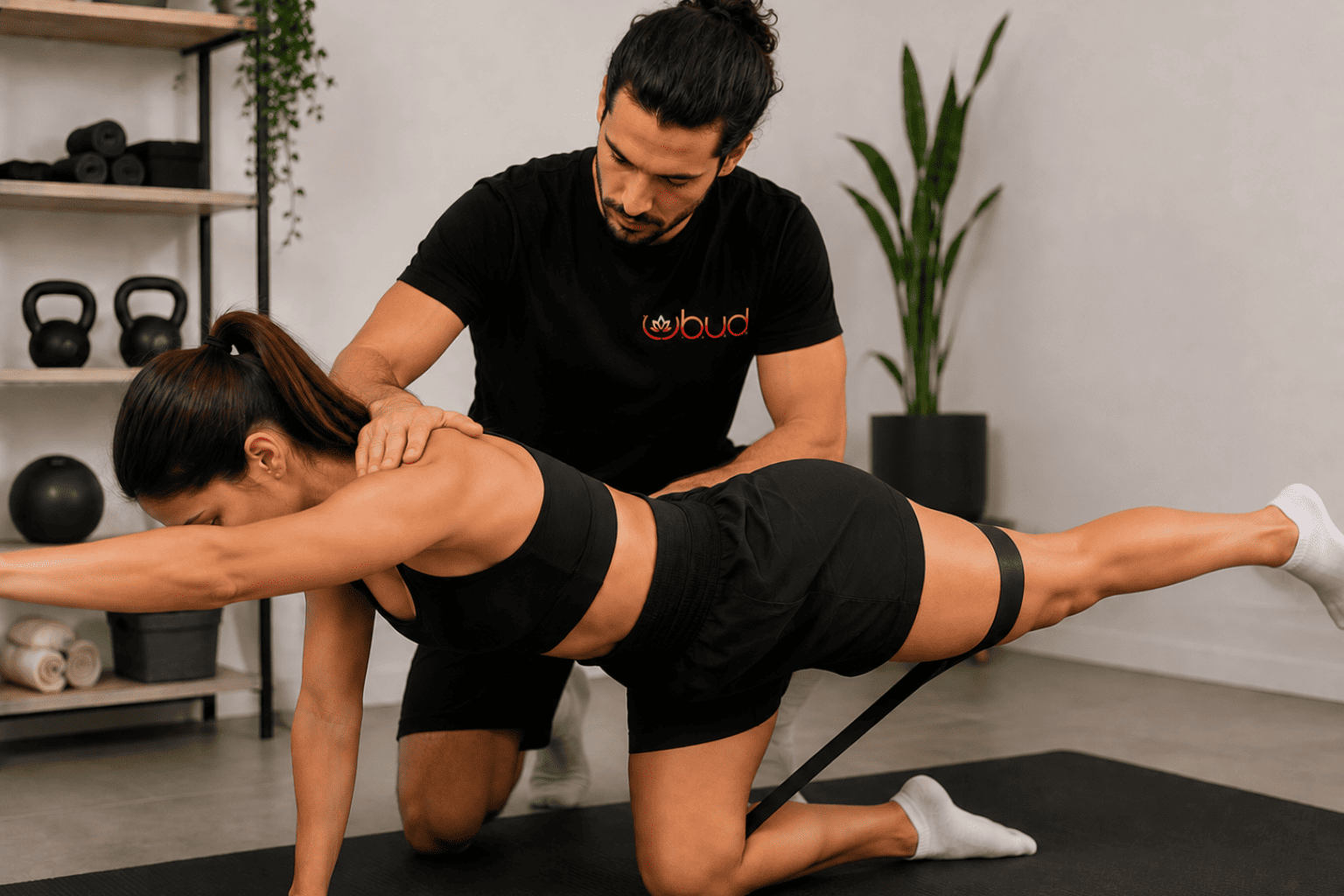
This is the core of the treatment. Evidence shows that exercise programmes combining strength and balance reduce the number of falls in older people living at home. Exercises are chosen and dosed for each person: sit-to-stand from a chair, heel raises, small side steps, band work or exercises in bed when standing for long is not yet possible. To learn more about this approach, see our page on therapeutic exercise in Torremolinos.
Balance and walking
We train balance progressively and always safely: standing with support, narrowing the base, turning, changing direction or walking while talking. We also train walking, check whether the walking stick or frame is suitable and used correctly, and practise situations such as going through doorways, turning in tight spaces or going out into the street.
Fall prevention and what to do if a fall happens
As well as reducing the risk, we teach the person how to get up safely from the floor if they do fall, or how to call for help when they cannot. Knowing how to do this greatly reduces the fear of falling, which on its own makes many older people move less.
Manual therapy and pain relief
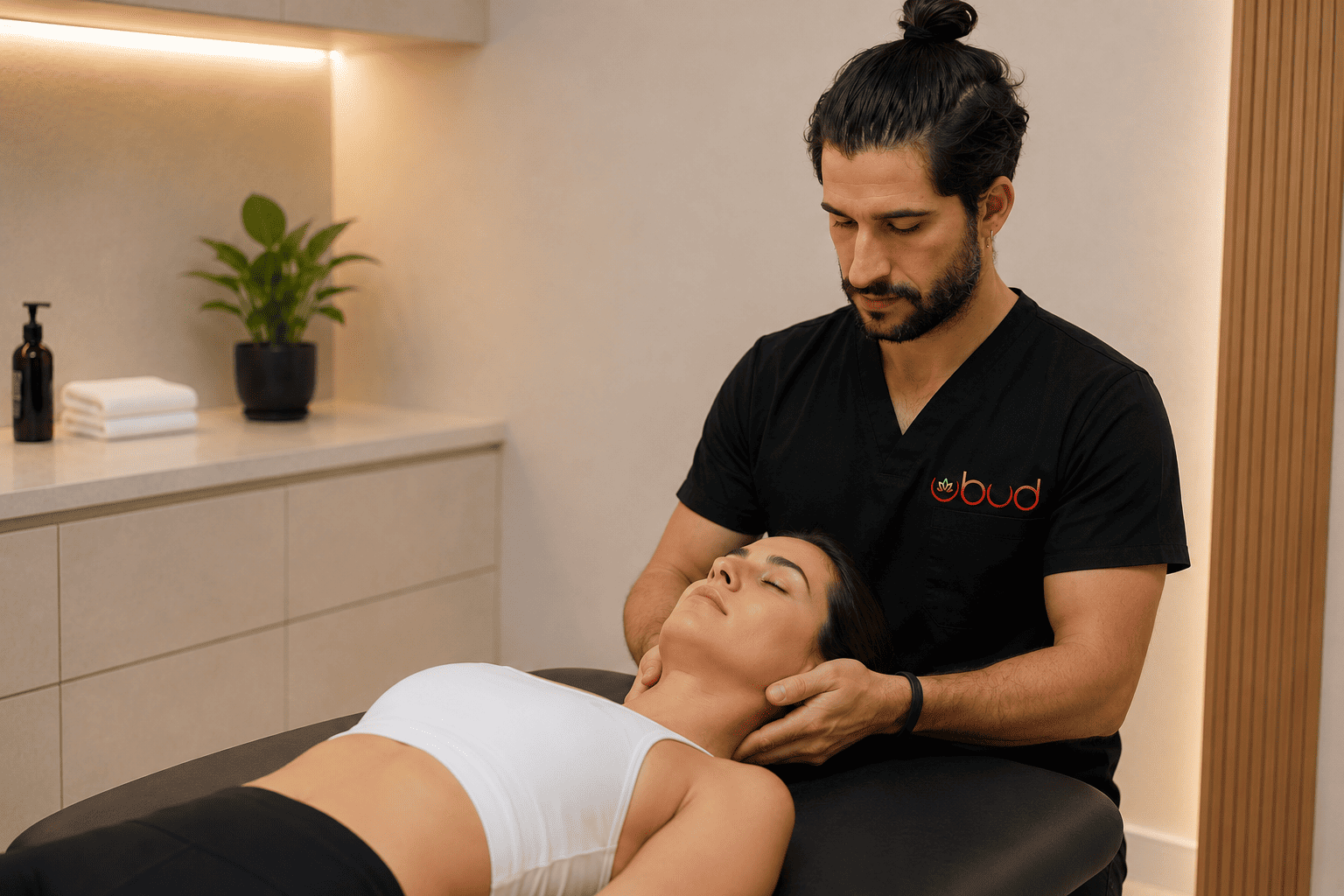
When there is pain or stiffness, manual therapy can help the person move better and tolerate exercise. It is a useful complement, but it does not replace active work. If the pain is in the hip or knee, you can find more information on our pages about hip pain in Torremolinos and knee pain in Torremolinos.
Advice and training for family and carers
The family plays a key role. We show them how to help the person stand up or walk without doing everything for them, how carers can avoid hurting their own backs and which exercises the older person can do between sessions. We leave written guidelines so nobody has to remember everything by heart.
Free first consultation at Centro Ubud, La Carihuela (Torremolinos). Message us on WhatsApp.
How many home physiotherapy sessions are needed?
It depends on the problem, the previous condition and the goals. As a general guide:
- After a hip fracture or a joint replacement, it is common to start with 2 or 3 sessions a week during the first weeks and space them out as the person becomes more independent.
- After a fall without a fracture or in cases of frailty, a programme of several weeks focused on strength and balance is usually planned, with daily exercises to do at home.
- For persistent pain or prolonged immobility, the duration varies widely and is adjusted according to the response.
What matters is that there is activity between sessions: a few minutes of exercise every day usually makes more difference than one long isolated session. Results vary from person to person, which is why we review goals regularly.
How can you prepare the home to prevent falls?
Small changes at home greatly reduce the risk. On the first visit we check the home with the family, but these are the most common recommendations:
- Clear floors: remove loose rugs, cables and objects from walkways, or secure them firmly.
- Good lighting: enough light in hallways and on stairs, easy-to-reach switches and a night light on the way from the bedroom to the bathroom.
- A safe bathroom: grab rails by the toilet and in the shower, a non-slip mat and, if needed, a shower seat. Replace the bath with a walk-in shower where possible.
- Chairs and beds at the right height: allowing the person to stand up with feet flat on the floor and, ideally, with armrests.
- Everyday items within reach: avoid having to climb on stools or bend down a lot.
- Closed, supportive footwear: better than open slippers or walking around in socks.
- Stairs with handrails on both sides if possible, and clearly marked steps.
Many falls happen at night, when going to the bathroom in a hurry or half asleep. Getting up slowly, sitting on the edge of the bed for a few seconds before standing and having a light on are simple measures that help.
When should you see a doctor?
Physiotherapy does not replace medical assessment. See a doctor, or go to A&E if it is severe or sudden, when there is:
- Severe pain in the hip or groin after a fall, or inability to put weight on the leg.
- Sudden weakness on one side of the body, difficulty speaking, a drooping mouth or loss of vision (possible signs of stroke: call emergency services immediately).
- Frequent dizziness, fainting or repeated falls without a clear cause.
- New confusion, fever or a rapid general decline.
- Swelling, warmth and pain in the calf after surgery or a period of bed rest.
It is also important to review medication with the doctor when there are falls, because some drugs can cause dizziness; never change it on your own.
If you have an older relative in Torremolinos, Benalmádena or Málaga and are not sure whether they need home physiotherapy or can come to the clinic, our team of physiotherapists in Torremolinos can advise you. To book an appointment, message us on WhatsApp.
Frequently asked questions
From what age does home physiotherapy make sense?
It does not depend on age but on the situation. What justifies it is that travelling is difficult or risky, or that the main problem is managing inside the home.
Can a very old or frail person exercise?
Yes, and they usually benefit a great deal. Exercise is adapted to their level, even starting seated or in bed, and progressed safely according to their response.
Does a family member need to be present?
It is not compulsory, but it is highly recommended, especially in the first sessions, to learn how to help and which exercises to repeat between visits.
What equipment do I need at home?
Usually a stable chair, some free space and, where relevant, the walking stick or frame are enough. The physiotherapist brings the necessary equipment, such as resistance bands or small weights.
Do you cover Benalmádena and Málaga?
We cover Torremolinos and the surrounding area, including Benalmádena and nearby parts of Málaga. Message us on WhatsApp with your area and we will confirm availability.
Free first consultation at Centro Ubud, La Carihuela (Torremolinos). Message us on WhatsApp.

Physiotherapist specialising in the foot and ankle and musculoskeletal pain, educator of physiotherapists and founder of The Fisio Program. He works with Centro Ubud’s physiotherapy unit.
This article is for information only and does not replace an individual assessment by a healthcare professional.